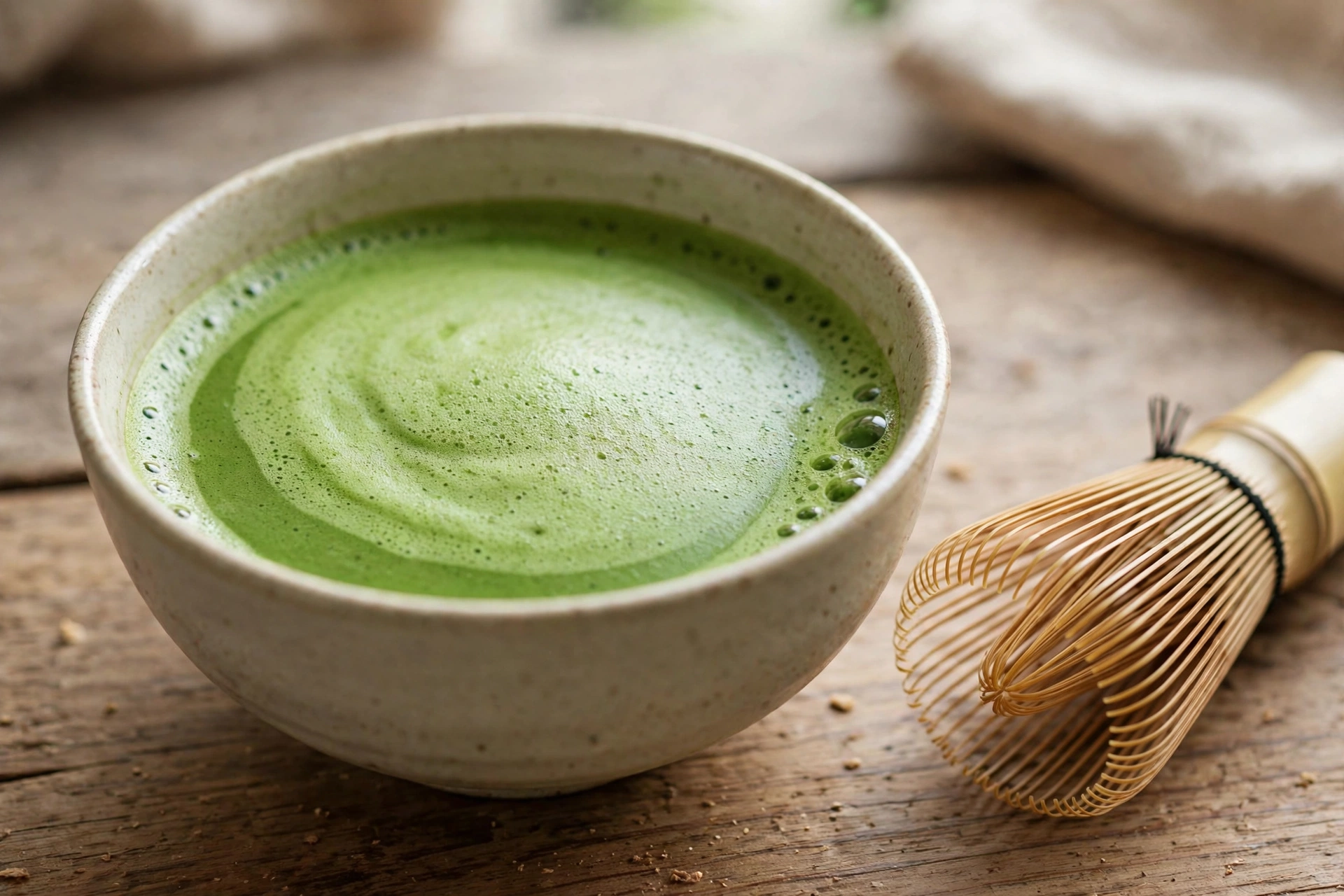
How to Whisk Matcha Without Clumps
Clumps are the one thing standing between most people and good matcha at home. You whisk, you whisk, you take a hopeful sip — and there's a gritty little pellet hiding at the bottom of the bowl, mocking you. Here's the thing: clumps aren't a whisking problem. They're a preparation problem. By the time you're whisking, the battle is mostly decided. Get the setup right and learning how to whisk matcha is easy.
We whisk more matcha in a day than most people make in a year, and nearly every clump complaint traces back to one of four fixable mistakes. Let's walk through them.
Why matcha clumps in the first place
Matcha is stone-ground tea leaf, milled finer than flour — and like flour, it's electrostatic. The particles cling together and form tiny pellets, especially once a tin has been opened and exposed to humidity. Add water and those pellets get more stubborn, not less: the outside of each pellet hydrates into a shell that protects the dry powder inside. You have to prevent them.
How to whisk matcha: the four things that actually matter
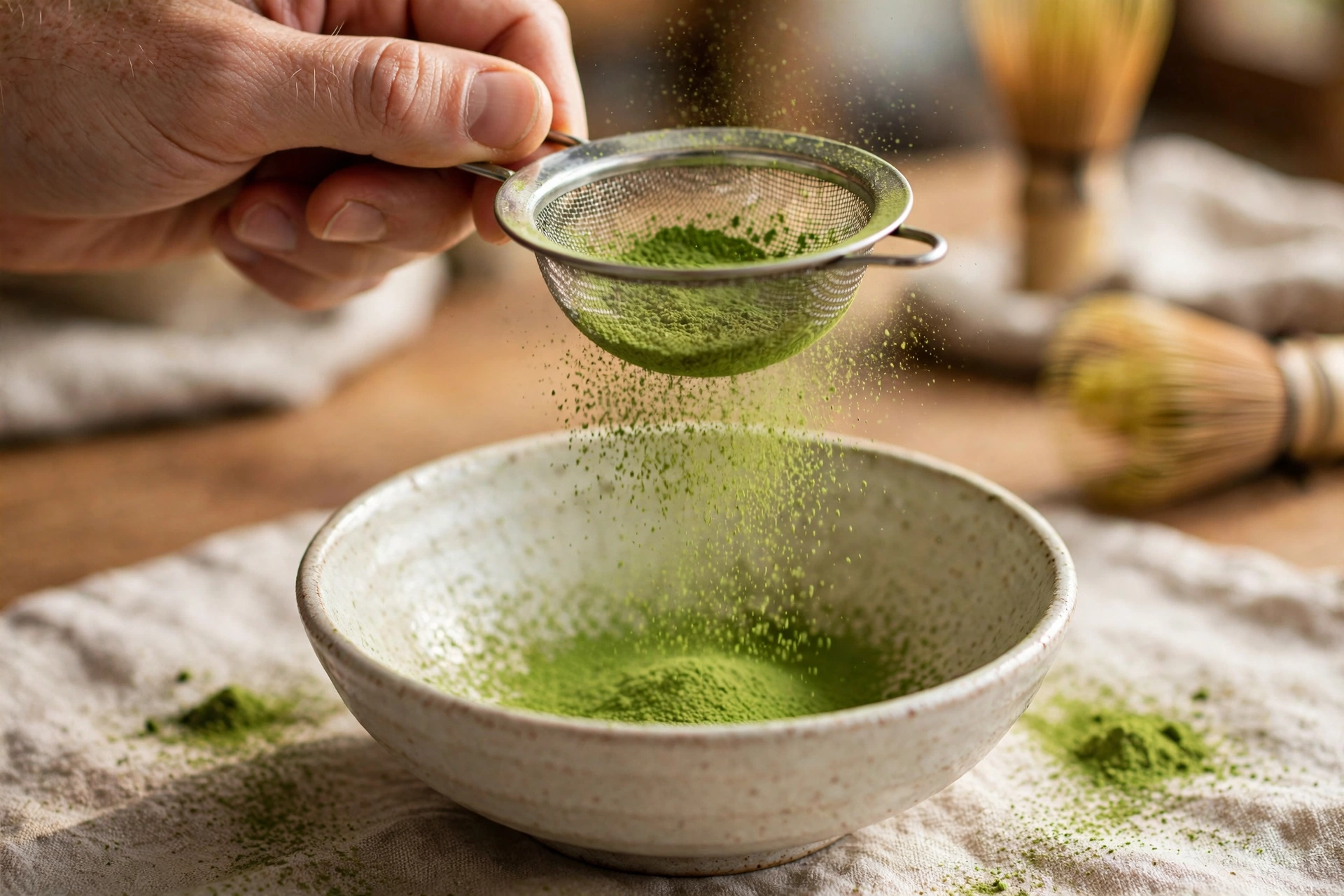
1. Sift before anything else. Push your measured matcha through a fine-mesh tea strainer into the bowl before adding water. This breaks the pellets while they're still dry and helpless. It's the highest-impact step in this entire article. Fifteen seconds, no clumps. Skip it, and you're fighting uphill.
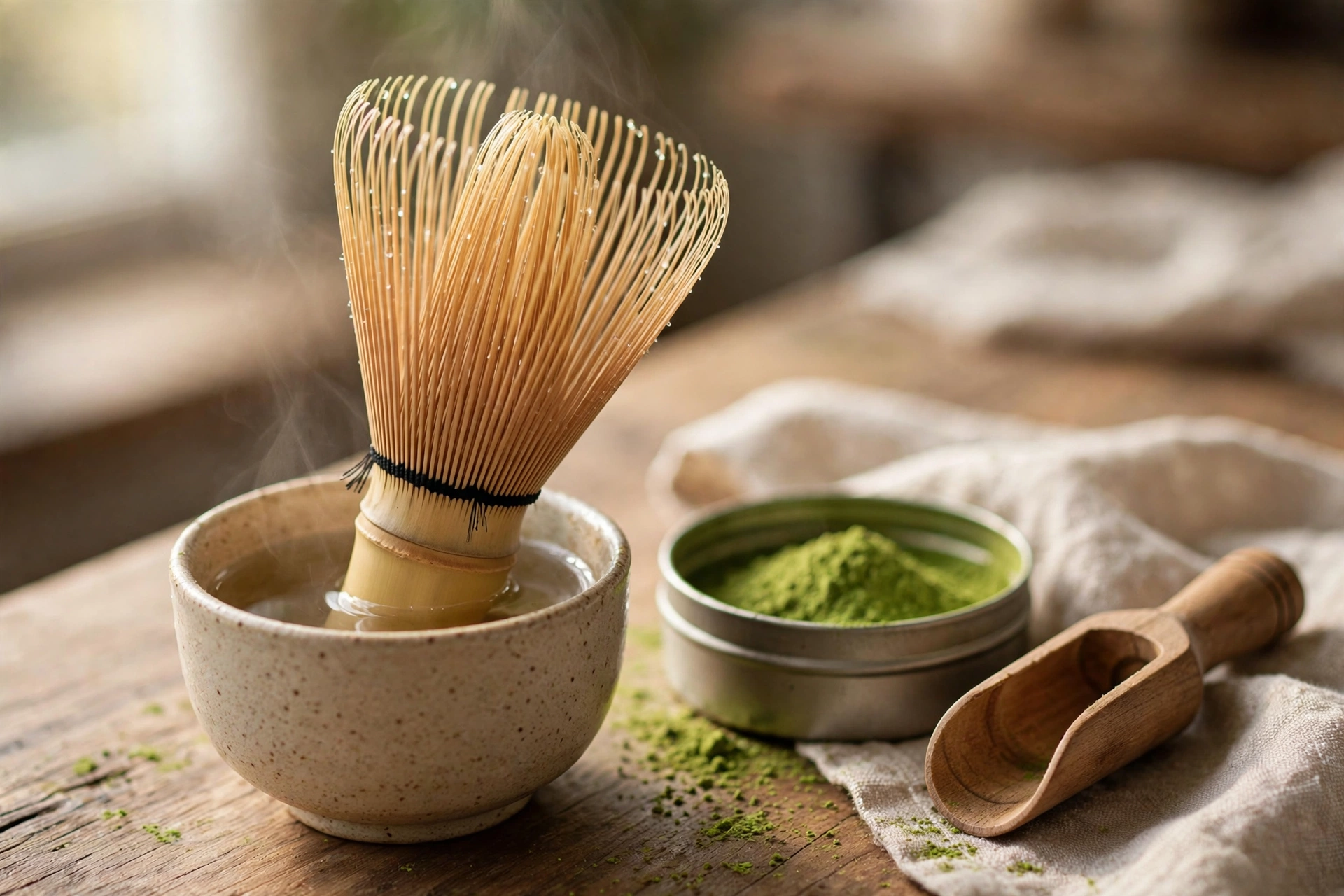
2. Soak the whisk. If you use a bamboo chasen, stand it in warm water for a minute before you start. Dry bamboo prongs are stiff and brittle — they snap instead of flexing, and stiff prongs push powder around instead of breaking it apart. A soaked whisk moves like it's supposed to. This also extends the whisk's life by a lot.
3. Use the right water. Around 175°F (80°C) — steaming, never boiling. Boiling water does two bad things: it scorches the tea into bitterness, and it flash-cooks the powder into tougher clumps. No thermometer? Boil the kettle, then wait two to three minutes. Err cooler rather than hotter.
4. Whisk in a W, not circles. Here's where the actual whisking technique lives. Hold the chasen lightly — no death grip — and move it in a fast zigzag, like writing a W or M, back and forth across the bowl. Don't stir in circles. Circles just push the liquid around in a lazy vortex; the zigzag smashes powder particles against each other at speed, which is what actually dissolves them and whips in the fine foam. Keep the whisk off the bottom of the bowl so you don't grind the prongs, and go for about 20 to 30 seconds until the surface is glossy with a layer of fine, even bubbles.
The whisk itself matters
A proper bamboo chasen has around a hundred thin prongs — that's a hundred edges breaking up powder at once. A metal kitchen whisk has maybe eight wires. It can work in a pinch, but it's a blunt instrument by comparison: fewer edges, less foam, more clumps left behind. An electric handheld frother is a decent middle ground and genuinely good at dissolving powder, though it makes bigger, coarser bubbles and can over-aerate delicate matcha, muting the flavor slightly.
If you're buying your first chasen, look for 100+ prongs and a whisk holder to store it upright. After use, rinse under warm water — never soap, never the dishwasher — and air dry on the holder. A cared-for whisk lasts six months to a year of daily use; replace it when prongs start snapping off or splaying permanently.
The shake method (no whisk required)
No chasen, no problem. Sift the matcha into a jar or bottle, add a couple of ounces of warm water, seal it, and shake hard for about 30 seconds. The agitation does the same job as the zigzag — particles smashing into each other — and you get a smooth, foam-topped concentrate. You miss out on the fine microfoam texture a bamboo whisk produces, but for an iced latte, the difference is negligible.
What about usucha and koicha?
Quick vocabulary, since you'll see these words everywhere: usucha is thin matcha, the everyday preparation — a little powder, more water, whisked to a light foam. Koicha is thick matcha, the ceremonial style — more powder, less water, kneaded into a smooth, paint-like consistency. For daily drinking and lattes, usucha is what you want.
Troubleshooting: still getting clumps?
If you sifted and you're still finding pellets, check these. Old matcha clumps worse — a tin open for months absorbs moisture and gets sticky. Matcha whisked with too little water clumps more too, since there's not enough liquid to separate the particles; use enough water to give the powder room to move. And add milk or sweetener only after the matcha is fully whisked — cold milk poured over half-whisked powder locks clumps in.
A few things people ask us
Does expensive matcha clump less? Somewhat. Fresh, high-quality matcha is ground finer and packed better, so it starts with fewer pellets. But the best matcha clumps if you skip the sifting — technique beats price.
Can I just use a blender? For a latte, sure — a few seconds in a blender obliterates clumps. But you lose the foam texture and the ritual, and blending can warm the tea. We'd take the whisk every time.
How do I know when it's whisked enough? Look at the surface: it should be glossy, jade-green, with a layer of fine, tight bubbles and no visible specks of powder. Lift the whisk — the matcha should fall off it in a smooth, unbroken stream. Thirty seconds of proper W-motion gets you there.
Come watch a pro do it — our baristas whisk every matcha to order, and we're happy to show you the technique in person on Melrose Ave in West Hollywood or on Edinburgh Ave in Hollywood.