What Is a Cortado? (vs Latte vs Flat White)
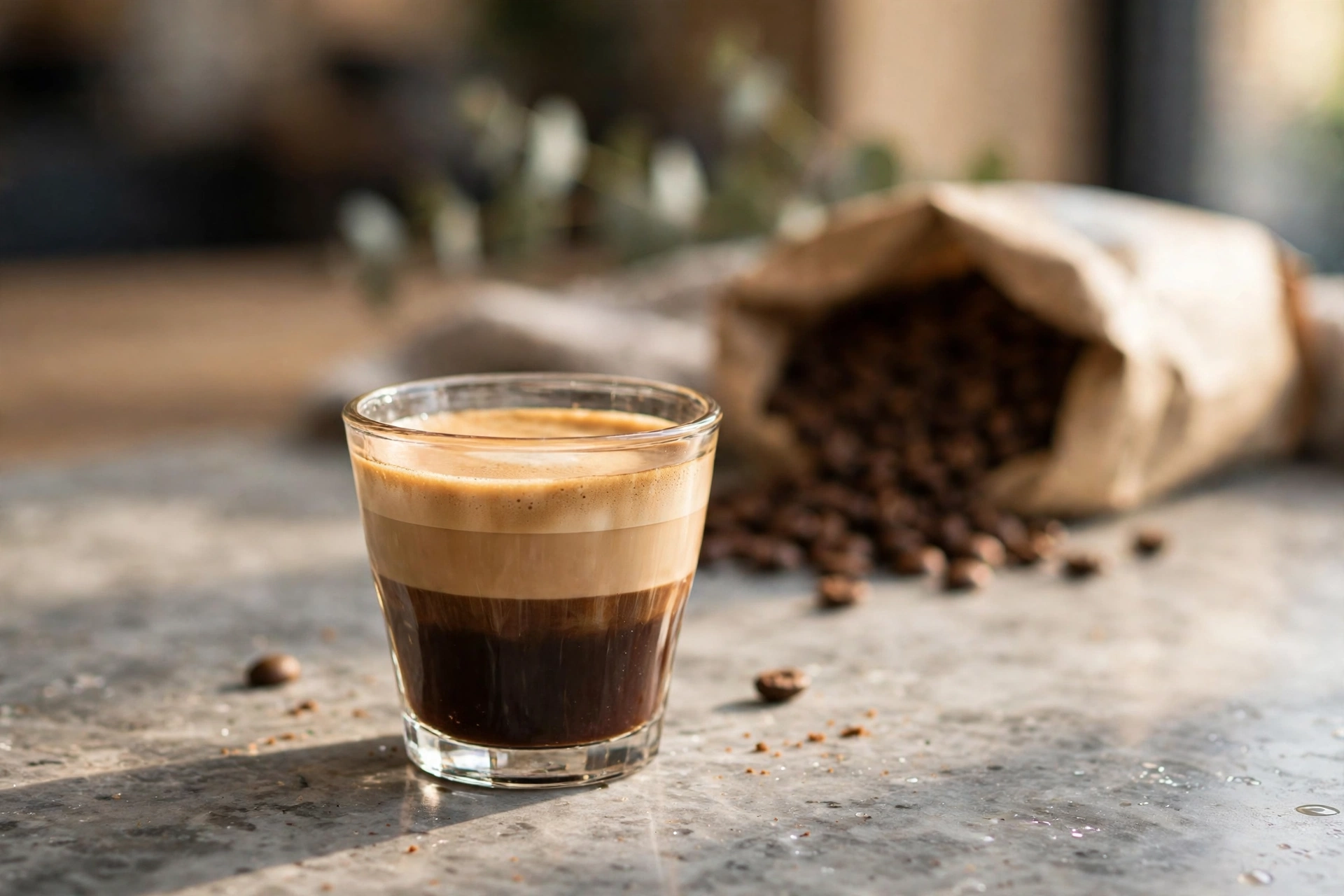
What is a cortado? It's a small Spanish coffee drink made with equal parts espresso and warm steamed milk — roughly a 1:1 ratio — served in a 4-ounce glass. The milk "cuts" (cortar) the espresso's sharpness without burying its flavor, so you get a bold, balanced coffee that's stronger than a latte but smoother than straight espresso.
The cortado is for people who find lattes a little boring and straight espresso a little aggressive. Small, strong, over in about six sips — and once it clicks, it tends to become your default order.
What is a cortado made of?
Two things: a double shot of espresso and an equal amount of warm, lightly steamed milk. The cortado comes from Spain's Basque Country, where "cortar" means "to cut" — as in, cut the espresso with a little milk. Traditionally it's an afternoon drink, the thing you order after lunch when a full milky coffee feels like too much but you still want something with a little softness. It's served in a small glass, not a ceramic cup, which is part of its identity: you can see the layers, the dark espresso below and the pale milk above, meeting in the middle.
It migrated to the US through specialty shops in the 2000s and never left — a drink that trusts the espresso. No syrups, no foam art, no 16-ounce bucket. Just good coffee, softened exactly enough.
What a cortado tastes like
Imagine a double espresso, then imagine someone rounded off its sharp edges with warm milk — not enough to make it milky, just enough to take the bite out. That's a cortado. It's rich and espresso-forward, with the milk adding body and a gentle sweetness rather than diluting the coffee into the background.
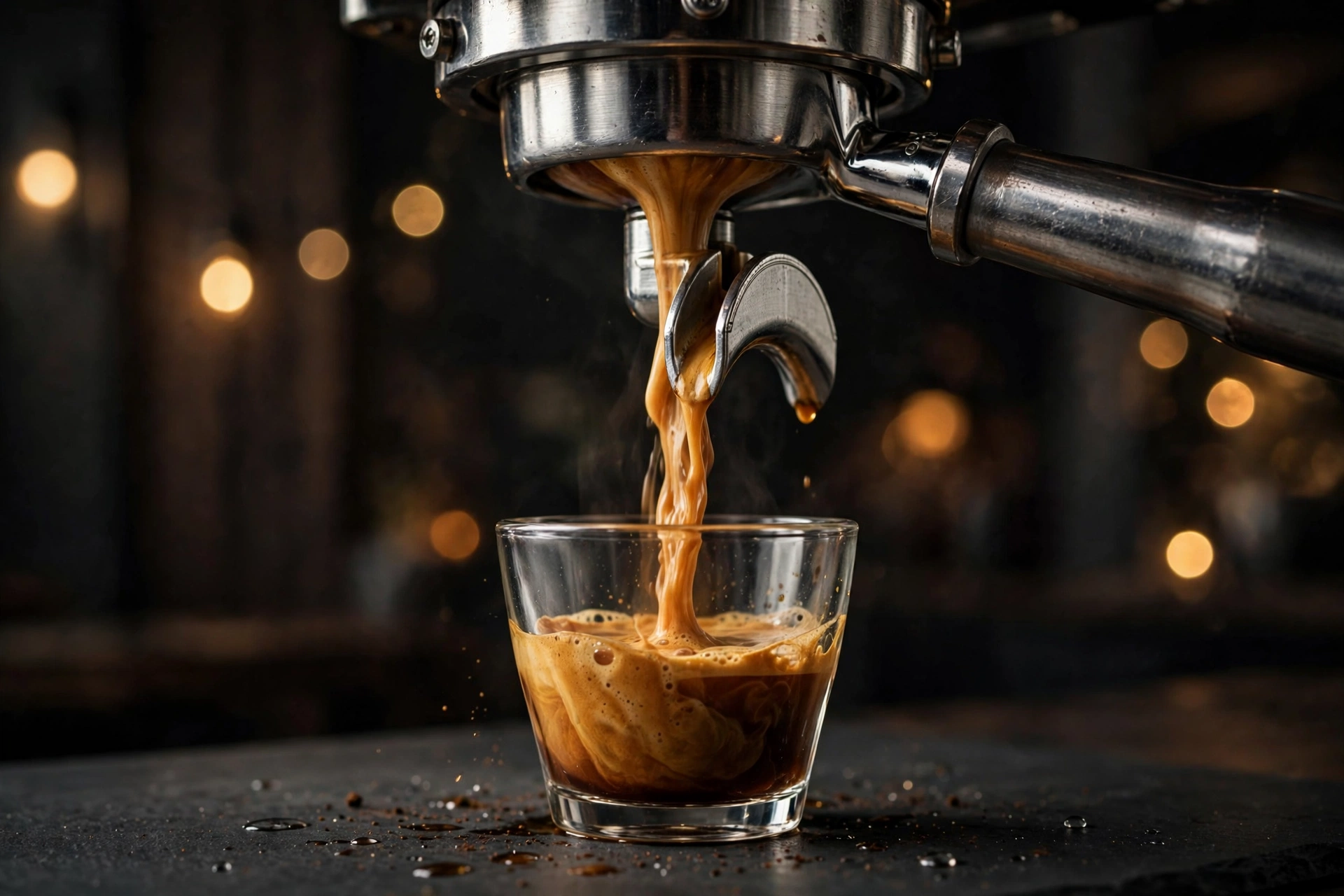
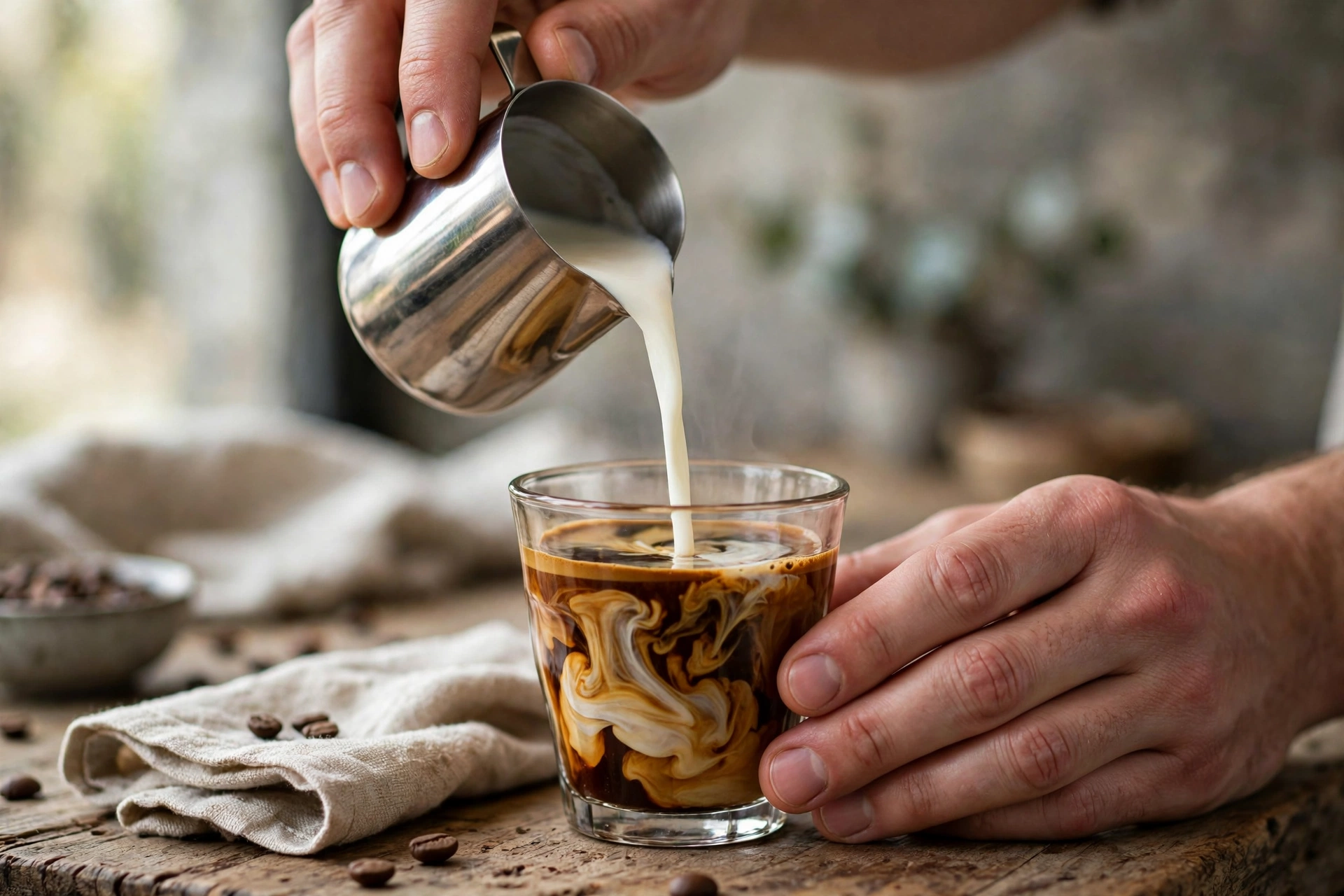
The milk is steamed but barely — warmed to about 130–150°F with very little air. No foam cap, no latte art. The texture is silky and integrated, and at 1:1 the espresso's character dominates: chocolatey, nutty, maybe fruity depending on the beans. A cortado made with bad espresso is a bad cortado — nowhere to hide.
Cortado vs latte vs flat white
These three look similar on a menu and taste meaningfully different. The differences come down to three variables: how much milk, how much foam, and how big the cup is.
| Cortado | Flat White | Latte | |
|---|---|---|---|
| Espresso : milk ratio | ~1:1 | ~1:2 | ~1:3 to 1:4 |
| Typical size | 4 oz | 5–6 oz | 8–12 oz |
| Milk texture | Warm, silky, almost no foam | Velvety microfoam throughout | Steamed milk + layer of foam |
| Flavor | Bold, espresso-forward | Balanced, smooth | Mild, creamy, milky |
| Caffeine | Same double shot as the others | Same | Same |
That last row surprises people: all three typically contain the same double shot — roughly 120–140mg of caffeine. The cortado just delivers it in the smallest package, so it tastes strongest. Per ounce, the cortado is most intense; per cup, they're even.
The flat white is the cortado's closest relative. Think of it as a small, strong latte — more milk than a cortado, with velvety microfoam. The cortado is drier and more direct. Like the idea of a flat white but want more punch? Order a cortado. Want your cortado a touch softer? Try the flat white.
How to order a cortado like you mean it
Just say "cortado." That's the whole order. It comes in a small glass, hot, with no foam art and no size options — a cortado is 4 ounces by definition. Asking for a "large cortado" or a "venti cortado" is like asking for a large shot of espresso; the size is the drink.
A few things worth knowing: whole milk is the classic choice and gives the richest result, but oat milk works beautifully too — it's naturally sweet and steams well. And yes, you can get it iced, though the traditional preparation is hot. An iced cortado is essentially espresso and cold milk in equal parts over ice, and on a hot day it's excellent.
Common mistakes
Expecting it to be big. The number one surprise for first-timers is the size. Four ounces looks small next to the bucket-sized drinks most American cafés serve. It's supposed to be small. Drink it in a few minutes, while it's at the right temperature.
Confusing it with a macchiato. A macchiato is espresso "marked" with just a spoonful of foam — much stronger and smaller than a cortado. If you order a macchiato expecting a cortado, you're in for a bracing surprise.
Drowning it in syrup. Some shops will offer flavored cortados. Resist, at least the first time. The drink's whole appeal is the unadorned interplay of espresso and milk. Add vanilla and you've just made a small, expensive latte.
Quick answers
Is a cortado stronger than a latte? In flavor concentration, yes — same caffeine, half (or less) of the milk, so it tastes much bolder. In total caffeine, no — both use a double shot.
Can you get an iced cortado? Yes. It's not traditional, but most good shops will make one: equal parts espresso and cold milk over ice. Refreshing and punchy.
What's the difference between a cortado and a Gibraltar? Almost nothing — a Gibraltar is a cortado served in a specific Libbey Gibraltar glass, popularized by Blue Bottle. Same drink, trademarked glassware.
If you're the kind of person who drinks their coffee black but is curious about the milky side, the cortado is your gateway. Come try one at our Melrose Ave shop in West Hollywood or our Edinburgh Ave location in Hollywood — small glass, big flavor, no foam art required.