What Does Matcha Taste Like? A Beginner's Guide
What does matcha taste like? Good matcha is smooth, savory, and gently sweet: fresh-cut grass up front, deep umami in the middle — almost like a light broth — and a soft, sweet finish with only a whisper of bitterness. Creamy, never chalky. A great cup reads as bright and alive; a bad one, muddy.
If you've only had matcha as neon-green syrup at a drive-through, none of that will sound familiar. The gap between good matcha and bad matcha is enormous — bigger than with coffee. Most people who say they don't like matcha just had it done badly.
What does matcha taste like? The four flavors in every good cup
Umami. Matcha's signature, and the biggest surprise for first-timers. Shading the plants before harvest floods the leaves with amino acids — a savory, brothy depth, like miso soup or parmesan, that coffee and most teas don't have. When people call matcha "rich," this is what they mean.
Vegetal and grassy. The green part: steamed spinach, snap peas, fresh-cut grass, sometimes a whisper of seaweed. It should taste clean and vivid. When it tastes like lawn clippings or a swamp, something went wrong.
Natural sweetness. The part nobody warns you about: really good matcha is sweet — not sugar-sweet, more like fresh corn or steamed milk. It tends to bloom a beat after you swallow. It's why ceremonial matcha is traditionally drunk plain.
Bitterness. A little belongs there — the bass note that keeps the sweetness interesting. But it should be a gentle finish, not a punch in the jaw. Harsh, lingering bitterness means low-grade powder, stale stock, or water that was too hot.
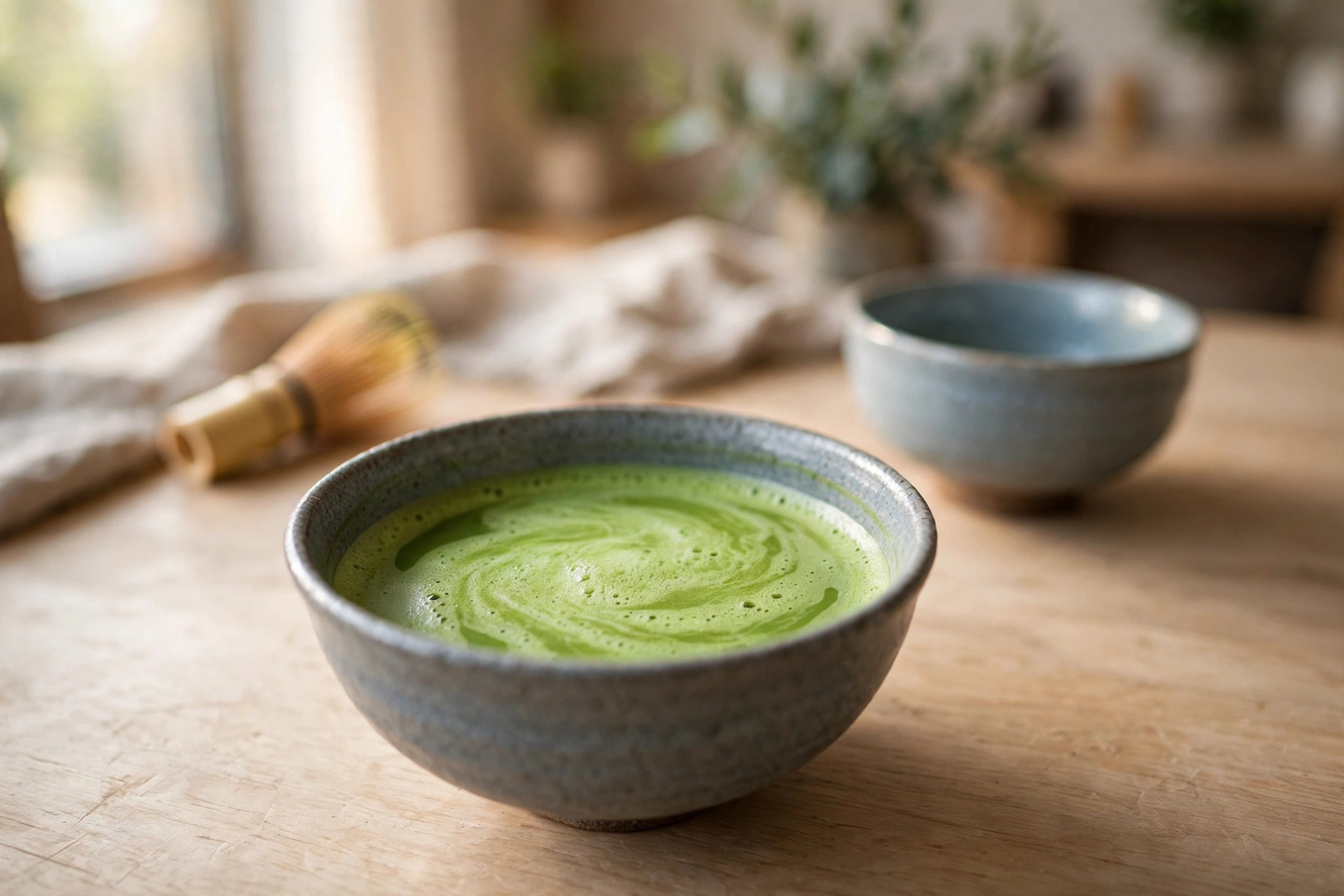
Then there's texture — half the experience. Properly whisked matcha has a fine, creamy froth and a body that coats your mouth. Thin or gritty means a preparation problem, not a matcha problem.
What bad matcha tastes like (and why it fools beginners)
Let's be blunt: most first encounters with matcha are terrible. Bad matcha tastes aggressively bitter and astringent, drying your mouth out like an oversteeped tea bag — sometimes like hay, dust, or, memorably, fish. The color gives it away before you sip: vibrant electric green means fresh; dull, yellowish green means old or cheap.
If your first matcha was a bitter green milkshake from a tin that'd been open for six months, you haven't tasted matcha. Don't judge the drink by that cup.
What changes the taste: grade, water, and milk
Three things decide what your cup tastes like more than anything else.
Grade. Ceremonial-grade — first harvest, stone-ground, vivid green — is the smooth, sweet, umami-forward stuff made for drinking straight. Culinary grade is bolder and more bitter, built to stand up to milk and sugar. For your first proper tasting, ceremonial is the move.
Water temperature. This is the number-one home-brewing mistake. Boiling water scorches matcha and drags out all the bitterness — the sweet, delicate notes get bulldozed. Water around 175°F (80°C), hot but not boiling, is the sweet spot. Let a just-boiled kettle sit for a minute or two and you're there.
Milk and sweetener. A latte doesn't hide good matcha; it reframes it. Milk rounds off the vegetal edges and carries the sweetness, which is why an iced matcha latte is the friendliest introduction. If it tastes like nothing but milk and sugar, the powder was an afterthought.
How to taste matcha for the first time
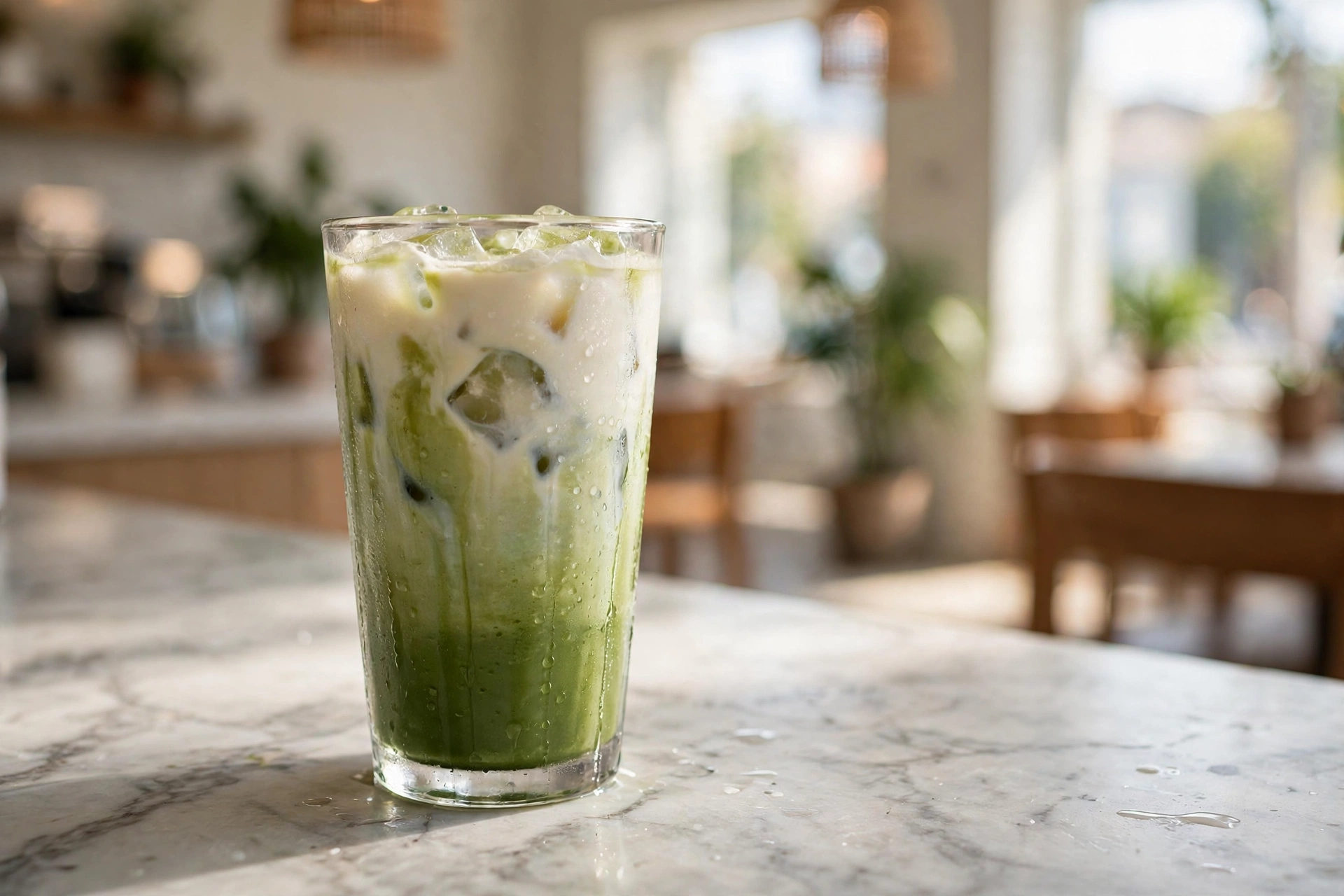
Our honest recommendation: start with an iced matcha latte, lightly sweetened or unsweetened. It's the most forgiving format, and it's how most of us fell for the stuff. Notice the green up front, the savory middle, the sweet finish.
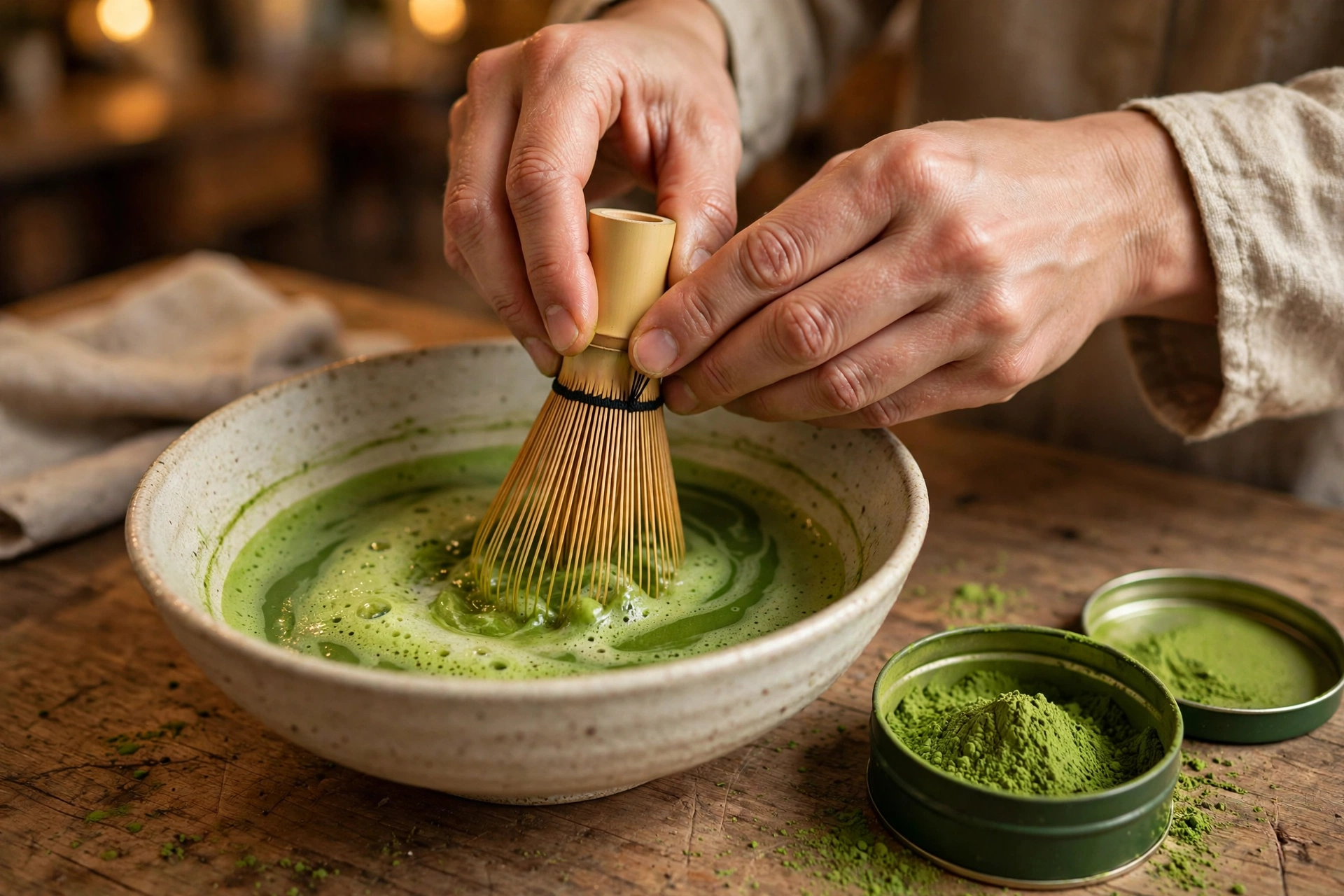
Then try it whisked hot, straight. Smell it first — good matcha smells fresh and sweet, like a garden after rain. Take a small sip, let it sit on your tongue, then a bigger one. At a good shop, this is the moment it clicks: oh, that's what everyone's been going on about.
And if your first cup disappoints, don't write matcha off. Try it somewhere that takes it seriously — ceremonial-grade powder, the right water temperature, real whisking. The difference will embarrass every mediocre matcha you've had before.
Matcha taste questions, answered
Does matcha taste like regular green tea? Related, but more intense. You're consuming the whole powdered leaf instead of a steep, so the flavor is deeper and more full-bodied, with umami that steeped green tea rarely shows.
Is matcha supposed to be bitter? A little — a gentle bitter finish belongs there. But a puckering mouth means old powder, boiling water, or too much matcha for the water.
Why does my matcha taste fishy? Almost always stale or low-grade powder. Fresh matcha smells sweet and vegetal, never fishy — and vivid green means fresh, dull olive means old.
Will I like matcha if I don't like green tea? Maybe — plenty of converts started as skeptics. The creamy texture and natural sweetness win over people who find steeped green tea thin or harsh. Start with a latte and see.
We take matcha seriously — ceremonial-grade, whisked properly, water at the right temperature. Come taste the real thing at our Melrose Ave shop in West Hollywood or our Edinburgh Ave spot in Hollywood. Iced matcha latte first, then the hot whisked one. Thank us later.