
Oat Milk vs Regular Milk: Which Makes the Better Latte
Ask a barista which milk makes the better latte and you'll start a fight. Oat milk has taken over LA café culture — it's the default alt-milk everywhere now — but whole milk has been the backbone of espresso drinks for a century, and it didn't earn that spot by accident. So let's settle the oat milk vs regular milk latte question properly: taste, steaming, foam, and nutrition, no tribalism.
Short version: whole milk gives you the classic — richer body, more forgiving microfoam, and a neutral canvas that lets the espresso lead. Oat milk gives you a naturally sweeter, silkier cup that's dairy-free and genuinely excellent — as long as it's a barista-formulated version. Both make a great latte. The "better" one depends on what you value in the cup.
Taste: Neutral Canvas vs Sweet Character
Whole milk tastes like the latte you grew up with. Its 3.5% fat gives the drink body and a creamy roundness, while the lactose adds a gentle sweetness that shows up more as the milk heats — right around 140°F is the sweet spot. Crucially, whole milk stays out of the espresso's way. It softens bitterness and adds richness without contributing much flavor of its own, so you taste more of the actual coffee.
Oat milk brings its own personality. It's naturally sweet — the starches in oats break down into sugars during processing — and it adds a distinct, well, oaty character: creamy, a little grain-sweet, almost like the milk at the bottom of a cereal bowl. Some people love this; it makes a latte taste like a treat without any added syrup. Others find it masks the espresso. Pairing matters here: oat milk loves chocolatey, nutty, medium-dark espresso and can fight with bright, fruity light roasts.
Honestly? Blind-taste a well-made oat latte against a whole milk latte and most people can't tell which is which until they're told to look for the oat note.
Steaming and Foam: Where Whole Milk Still Rules
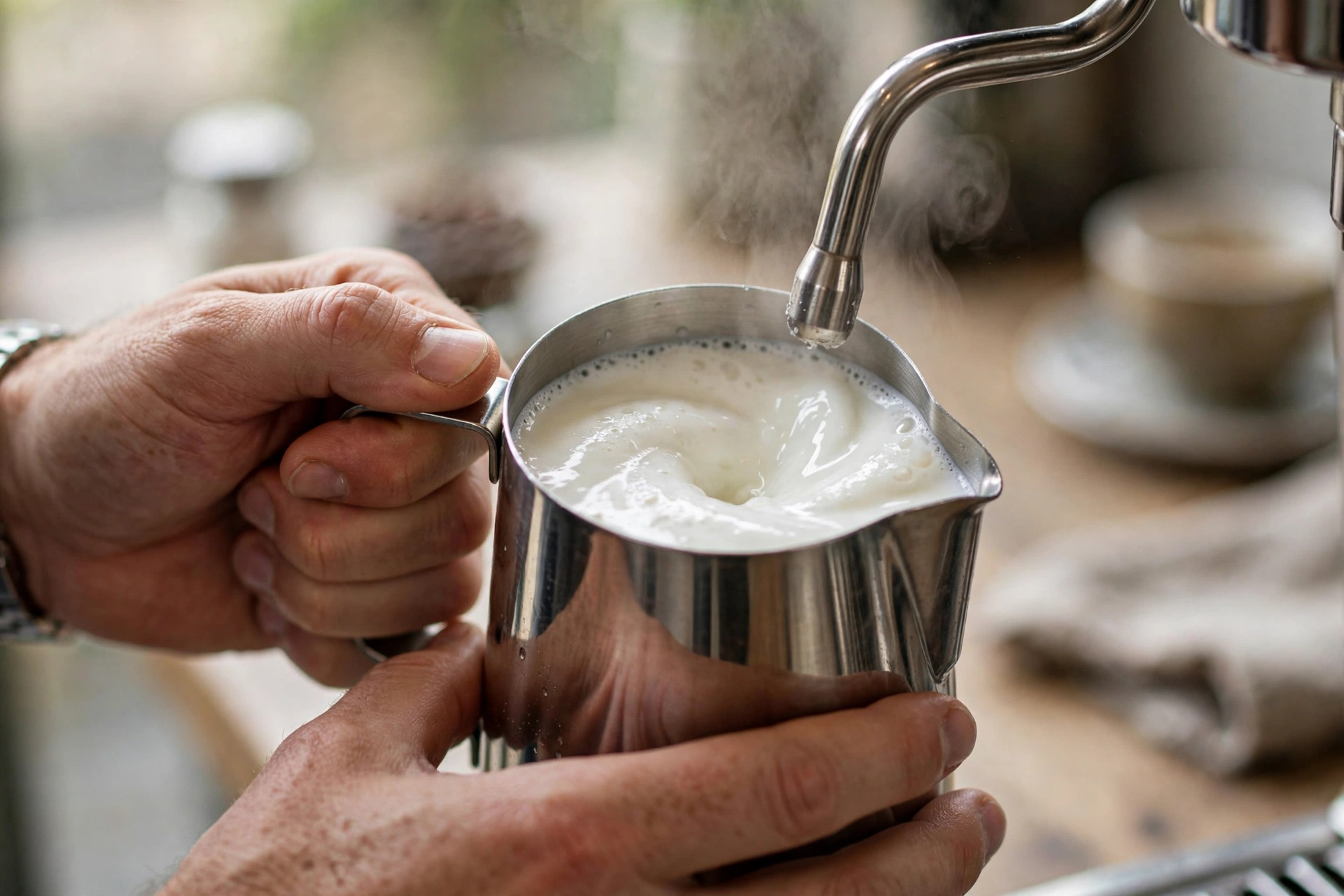
This is whole milk's home turf and it isn't close — though the gap has narrowed a lot. Whole milk's balance of protein and fat makes it the easiest milk to steam into glossy, paint-like microfoam. It's forgiving of imperfect technique, holds latte art beautifully, and behaves the same way every single time, jug after jug.
Oat milk can absolutely produce great microfoam, but there's a catch: it has to be a barista edition. Standard supermarket oat milk will split, go thin and bubbly, or curdle when it hits hot, acidic espresso — it's genuinely unpleasant. Barista-formulated oat milks (the ones engineered with extra fat and stabilizers for coffee) steam remarkably well, pour decent latte art, and taste creamy. They're just more temperature-sensitive than dairy and less forgiving if your technique is sloppy.
Nutrition at a Glance
Per roughly a latte's worth of milk, whole milk runs about 130 calories with 7g of fat (4.5g saturated) and 6.6g of protein. Oat milk (barista edition) is close on calories at around 120, but with only 3g of fat (0.4g saturated) and 2g of protein. So oat milk wins clearly on saturated fat — meaningful if you're watching cholesterol — while whole milk gives you more protein and naturally occurring calcium without fortification. Sugar-wise they're comparable; whole milk's sugar is all natural lactose, while some oat milks have added sugars, so check the label.
Oat Milk vs Regular Milk Latte: The Full Comparison
| Whole Milk | Oat Milk (Barista Edition) | |
|---|---|---|
| Taste in a latte | Rich, creamy, neutral — coffee leads | Naturally sweet, silky, distinct oaty note |
| Steaming ease | Excellent — forgiving, consistent | Very good — but temperature-sensitive |
| Microfoam & latte art | The gold standard | Close behind with the right product |
| Calories (per latte) | ~130 | ~120 |
| Saturated fat | 4.5g | 0.4g |
| Protein | 6.6g | 2g |
| Dairy-free / vegan | No | Yes |
| Lactose | Yes | None |
| Best espresso pairing | Everything, especially bright single origins | Chocolatey, nutty, medium-dark roasts |
Our Verdict: Whole Milk by a Nose
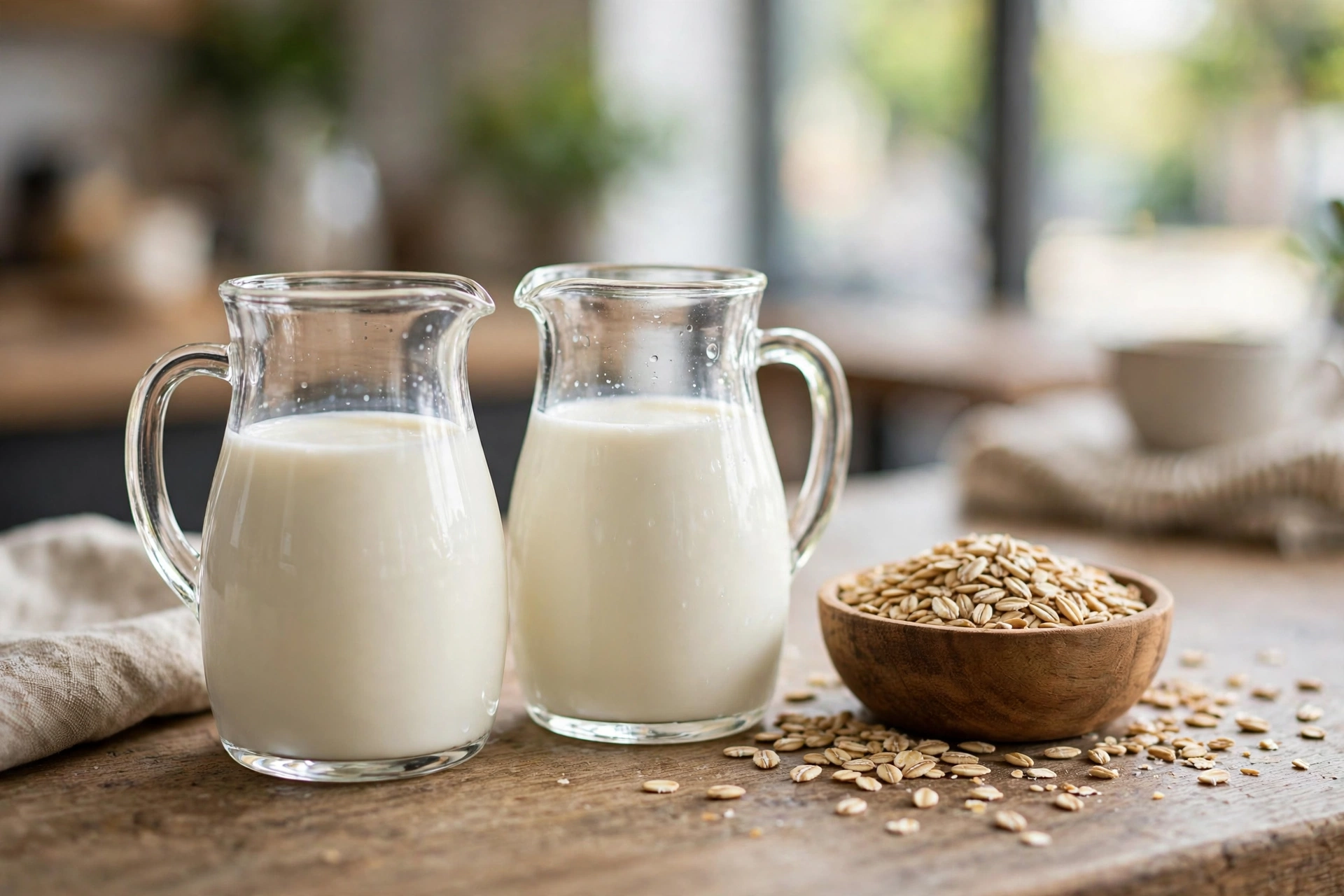
We'll be straight with you: if you can drink dairy, whole milk still makes the better latte. Not by a mile — oat milk has closed the gap to a genuinely small margin — but whole milk's foam is more reliable, its flavor lets the espresso shine, and it never has an off day. For a cappuccino or anything where foam structure is the whole point, it's not even a debate.
But here's the thing: oat milk is the best alternative milk ever made for coffee, full stop. It beat soy, it buried almond, and in a flavored latte — vanilla, caramel, our cream-top drinks — you'd be hard-pressed to notice the swap. If you're dairy-free, lactose-sensitive, vegan, or just prefer it, you're not settling. You're drinking one of the two best latte milks on earth.
We pour both, all day, at Community Goods — a proper barista-edition oat milk and fresh whole milk, steamed the same careful way. Come to Melrose Ave in West Hollywood or Edinburgh Ave in Hollywood and order your usual with the other milk for once. You might surprise yourself.
Quick Questions
Does oat milk curdle in coffee? Standard oat milk can split in hot, acidic espresso. Barista-edition oat milk is formulated to prevent this — always use the barista version for hot drinks.
Which milk is healthier in a latte? Oat milk is much lower in saturated fat; whole milk has more protein and no additives. Neither is a health food or a villain — pick based on your dietary needs.
Can you make latte art with oat milk? Yes, with a barista-edition oat milk and good technique. It's slightly less forgiving than whole milk, but a skilled barista can pour a clean rosetta with it.