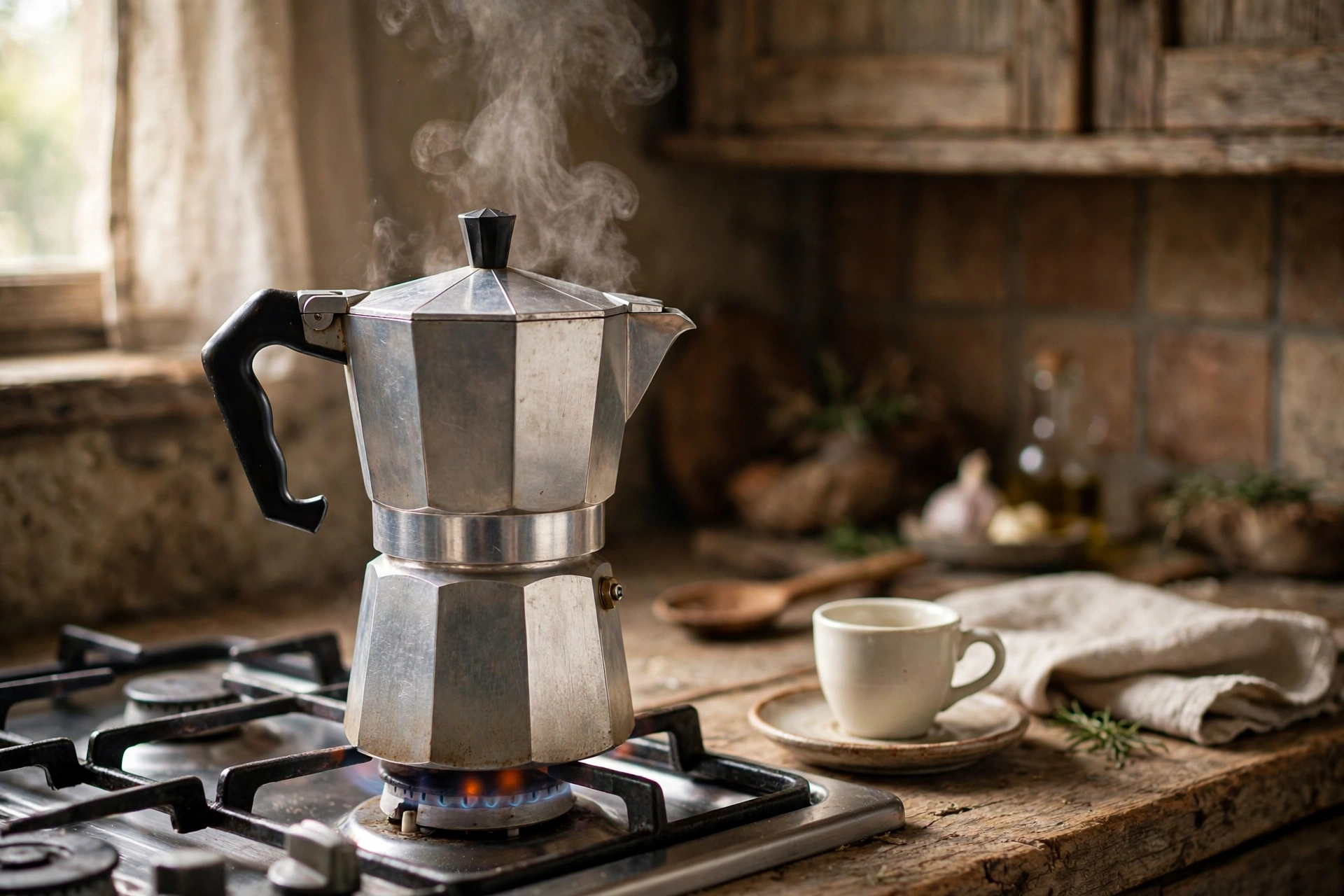
Moka Pot vs Espresso Machine for Home Lattes
If your goal is a proper latte at home — strong coffee base, steamed milk, the whole café ritual — you'll eventually face the moka pot vs espresso machine question. But they make fundamentally different coffee, demand fundamentally different budgets, and suit fundamentally different mornings. We've made lattes both ways (the moka pot was our gateway drug too), so here's the honest breakdown.
The Core Difference: Pressure
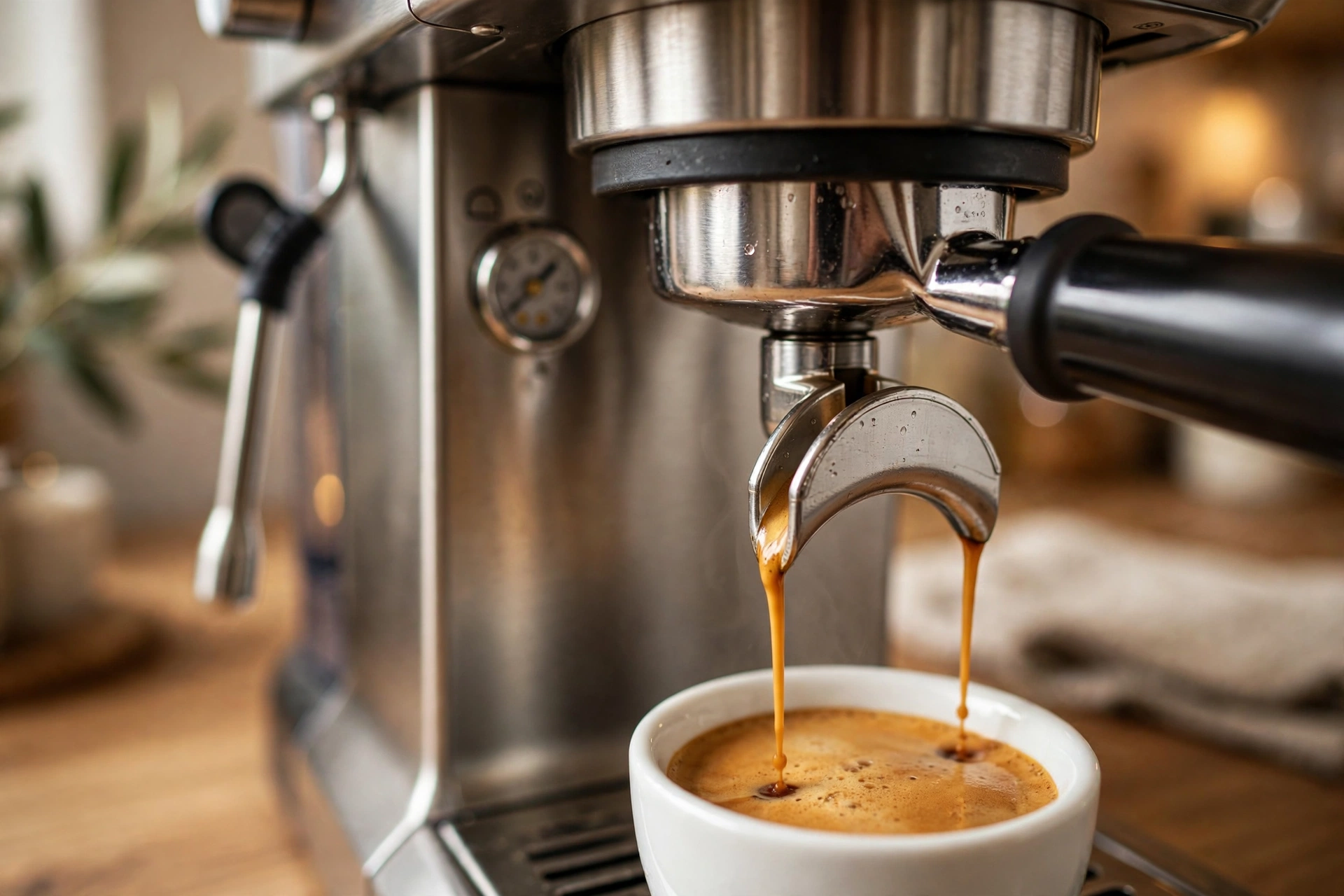
Everything else flows from this. An espresso machine uses a pump to force hot water through finely ground coffee at around 9 bars of pressure. A moka pot uses steam pressure — roughly 1 to 2 bars — to push water up through the grounds. That gap is why a moka pot makes strong, concentrated coffee but not technically espresso: true espresso's syrupy body and signature crema only happen at high pressure. Moka coffee lands somewhere between drip and espresso — bold, punchy, a little heavier than filter coffee, but without crema.
Moka Pot vs Espresso Machine: How They Actually Compare
Flavor in milk. Here's the part most comparisons gloss over: an espresso shot cuts through milk. The high-pressure extraction pulls out compounds that keep the coffee present and balanced in a latte. Moka pot coffee, bold as it is black, tends to get a little lost in milk — your "latte" drifts toward a strong café au lait. Still delicious, but coffee-forward drinkers notice the difference.
Cost. A good moka pot runs $25–50 and lasts decades. A worthwhile espresso machine starts around $200 for an entry-level pump model and climbs past $1,000 fast — and that's before a grinder, which matters more than the machine itself. The single most common mistake in this category is buying a sub-$100 "espresso machine" that's really a steam toy; a quality moka pot will outperform it every time.
Counter space and maintenance. A moka pot lives in a cabinet. Rinse it with water (never soap — it strips the seasoned patina), replace the gasket once a year, done. An espresso machine is a countertop appliance with a descaling routine, backflushing, and parts to maintain. If your kitchen is small or your patience is finite, this matters more than you think.
Ritual and speed. A moka pot takes 5–7 minutes of pleasant, meditative stovetop time — fill, assemble, wait for the gurgle. An espresso machine pulls a shot in under 30 seconds once it's heated, but there's dialing in, tamping, and cleanup around every shot. Moka mornings feel slower in a good way; espresso mornings feel faster in a good way.
Grind. Different tools, different grinds: espresso needs a very fine, consistent grind; a moka pot wants medium-fine (think table salt). Use espresso-fine coffee in a moka pot and you'll choke it — bitter, sputtering, possibly a safety-valve situation. Never tamp moka grounds; just level them and let the steam do the work.
So Which Should You Buy?
Get a moka pot if: you want a simple daily ritual, you mostly drink your coffee strong and black or with a splash of milk, your budget is under $50, or you just want to find out whether home brewing is even your thing before investing. It's the lowest-risk entry into serious coffee, and honestly, a well-made moka brew is one of life's great pleasures.
Get an espresso machine if: lattes, cappuccinos, and flat whites are the actual goal — the machine is the only way to get a true espresso base with crema that stands up to milk. Accept the cost, the counter space, and the learning curve going in.
The upgrade path we actually recommend: start with the moka pot. Learn what fresh, well-brewed coffee tastes like, figure out your palate, and if you find yourself craving real lattes six months later, you'll buy the espresso machine with confidence instead of buyer's remorse.
What to Buy: Our Picks
Bialetti Moka Express — the gold standard moka pot. The octagonal classic has barely changed in 90 years because it works. Aluminum heats fast and brews consistently; it just needs hand-washing and won't work on induction. If you have a gas or electric coil stove, this is the one.
Bialetti Venus — best moka pot for induction. Same Bialetti reliability in stainless steel, which means it works on every stovetop including induction, tolerates the dishwasher, and resists corrosion. Slightly slower to heat, slightly pricier — worth it if your stove demands it.
GROSCHE Milano — best budget moka pot. A genuine contender that doesn't feel like a compromise, for a few dollars less than the Bialetti. If the price gap matters to you, you won't be punished for choosing it.
An entry-level pump espresso machine (like De'Longhi's classic line) — best first espresso machine. When you're ready for real espresso, start here: a proper 15-bar pump (regulated down to 9 at the group head), a real portafilter, and a steam wand for milk. Honest take: budget for a decent grinder too — a $200 machine with a good grinder beats a $600 machine with pre-ground coffee every single time. And skip anything under $100 calling itself an espresso machine; that's a moka pot with extra steps.

Quick Answers
Can you make lattes with a moka pot? Absolutely — the strong, concentrated brew is an excellent milk-drink base. You'll just need a separate milk frother, since there's no steam wand.
Does a moka pot make real espresso? Not technically — 1–2 bars vs. the 9 bars espresso requires. It makes "stovetop espresso": strong and concentrated, but no crema and a different texture.
Is a cheap espresso machine better than a moka pot? Usually not. A well-made moka pot is more durable and more consistent than a flimsy low-pressure electric machine. Cheap out on the brewer or don't — there's no middle ground that wins.
Whichever side you land on, the best brewer is the one you'll actually use every morning. And on the mornings you'd rather not — we'll be pulling real shots at our Melrose Ave shop in West Hollywood and our Edinburgh Ave spot in Hollywood.