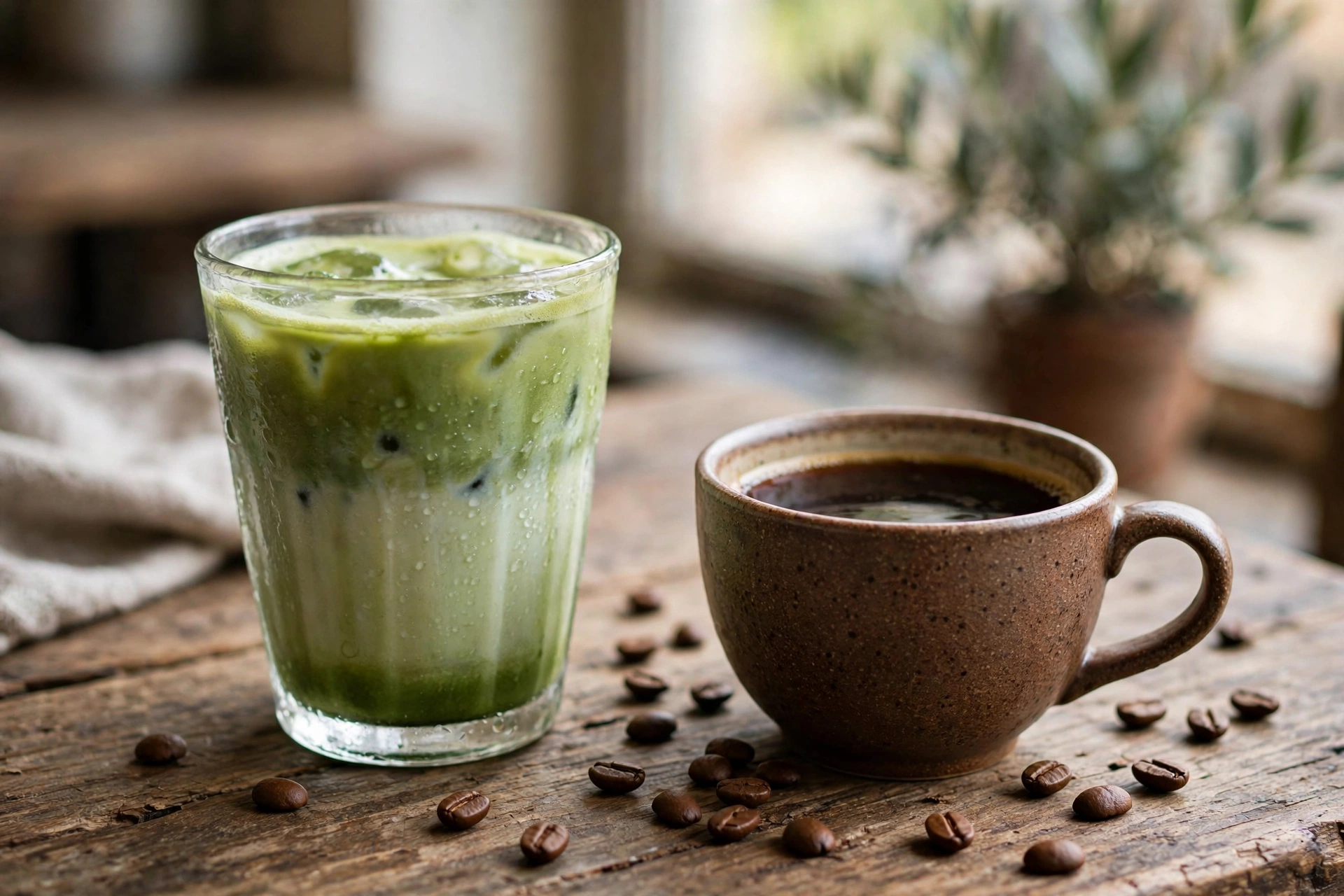
Matcha vs Coffee Caffeine: How Much Is in Each?
Matcha vs coffee caffeine: how much is in each? A standard matcha serving (about 2 grams of powder) has roughly 35–70 mg, an 8-ounce brewed coffee has about 95 mg, and a single espresso shot has around 63 mg. So cup for cup, coffee usually wins — but the ranges overlap, and how each drink feels is a different story.
That's the short version. The longer version matters more — caffeine numbers without context are how people end up surprised:
Matcha vs coffee caffeine: the numbers
| Drink | Typical serving | Approx. caffeine |
|---|---|---|
| Matcha (whisked) | 2 g powder (1 tsp) | 35–70 mg |
| Matcha latte (café) | 2–4 g powder | 70–140 mg |
| Brewed drip coffee | 8 oz | ~95 mg |
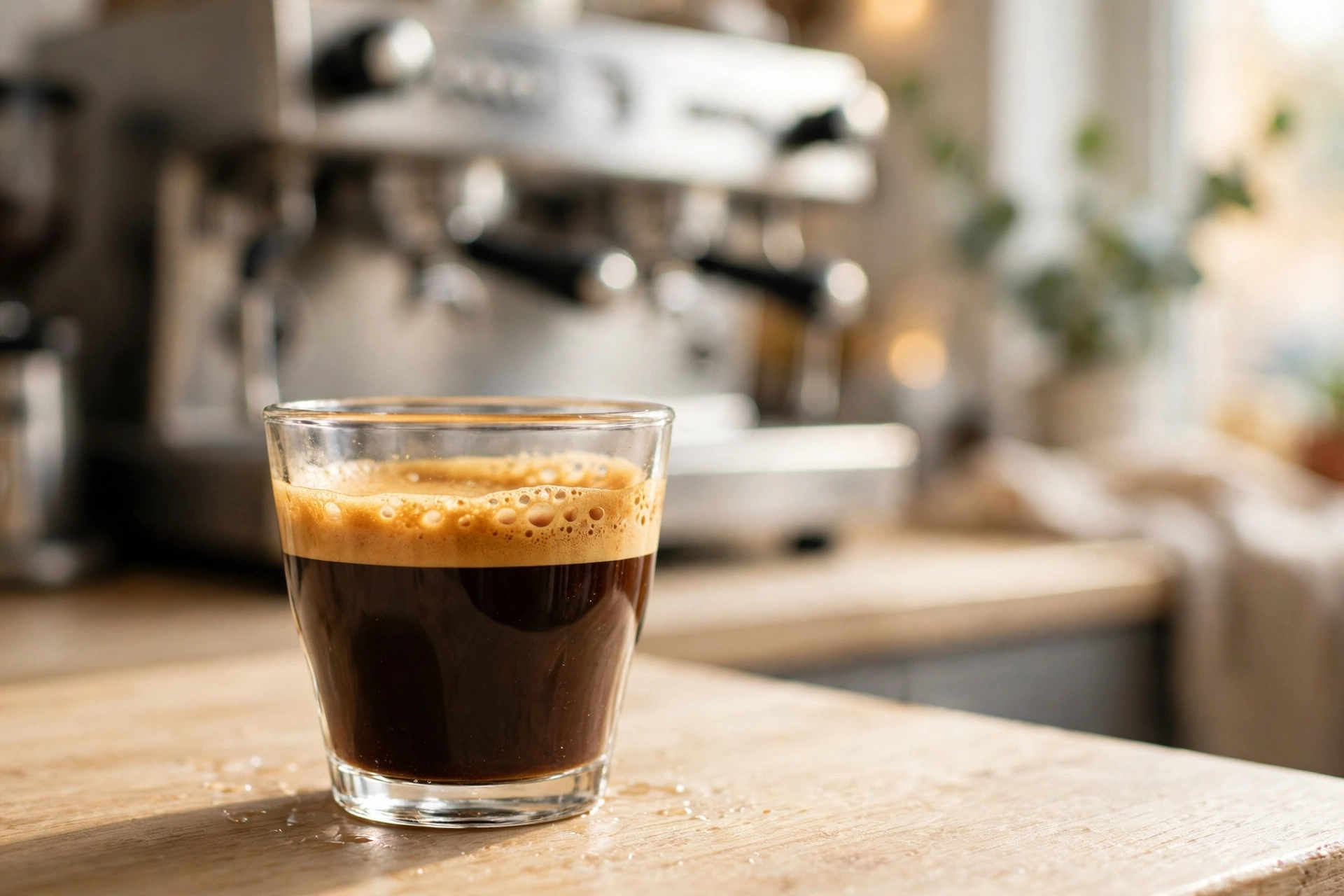
| Espresso | 1 shot (1 oz) | ~63 mg |
| Cold brew | 12–16 oz | 150–300+ mg |
Matcha's caffeine lives in the powder — roughly 19–44 mg per gram — so your dose scales with how much you use. Double the matcha, double the caffeine. Coffee is messier: bean variety, roast, grind, brew time, and especially serving size all move the number. A 12-ounce café drip isn't one 8-ounce serving, and a 16-ounce cold brew can quietly carry two to three times the caffeine of a standard cup.
So the honest answer to "which has more" is: it depends on the cup in front of you. A strong double-scoop matcha latte can land next to a mild drip; a big cold brew out-caffeinates almost any matcha. Preparation is usually a bigger variable than which plant you picked.
Why the same milligrams feel completely different
Here's where it gets interesting, because anyone who's tried both knows a 70 mg matcha and a 70 mg espresso do not feel the same. Matcha contains L-theanine, an amino acid associated with calm alertness. The honest version: no human study has proven L-theanine slows caffeine absorption, but trials pairing caffeine with L-theanine have shown modest attention benefits — and the common report is real. Most drinkers describe a slower, steadier climb into focus instead of a spike. Part of that may simply be the smaller dose: 70 mg of matcha is often less caffeine than the coffee you'd compare it to.
Coffee's caffeine arrives faster and hits harder — it blocks adenosine receptors quickly, which is why coffee feels like flipping a switch. The trade-off: a fast peak, then a fade a few hours later that sends plenty of people back for cup number two. For sensitive folks, that peak can bring jitters, a racing heart, or buzzy anxiety.
Neither is objectively better — they're different tools. But the calm-focus experience is why matcha people talk about their drink like a different substance: the stimulation genuinely feels different, even if science can't fully explain why yet.
How to control your caffeine dose (both drinks)
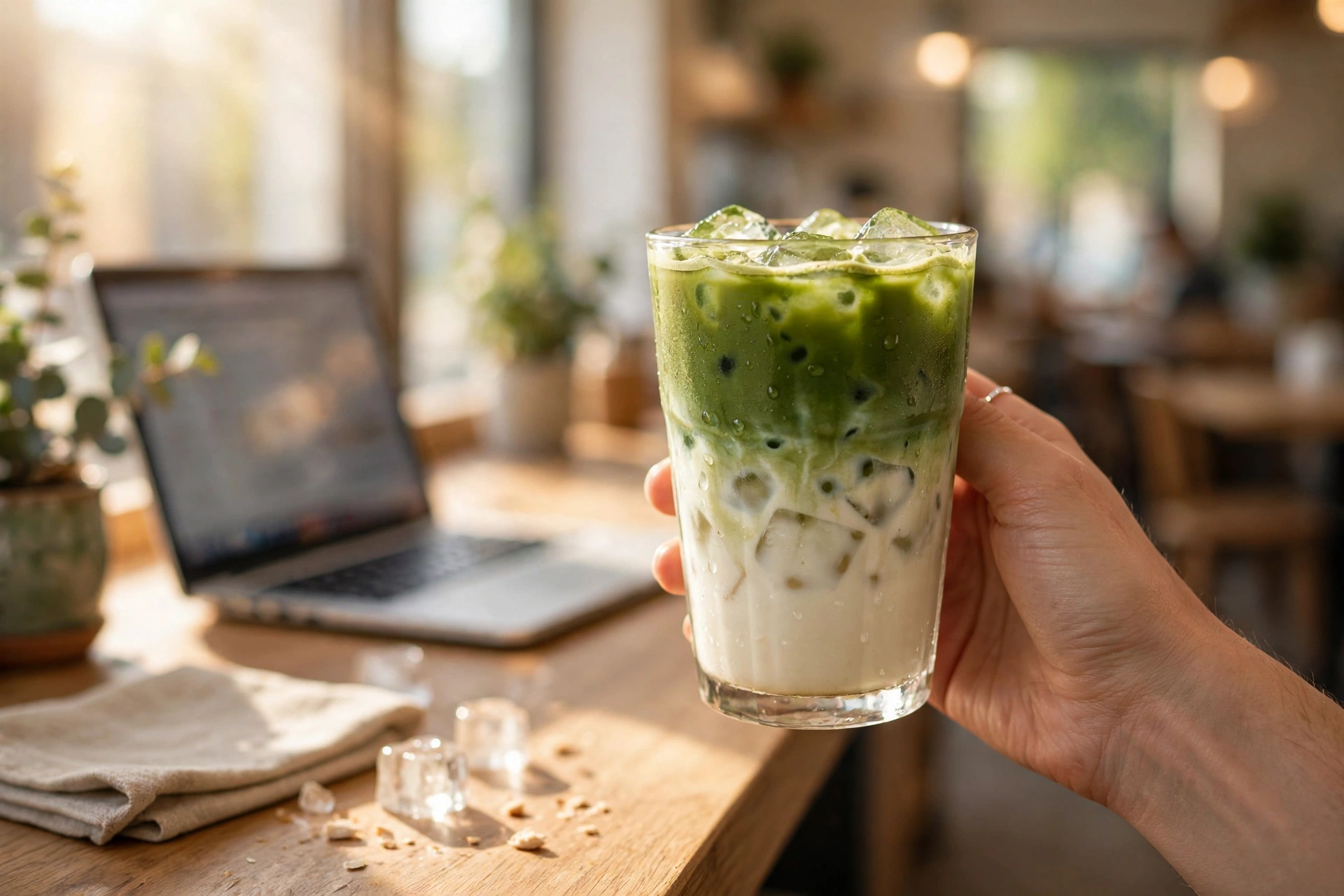
One underrated matcha advantage: precision. The caffeine is in the powder and you measure it by the gram, so you can tune your dose almost exactly — one gram for a gentle morning, three or four for more presence. A café matcha latte with two scoops lands around 70–140 mg: squarely in coffee territory, delivered more smoothly.
Coffee dosing is fuzzier. "A cup of coffee" at a café can mean anywhere from 100 mg to well over 300 mg. Practical moves if you're sensitive: order a small, ask how many shots are in your drink, and remember cold brew is the menu's heavyweight — not the 4 p.m. order unless you enjoy being awake at midnight.
One more thing: milk, syrup, and ice change calories and flavor, not caffeine. A 16-ounce caramel latte and a 16-ounce black coffee with the same shots have identical caffeine — one just tastes like dessert.
So which should you pick?
Most caffeine per sip and fastest jolt — pre-workout, red-eye recovery, deadline sprint — coffee wins. Steady, calm, long-lasting focus — deep work, studying, creative afternoons — matcha is the better vehicle, even at a lower dose. Honestly, a lot of us do both: coffee to launch the morning, matcha to sustain the afternoon. No rule says you have to pick a team.
Caffeine questions, answered
Does matcha have more caffeine than coffee? Usually not, cup for cup — a standard 2-gram serving (35–70 mg) sits below an 8-ounce brewed coffee (~95 mg). But a strong matcha latte can approach a mild coffee.
Espresso vs matcha, shot for shot? A single espresso shot (63 mg) roughly equals a standard matcha serving. A double shot (120+ mg) pulls ahead.
Will matcha keep me up at night? It can. Caffeine is caffeine — matcha's smoother delivery doesn't leave your system faster. Treat an afternoon matcha like an afternoon coffee.
Is matcha's caffeine "healthier"? The molecule is identical. What differs is the experience: a typically smaller dose, plus L-theanine, which most drinkers find makes it feel calmer and more sustained. The "slow absorption" mechanism itself isn't proven — but the calmer experience is widely reported.
Still deciding? Feel the difference yourself. Come by our Melrose Ave shop in West Hollywood or our Edinburgh Ave location in Hollywood — matcha latte one day, espresso drink the next — and see which energy your afternoons prefer.