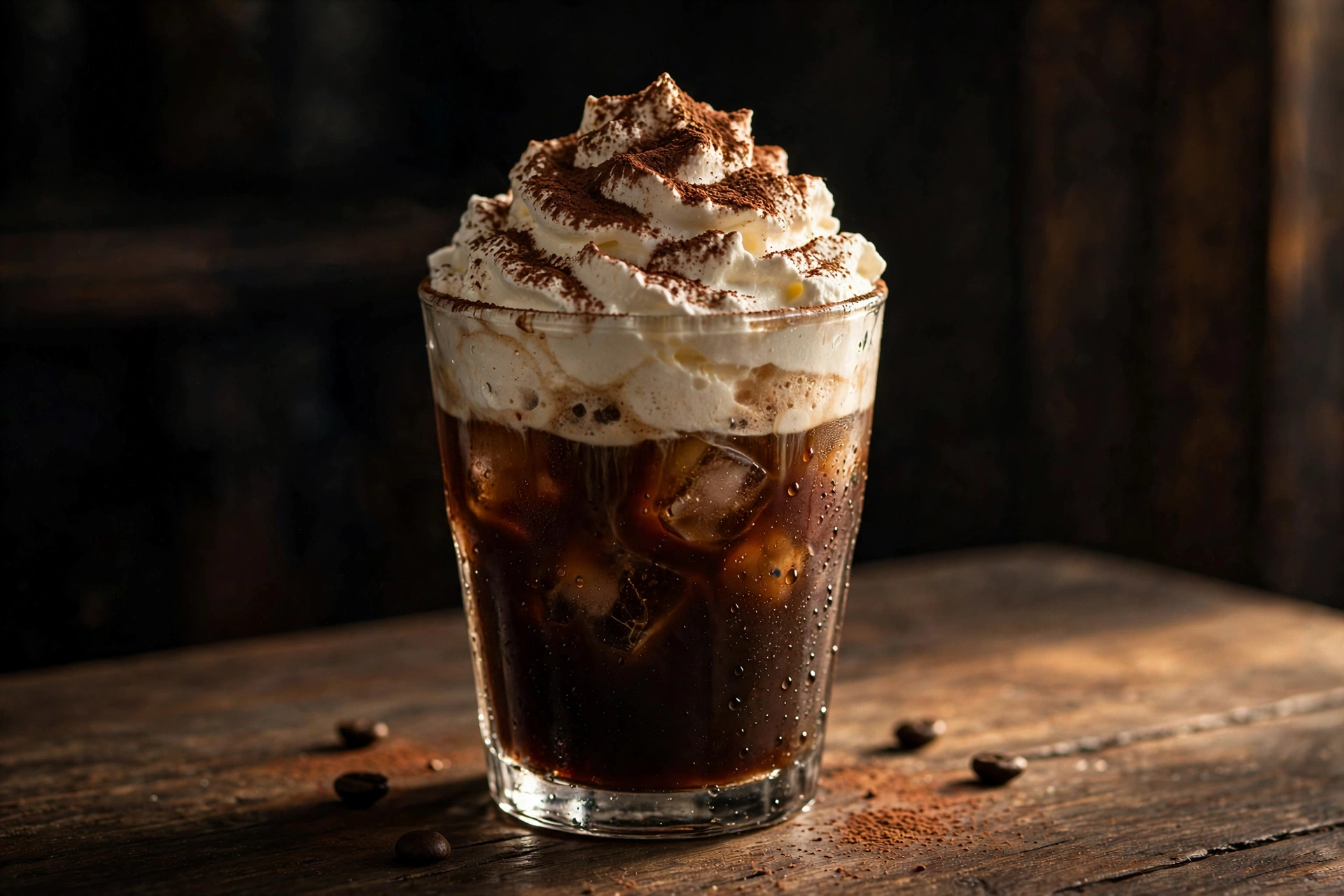
It starts with a pour you've seen a hundred times on your feed: thick cream settling in a slow, deliberate layer over dark iced espresso, then a flurry of cocoa through a tiny sieve. The drink is the einspänner, and it's become the signature order of Korean coffee culture — which is funny, because it isn't Korean at all.
A Viennese Drink With a Hundred-Year Head Start
The einspänner comes from Vienna, where the name refers to a carriage drawn by a single horse. The story goes that the fiaker — carriage drivers — waiting for fares outside the opera houses in the late 1800s drank strong black coffee capped with whipped cream: the cream kept the coffee warm, and the tall handled glass let them drink one-handed while the other held the reins. The cardinal rule, then and now: you never stir it. You sip the coffee through the cream, so bitter and sweet arrive together in every sip.
How Korea Fell for Coffee in the First Place
Korean coffee culture didn't start with specialty cafés. It started with the dabang — the old coffee houses of the post-liberation decades, shaped by Japanese kissaten culture — and then with instant coffee. When Dongsuh Foods launched the first coffee-mix packets in 1976 (instant coffee, sugar, and creamer in one stick), it changed the country: sweet, milky coffee became the national default almost overnight, and a generation grew up with sweet-and-creamy as the taste of coffee itself. Korea learned to love coffee sweet and creamy before it ever learned to love it black — and that preference never left.
The modern café boom layered on top of that foundation. Seoul's cafés became genuine social infrastructure: study cafés where students camp for hours, date spots designed down to the lighting, neighborhood living rooms. And Korean café culture developed its own visual grammar along the way — drinks served in tall clear glasses, because a drink that doesn't look spectacular in cross-section barely exists.
2016: The Einspänner Goes Korean
Around 2016, riding a retro boom, Korean cafés picked up the einspänner and rebuilt it. The hot coffee became iced espresso, often over cold milk. The modest cap of plain cream became a dramatic, lightly sweetened layer thick enough to hold a cocoa dusting. Franchise chains ran with it — big Korean coffee brands put it on menus nationwide, sold iced and cheap enough to become an everyday habit.
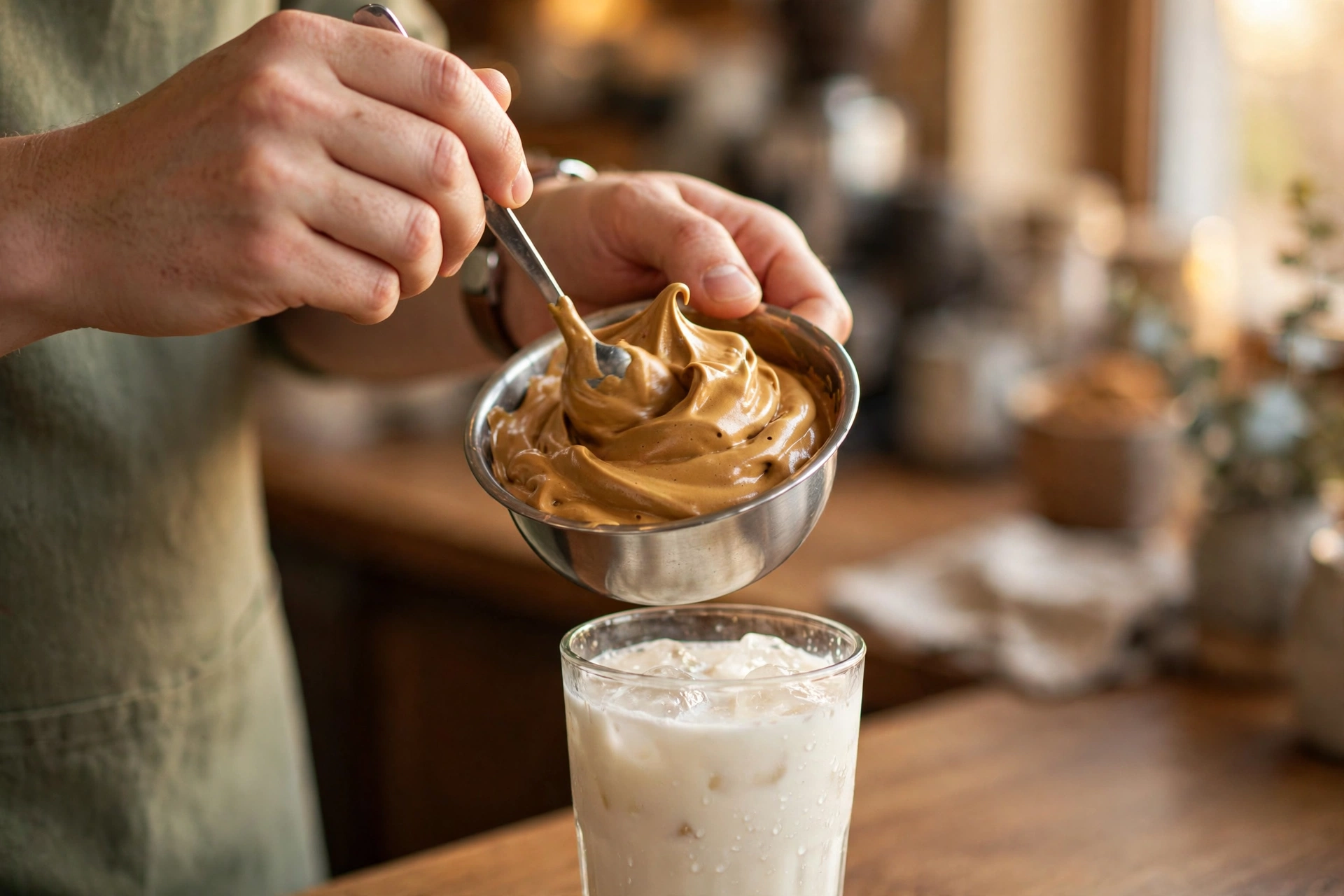
Then came the variations that made it unmistakably Korean: vanilla einspänner as the gateway, then matcha, black sesame, Earl Grey, and salted caramel creams — each tinting the top layer a different pastel shade. Around the same time, dalgona — whipped instant coffee spooned over iced milk — was simmering as a homecafé trend before exploding globally in 2020. The throughline is consistent: in Korean coffee culture, the top of the drink is a canvas.
The LA Chapter
Los Angeles got its cream-top education from Korean roasters. Around 2016, Maru Coffee started serving a long black topped with sweet cream at its new Los Feliz shop — the Creamtop. It launched a citywide obsession and arguably kicked off LA's whole cream-top era. 85°C Bakery Cafe had been doing sea-salt whipped cream on drinks in the U.S. since 2008, Little Fluffy Head Cafe brought cheese foam to downtown LA in 2017, and HeyTea's Beverly Hills flagship followed.
And then, interestingly, came the backlash. Maru later discontinued its $3 cream-top add-on (keeping the signature Creamtop), saying the topping could overpower the coffee itself — and Mandarin Coffee Stand in Pasadena followed suit. It's a real debate in the city's coffee scene: hospitality and indulgence on one side, coffee purism on the other. Our take? A cream top designed for the drink — not slapped onto everything — is a feature, not a mask. Intention is the difference between a gimmick and a signature.
Why Korean Coffee Culture Stuck in LA
The deeper reason Korean coffee culture took over LA isn't really about cream. It's about what cafés are for. In Korea, the café is a third place in the truest sense — where you study, date, celebrate, decompress. LA's Korean-influenced shops imported that philosophy along with the drinks: spaces designed for lingering, menus built for sharing, pastries (salt bread, croffles, soboro) that turn a coffee run into a hangout. The cream top was just the most photogenic ambassador.
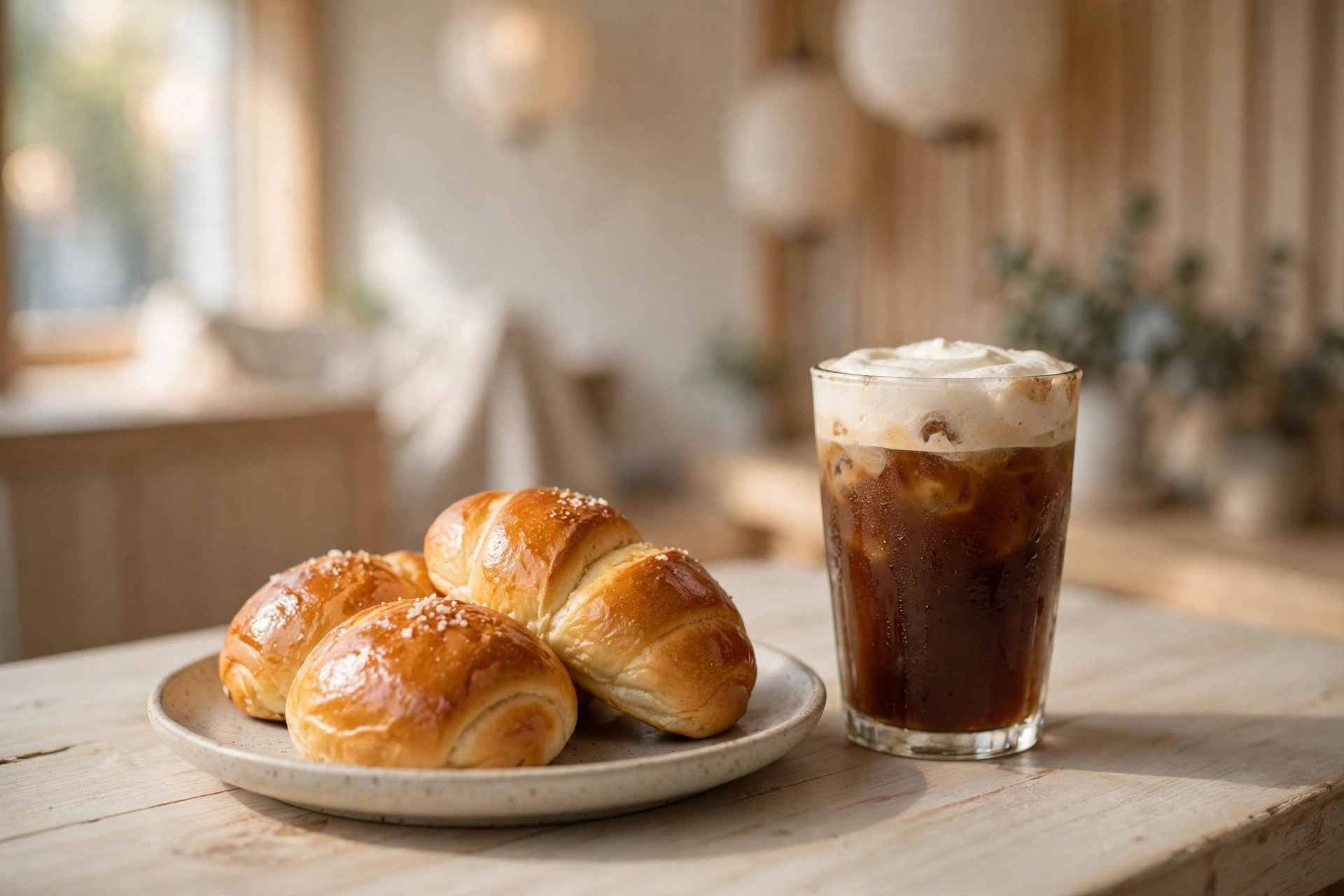
That's the tradition we're part of at Community Goods. Our head barista is Korean, and our most famous drink — the Matcha Einspänner — is Korean café culture filtered through our own obsession with ceremonial-grade matcha. We didn't invent the cream top; we just take it as seriously as Seoul does.
Quick questions
Is the einspänner actually Korean? No — it's Viennese, more than a century old. Korean cafés adopted it around 2016, iced it, sweetened the cream, and made it their own. LA got it from Korean roasters like Maru.
What is dalgona coffee? Whipped instant coffee, sugar, and water beaten into a caramel-colored foam and spooned over iced milk. A Korean homecafé trend that went global in 2020.
Why don't you stir an einspänner? The whole design is layered: bitter coffee below, sweet cream above. Stirring collapses it into sweet milk. Sip through the cream instead — that's the drink.
Taste the tradition
Come try our Matcha Einspänner — ceremonial-grade matcha under a thick cream cap, the Korean café classic our way. Community Goods: 8687 Melrose Ave in West Hollywood or 710 N Edinburgh Ave in Hollywood.