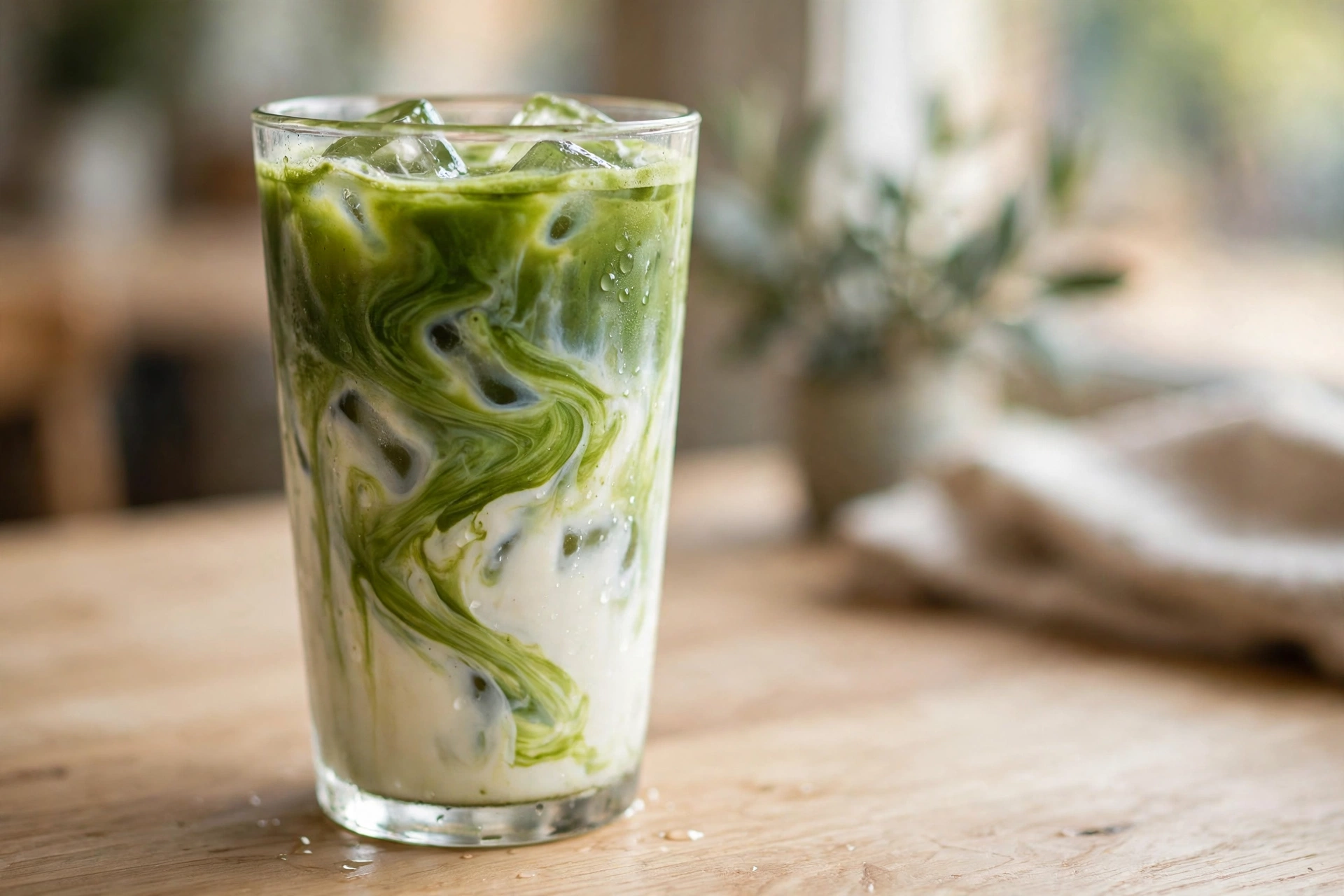
Iced Matcha Latte Recipe: How to Make It at Home
An iced matcha latte divides people into two camps: the ones who make a smooth, vibrant green glass that looks like it came from a Kyoto café, and people staring at a glass of watery milk with sad green sediment at the bottom. There's no secret separating them. It comes down to three small things — sifting, water temperature, and how you whisk — and this iced matcha latte recipe gets all three right, so you'll land in the first camp every time.
We make hundreds of these a week; the home version can be just as good.
The matcha matters more than anything else
Before the recipe: buy decent matcha. For a latte, you want a bright, vivid green powder that smells fresh and grassy — that color is the best proxy for quality you'll get without tasting it. "Ceremonial grade" is the label to look for; it's stone-ground from younger tea leaves and tastes naturally sweeter and less bitter. Culinary grade works, but you'll taste the difference — it's duller in color and harsher, which is why it's fine for baking but underwhelming in a glass.
Storage matters too. Matcha fades fast: light, heat, and air dull both the color and the flavor within weeks. Keep it sealed, keep it in the fridge, and use it within a month or two of opening. If your tin has been sitting on the counter since last summer, no technique will save it.
What you'll need
- 1 1/2 teaspoons (about 3g) ceremonial-grade matcha powder
- 1/4 cup (60ml) hot water, around 175°F (80°C) — steaming, not boiling
- 3/4 cup (180ml) cold milk of your choice
- 1 to 2 teaspoons sweetener of choice (optional — simple syrup, honey, or maple)
- 1 cup ice
Equipment: a fine-mesh strainer, a small bowl or wide mug, and a bamboo whisk (chasen) or handheld frother. A bamboo whisk is worth it if you drink matcha regularly — it breaks up clumps and builds foam in a way metal whisks can't match.
Iced matcha latte recipe: the steps
Step 1: Sift the matcha. Push the powder through the fine-mesh strainer into your bowl. This is the most skipped step and the biggest cause of clumps. Matcha is electrostatically clingy — the powder forms tiny pellets that whisking alone can't always break. Sifting takes fifteen seconds and fixes it.
Step 2: Add hot — not boiling — water. Pour the 175°F water over the sifted matcha. Boiling water is the other classic mistake: it scorches the tea into bitterness and dulls the color. If you don't have a thermometer, boil the kettle and let it sit for two to three minutes.
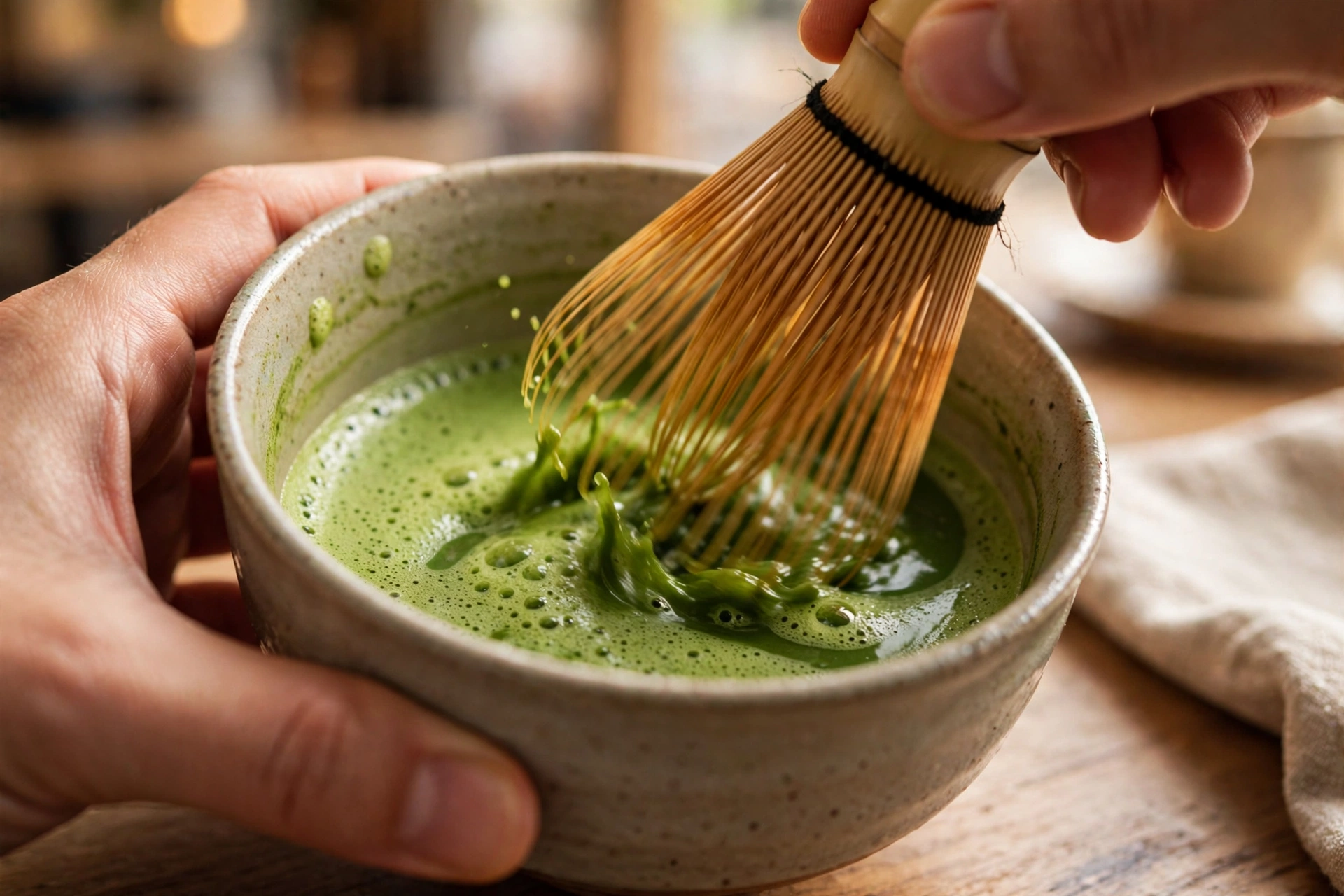
Step 3: Whisk in a W. Hold the whisk lightly and move it in a fast zigzag — a W or M pattern — for about 20 to 30 seconds. Don't stir in circles; circles just push the powder around. The zigzag smashes the particles against each other and whips air in, which is how you get that smooth, slightly frothy surface with tiny, even bubbles. When it looks glossy and uniform with no visible specks, you're done.
Step 4: Sweeten now, if you want it. Stir your sweetener into the warm matcha concentrate, where it dissolves instantly. Trying to dissolve honey into a finished iced drink is a losing battle.
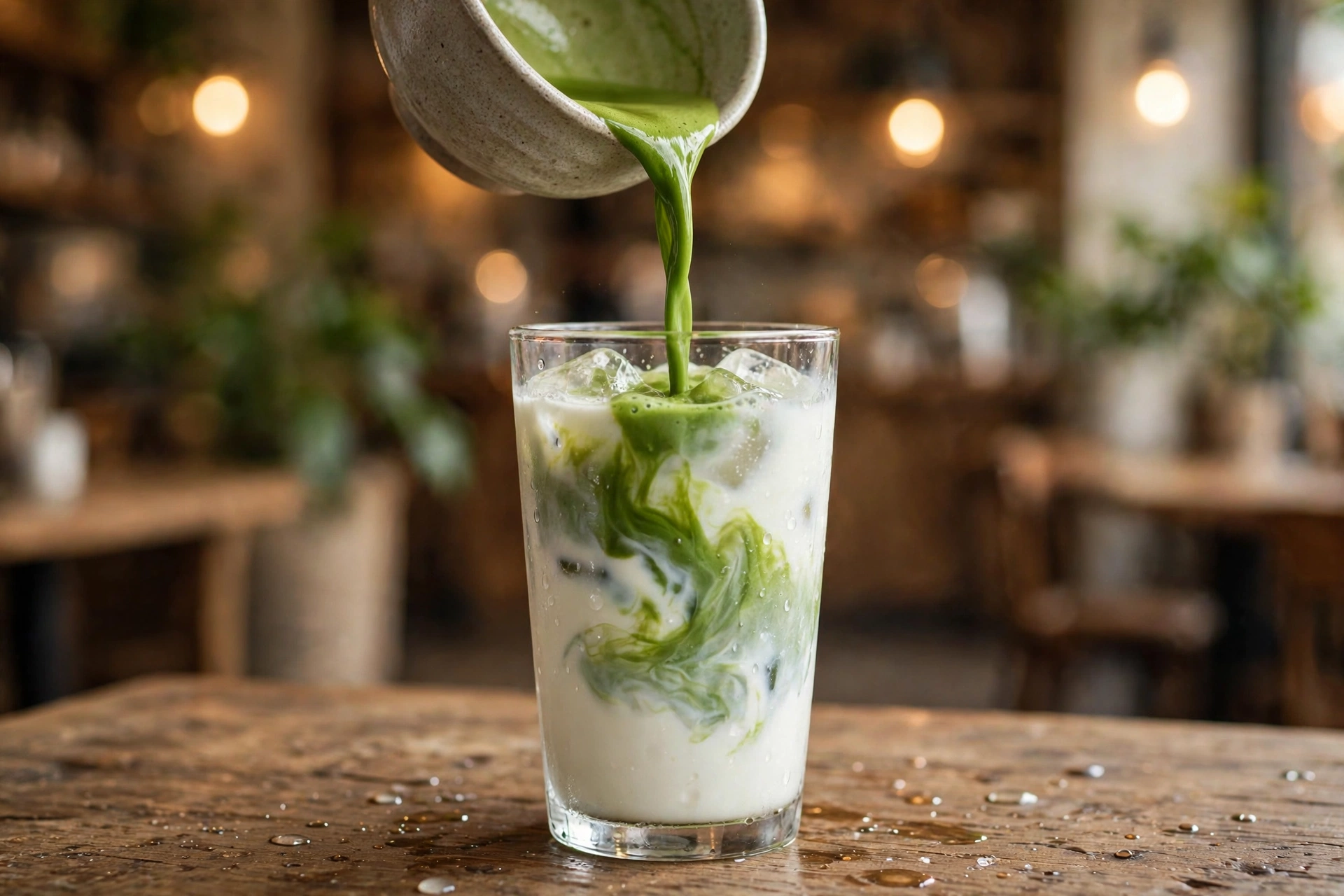
Step 5: Build the glass. Fill a tall glass with ice, pour in the cold milk, then pour the matcha slowly over the top. Pour gently and you get those beautiful marbled layers — green swirling into white. It'll mix as you drink; give it a gentle stir before the first sip so you're not getting pure milk at the bottom and pure matcha at the top.
The milk question
Any milk works, but they don't work equally. Whole dairy milk gives the classic creamy result. Oat milk is the best plant option by a wide margin — its natural sweetness and body mimic dairy better than anything else, and barista-edition oat milk is even better. Almond milk is the thinnest choice; it'll taste fine but noticeably lighter. Soy sits in the middle with a slightly beany note that some people love with matcha and some don't.
A small trick from the café line: a tiny pinch of flaky salt in the milk rounds everything out — it makes the matcha taste sweeter and more vivid, the way salt does in caramel.
Getting the layers right
Those Instagram-worthy layers aren't an accident; they're physics. Matcha whisked with water is slightly denser than milk, so if you pour it slowly over the back of a spoon onto cold milk and ice, it sinks in ribbons instead of instantly blending. The key word is cold — warm matcha over cold milk mixes too fast. Make your concentrate, let it sit a minute while you build the glass, then pour slow.
A few things people ask us
Why is my matcha bitter? Usually one of three things: water too hot, cheap matcha, or too little powder for the milk. Fix the temperature first — 175°F is the ceiling, and going a little cooler (160°F) is fine for delicate grades.
Can I make it without a whisk? Yes. Sift the matcha into a jar with a little cold water, seal it, and shake hard for 30 seconds. You won't get the same fine foam, but you'll get a smooth, clump-free concentrate that works great in a latte.
How much caffeine is in it? Roughly 60 to 70mg per serving — about two-thirds of a cup of coffee — but the L-theanine in matcha smooths the delivery, so most people describe it as calm, steady energy rather than a spike.
If you'd rather have a pro make it, ours are whisked to order all day — find us on Melrose Ave in West Hollywood or on Edinburgh Ave in Hollywood.