
How to Make Iced Coffee That Doesn't Taste Watery
Everyone knows the disappointment: the first sip of homemade iced coffee is great, and by the last sip you're drinking vaguely coffee-flavored water. Learning how to make iced coffee that stays bold isn't about some secret barista trick — it's about understanding that ice is an ingredient, and planning for the dilution it brings.
Why iced coffee goes watery (the actual problem)
Here's what's happening in that glass. Regular hot coffee is brewed at a strength meant to be drunk hot. The moment you pour it over ice, two things work against you: the heat melts ice fast, dumping a lot of water in at once, and then the remaining cubes keep melting as you drink. Most methods lose 20 to 30 percent of their strength to dilution — which is exactly why café iced coffee tastes bolder. They brew for the ice. There are three honest ways to make iced coffee, and each handles the dilution problem differently.
Method 1: The flash chill (fastest, brightest)
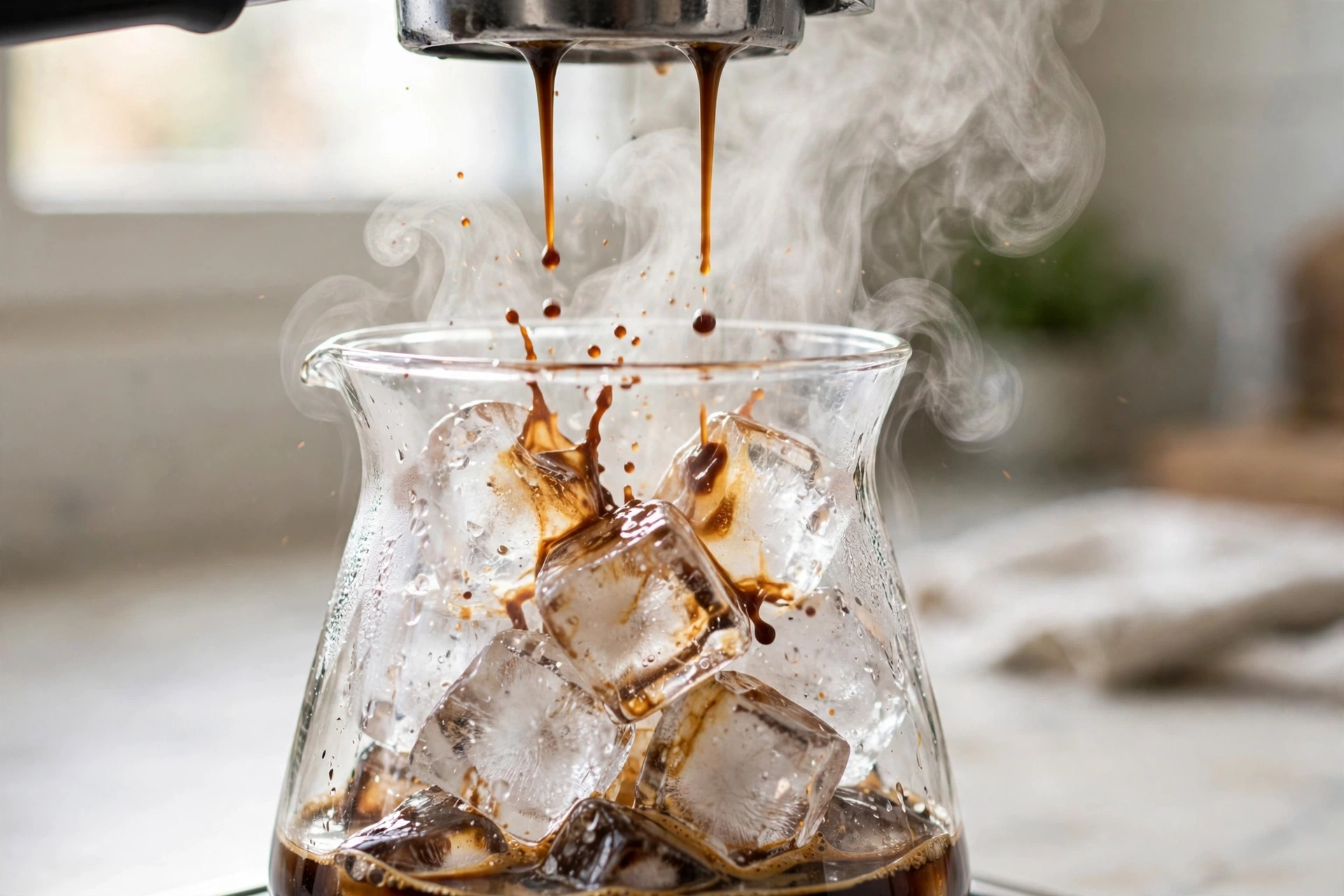
This is the pour-over lover's method and our pick for the best-tasting cup in under five minutes: brew hot coffee directly over ice, but brew it strong — about double strength — so the melting ice brings it down to normal instead of below it.
What to do: Fill a heat-safe pitcher about halfway with ice. Brew with roughly half the water you'd normally use (for a pour-over, a 1:8 ratio instead of 1:15 or 1:16). Brew directly onto the ice, swirl to chill, and pour into a fresh glass of ice.
The result is the brightest, most aromatic iced coffee of the three methods — all the volatile aromatics that make hot coffee smell amazing get locked in instead of drifting off while a pot cools on the counter. The trade-off is that it's a single-serving method. But if you already own a pour-over cone, this costs you nothing.
Method 2: Cold brew (easiest, smoothest)
Cold brew is the set-it-and-forget-it answer. Because it's brewed cold over 12 to 18 hours, there's no heat shock melting your ice all at once, and the concentrate is strong enough that dilution barely dents it. Make a batch on Sunday (we've got a full guide to how to make cold brew at home), keep it in the fridge, and your iced coffee all week is a 30-second pour.
The flavor profile is different from flash-chilled: smoother, lower in acidity, with a natural sweetness that hot-brewed coffee doesn't have. If your stomach is sensitive to acidic coffee, this is your method.
Method 3: Chill your hot brew (simplest, no new gear)
Brew your regular coffee about 1.5 times stronger than usual, then refrigerate it — don't pour it hot over ice. An hour in the fridge (or overnight in a sealed jar) gets you a cold, full-strength base. This is the lowest-effort upgrade: same brewer, same beans, just stronger and pre-chilled.
The catch is planning: coffee needs real time to cool, and it oxidizes as it sits — day-old brewed coffee tastes stale even when cold. Brew it in the evening for the next morning at the latest, and keep it sealed.
How to Make Iced Coffee That Never Goes Watery: Four Rules
Whichever method you choose, these are the habits that separate café-quality iced coffee from the sad desk-cup version:
1. Brew stronger than you think. This is the big one. Ice will dilute your drink — that's physics, not failure — so the brew has to start stronger than a hot cup. For drip or pour-over destined for ice, use 1.5 to 2 times your normal grounds. You can always dilute; you can't add strength back.
2. Use coffee ice cubes. Freeze leftover coffee (or cold brew) and use those cubes instead of water ice. As they melt, they release more coffee instead of water — this single habit fixes more watery iced coffee than anything else.
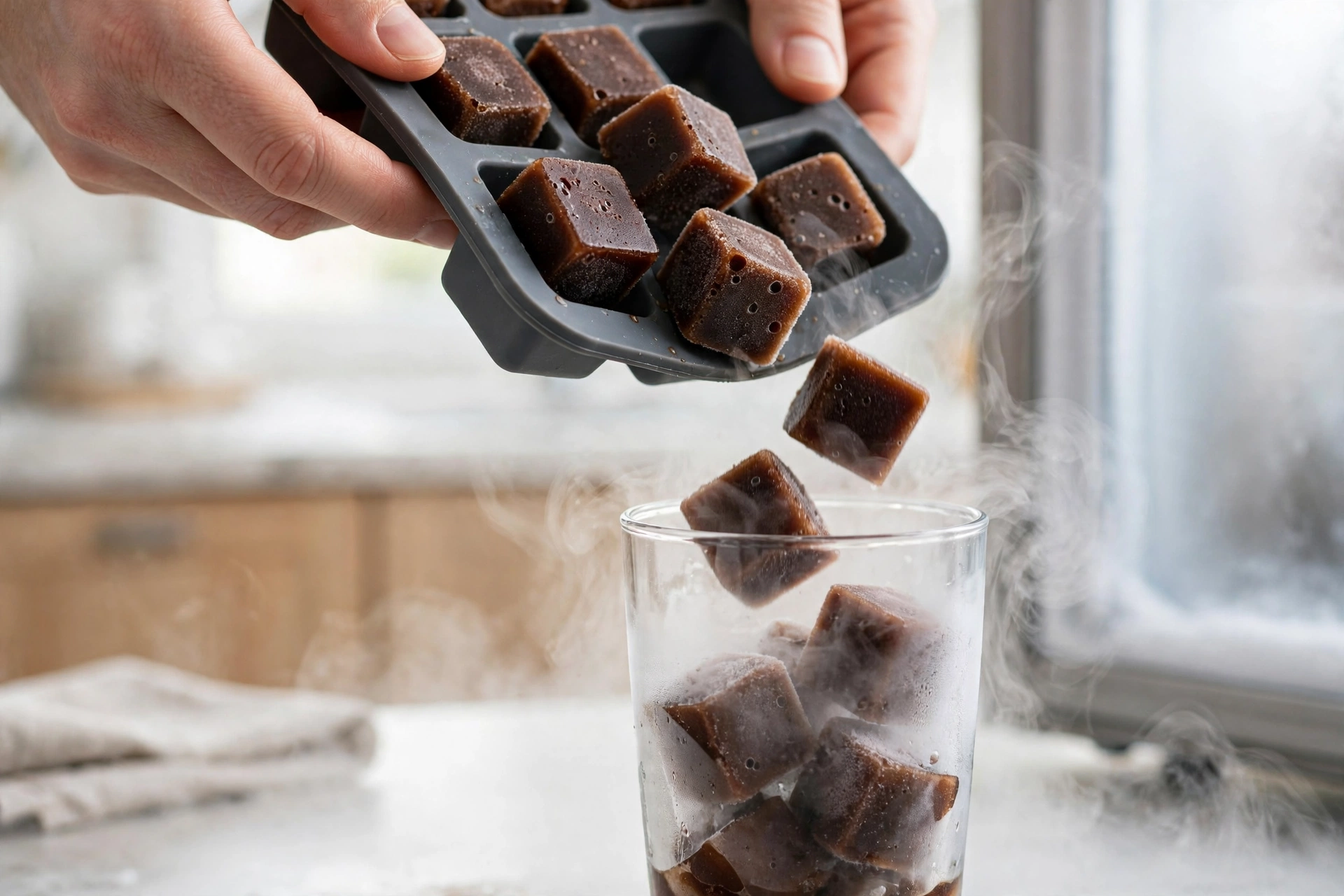
3. Chill before you ice. Never pour steaming coffee directly over ice unless you're flash-chilling with a double-strength brew designed for it. Even ten minutes on the counter takes the edge off; an hour in the fridge is better.
4. Use big cubes — and not too many. Small cubes and crushed ice melt fast because of their surface area. Large cubes melt slowly and chill efficiently. And don't overload the glass: a moderate handful chills fine, while a packed glass just adds dilution.
A few things worth knowing
Bean choice matters more for iced coffee than hot. Medium and dark roasts hold up better — their chocolate and caramel notes survive dilution, while delicate light roasts can taste thin and sour once cold.
On milk: add it after the coffee is cold. Cold coffee, cold milk, cold glass — everything cold is the whole philosophy. And if you like it sweet, make a simple syrup (equal parts sugar and hot water, stirred until clear, kept in the fridge) rather than spooning granulated sugar into a cold glass.
Quick questions
Why does my iced coffee taste bitter? Usually over-extraction — too fine a grind or too long a brew. Coarsen the grind slightly and don't over-steep.
How long does brewed coffee keep in the fridge? Three to five days sealed, though it's best in the first 48 hours.
Come taste the target
Once you've dialed in your home method, come benchmark it against ours — we've spent an unreasonable amount of time making sure our iced coffee stays bold to the last sip, even in August. Find us at Community Goods on Melrose Ave in West Hollywood or Edinburgh Ave in Hollywood. Bring your questions; we love talking ice strategy.