How to Order Like a Regular at a Specialty Coffee Shop
Everyone has a version of this story: you walk into a cool coffee shop, the menu board is full of words like einspänner and cortado, the line is moving fast, and suddenly you've forgotten how to order coffee — a thing you've done ten thousand times. Take a breath. Ordering at a specialty shop is genuinely easy once someone explains the logic, and nobody behind that counter is judging you. We've made thousands of drinks for first-timers, and the only people who look silly are the ones who fake confidence and order something they don't actually want.
Read the Menu Like It's Written for You (It Is)
Specialty menus are short on purpose. Most drinks on the board are the same espresso with different amounts of milk — the difference between a cortado, a flat white, and a latte is mostly ratio. If you know one thing, make it this: smaller drink, more coffee flavor; bigger drink, more milk flavor. That's the whole system.
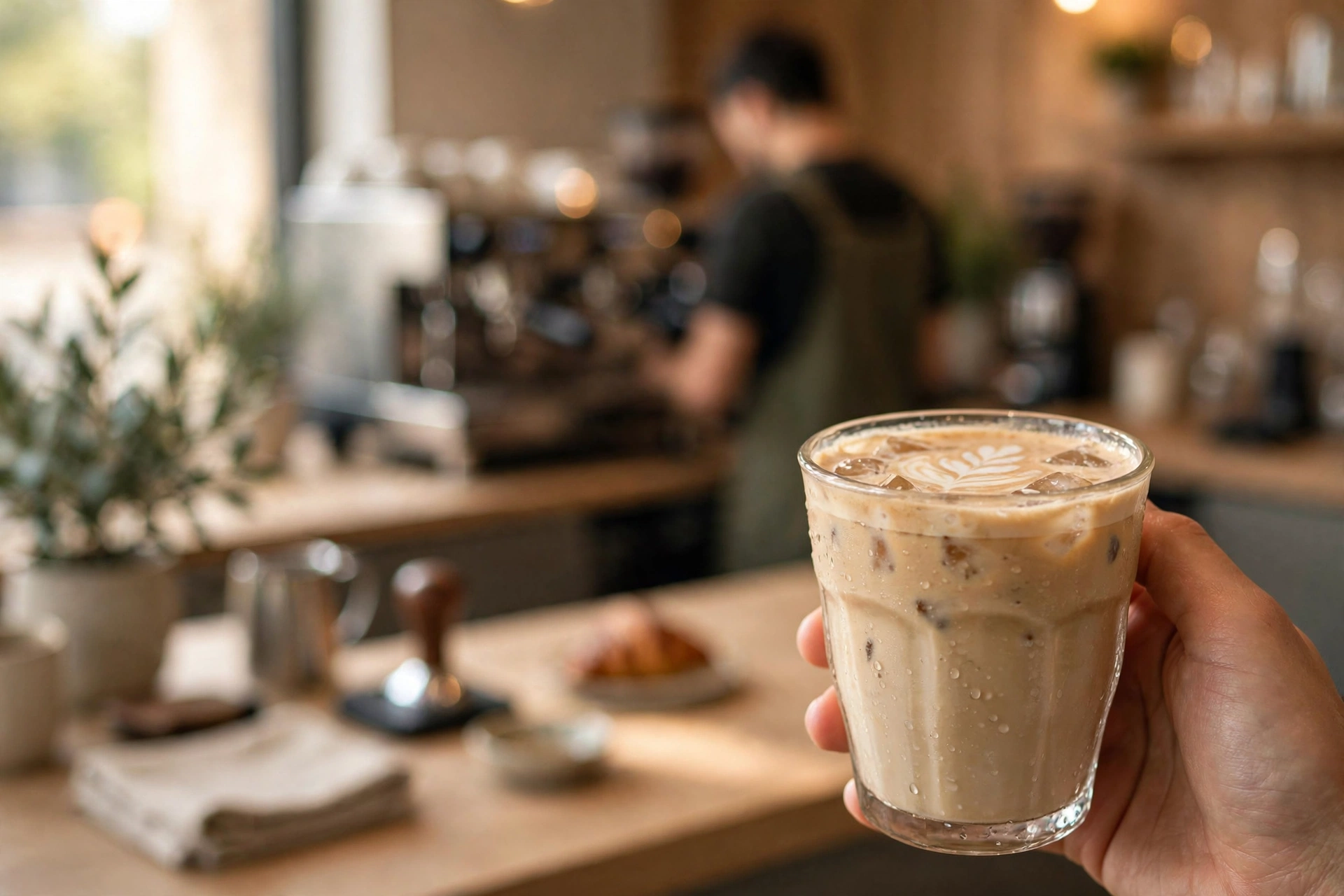
Watch for the shop's signatures, too. Specialty cafés put their personality into a handful of house drinks — ours include the Matcha Einspänner and the cream-topped lattes — and those are usually listed separately from the classics. If a shop bothers to create a signature menu, ordering from it is the fastest way to taste what makes that place different. Asking "what's the drink you're known for?" is one of the best sentences you can say at a counter. Baristas light up. They want you to try the thing.
How to Order Coffee: The No-Stress Formula
How to order coffee at a specialty shop follows one simple formula, in this order: drink name, size, hot or iced, milk, then any modifiers. "Can I get a medium iced oat latte?" covers everything in seven words. That's it. That's the whole skill.
A few notes on each piece. Sizes at specialty shops are simpler than the chains — usually small (8 oz), medium (12 oz), large (16 oz), and some drinks only come in one size because the ratio is the point. A cortado is a 4-ounce drink; ordering a "large cortado" is a contradiction, like ordering a dry martini with ice water. The barista will gently redirect you, and that's fine — better than getting a drink that isn't what you pictured.
Milk is where most people freeze, so here's the short version: whole milk is the default and steams the sweetest. Oat milk is the best alternative for hot drinks — it steams beautifully and tastes neutral. Almond milk works fine iced but can be thin in hot drinks. If you're not sure, just say "whatever you recommend" and trust the barista. They know their espresso better than you do.
Customize Without Being That Customer
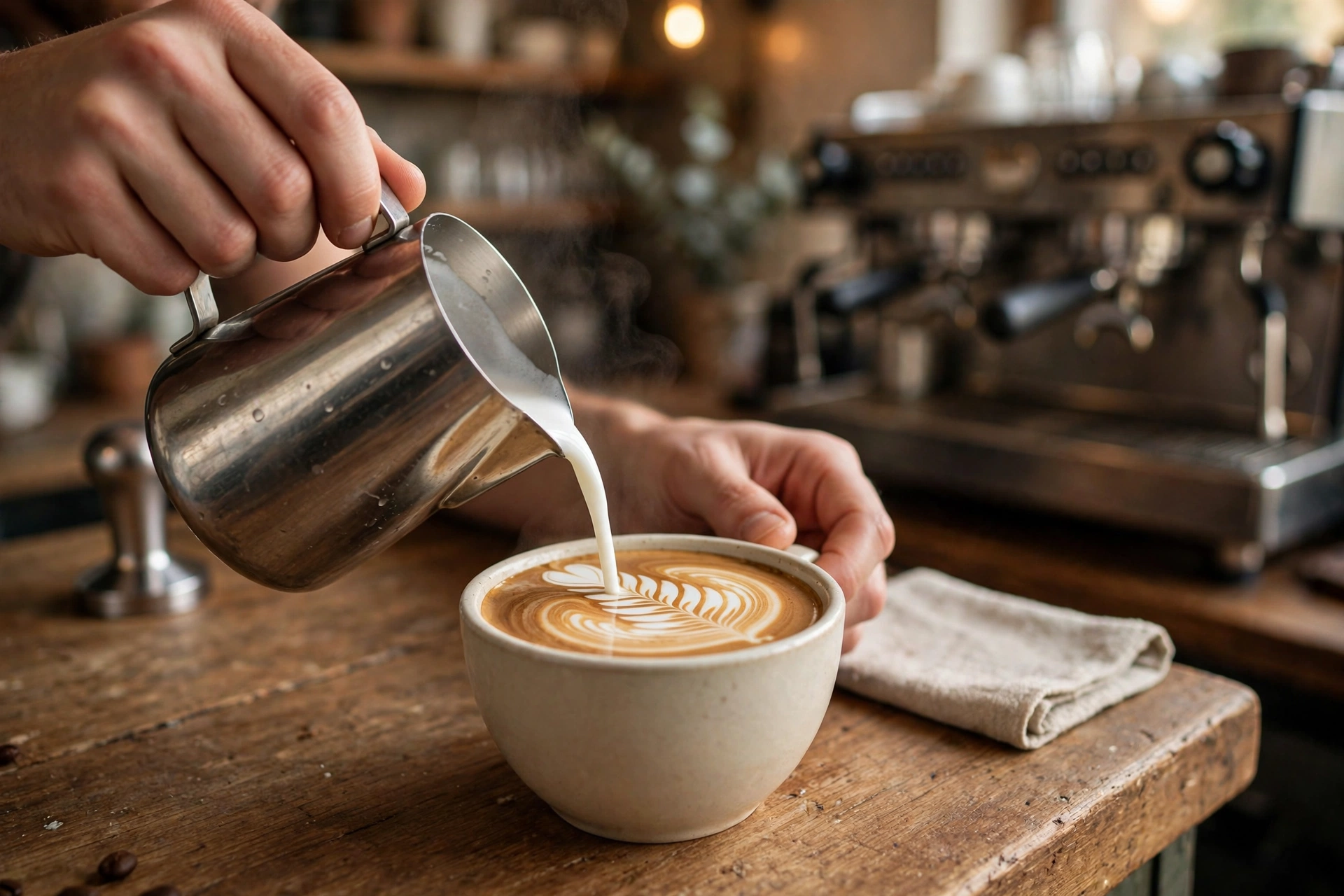
Here's the truth about customizing: reasonable requests are always welcome, and baristas genuinely prefer you enjoy your drink. Extra shot, half-caf, decaf, a pump of syrup, less ice — all normal, all fine. The "annoying customer" isn't the person who asks for oat milk; it's the person who redesigns the drink into something unrecognizable and then acts surprised when it's weird.
Two guidelines keep you in good standing. First, if you want a drink sweeter or milkier than the classic version, say so upfront — "a latte with an extra pump of vanilla" gets you exactly what you want without the barista guessing. Second, don't fight the recipe on the signature drinks. If a shop's famous drink is built around a specific cream top or syrup, ordering it without those things defeats the purpose. You paid for their expertise; let them use it.
And temperature: "not too hot" is a perfectly reasonable request. Milk steamed a little cooler actually tastes sweeter. Just know that iced versions of hot drinks dilute as the ice melts, so if your iced latte tastes milder than expected, that's physics, not a mistake.
The Regular Move: Just Talk to Your Barista
The actual secret to ordering like a regular isn't vocabulary — it's the two sentences before the order. "I usually drink lattes, what would you recommend?" or "What's new on the menu today?" does more for you than memorizing every drink definition. Regulars aren't regulars because they know terminology; they're regulars because there's a relationship. The barista remembers that you like things a little sweeter, or that you're the cortado person, and suddenly the menu anxiety disappears entirely.
Also: tip like you mean it. A dollar per drink or around 15–20% on handcrafted drinks is the standard, and at a small shop it goes directly to the people making your morning better.
A few last questions we hear a lot:
Is it okay to ask what's in something? Always. Asking about ingredients — especially with allergies — is smart, not annoying.
Can I bring my own cup? Almost always yes, and some shops give you a small discount. Just make sure it's clean.
What if I hate what I ordered? Tell us. A good shop would rather remake your drink than have you leave unhappy. We'd genuinely prefer the thirty seconds of remaking over you never coming back.
Now you know the formula — name, size, milk, modifiers — and the only remaining step is practice. Come run a rep at Community Goods, at our Melrose Ave shop in West Hollywood or our Edinburgh Ave spot in Hollywood. Order the signature, ask us what's good today, and congratulations: you're already ordering like a regular.