How to Choose Good Matcha Powder (What to Look For)
The matcha aisle used to be two tins at a tea shop. Now it's a wall of green bags at every grocery store, each one promising "ceremonial grade" and "authentic Japanese quality" — and most of them telling you almost nothing. Here's how to choose matcha, using the same checklist our team runs through when tasting new suppliers: what color is it, where's it from, when was it picked, and — most importantly — is it actually matcha?
First: Know What "Good" Means for Your Cup
Before anything else, be honest about how you'll drink it. Matcha grades sound official, but nobody regulates them — any brand can print "ceremonial" on a tin. The practical distinction: ceremonial-style matcha comes from shade-grown first-harvest leaves, ground fine, and tastes smooth and sweet whisked with just water. Culinary-style matcha comes from later harvests, runs bolder and more bitter, and is built for baking and milk drinks.
Our rule of thumb: whisking it straight? Buy the good stuff. Making lattes every morning? You want character that punches through milk — not delicacy that oat milk will drown out.
How to Choose Matcha: The Six Things That Actually Matter
1. Color: vivid jade green, not swampy
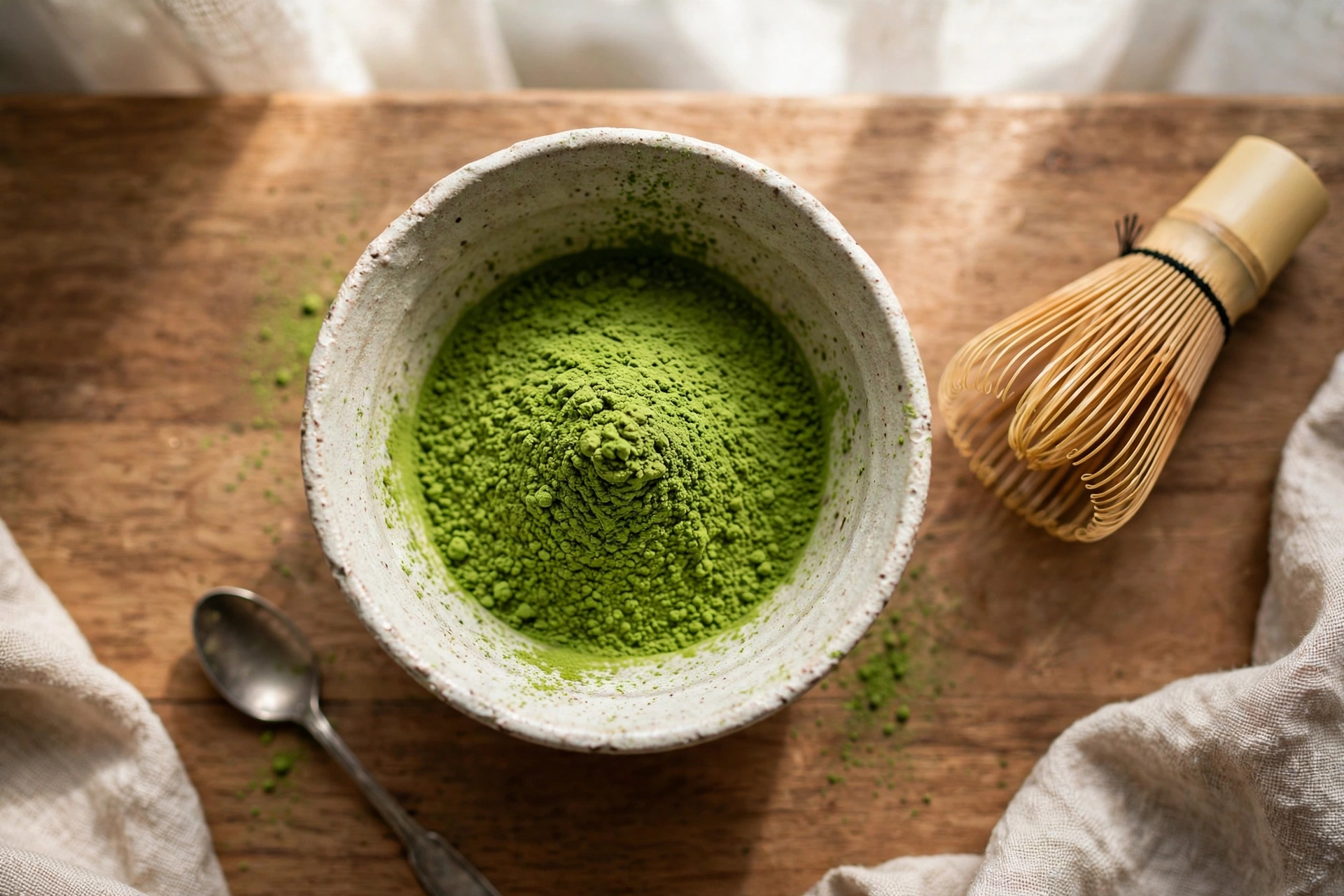
This is your fastest clue. Quality matcha is a bright, almost electric green thanks to chlorophyll that builds up in shade-grown leaves processed quickly after harvest. If the powder looks dull, olive, or yellowish, you're looking at oxidation, old leaf material, or sun-grown tea.
2. Origin: a specific Japanese region, not just "Japan"
Uji, Nishio, and Kagoshima are the names that mean something — real producing regions with serious tea infrastructure, Uji being the historic center of matcha culture. A label that just says "made in Japan" with no region is a yellow flag; legitimate producers tell you exactly where their tea grows.
3. Harvest: first harvest sets the ceiling
First-harvest leaves (ichibancha, picked in spring) carry the most L-theanine — the amino acid behind matcha's sweetness and calm, focused energy. Second harvest is respectable and more affordable; later harvests get progressively more astringent and belong in baking. Good brands state the harvest on the packaging.
4. Stone-ground and silky, not gritty
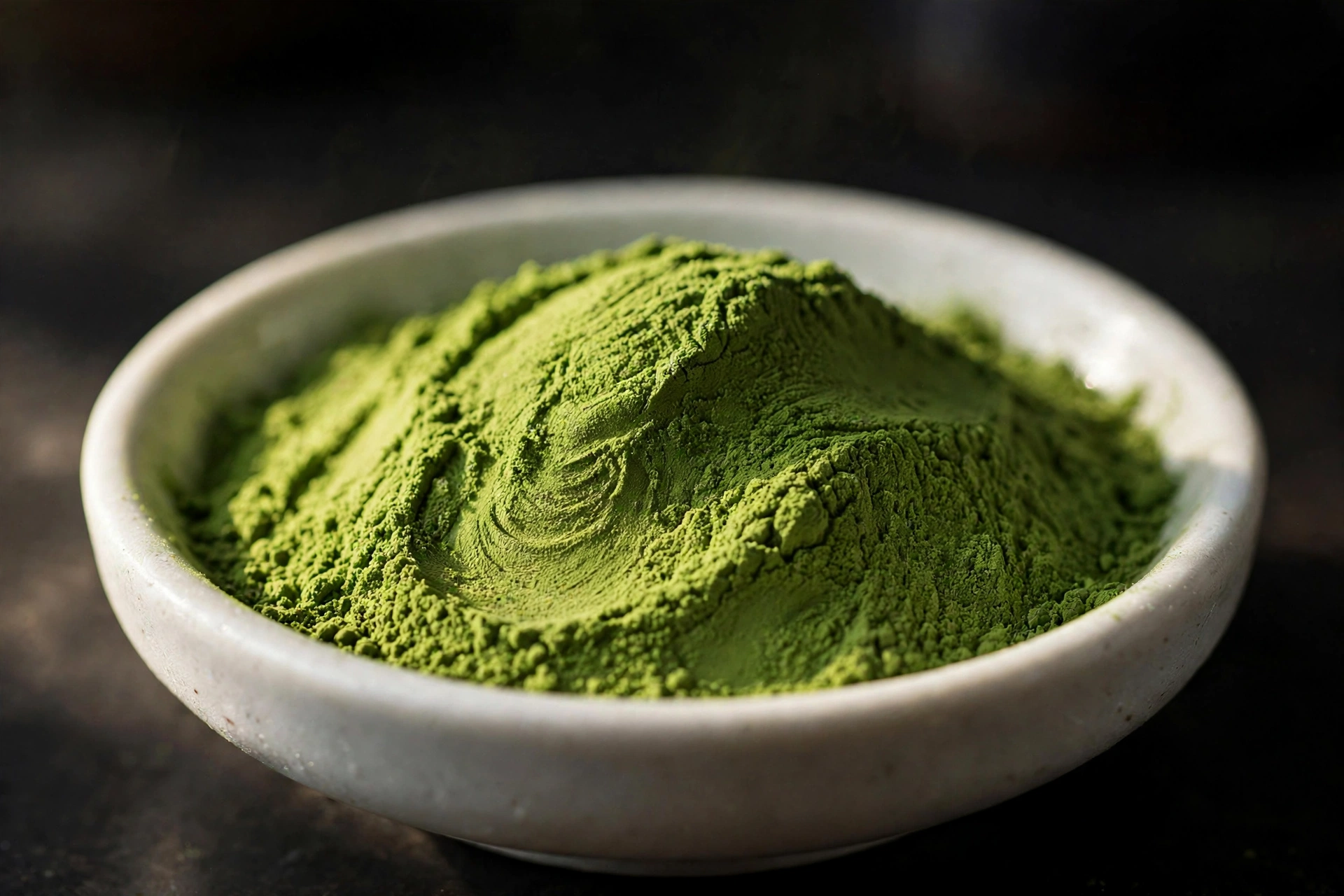
Real matcha is ground slowly between granite stones — a process that can take an hour to powder a handful of leaves. Rub the powder between your fingers: it should feel impossibly fine, like eyeshadow. Gritty powder was probably machine-ground (heat damages the leaf) or includes lower-grade material.
5. The ingredient list should be one thing: matcha
Flip the tin around. It should say matcha or green tea powder, and nothing else. No sugar, no "natural flavors," no fillers. Plenty of products labeled "matcha" are really just sweetened green tea powder — fine for a dessert mix, but they'll never whisk into the drink you had at a good café, and no amount of technique will fix that.
6. Price is a reality check, not a guarantee
Matcha is labor-intensive, and the price reflects that. Be skeptical of "ceremonial grade" under twenty bucks a 30-gram tin — it's almost certainly not what it claims. That said, expensive doesn't automatically mean excellent. The one-to-three-dollars-per-gram range is where reliably delicious matcha lives.
The "Matcha" That Isn't: Red Flags
Things that make us put a tin back: dull olive color, no origin or harvest info anywhere, "ceremonial grade" at a suspiciously low price, transparent packaging, and over-edited product photos. And the big one — sugar in the ingredient list. That's a drink mix, not matcha.
Four Matchas We'd Actually Spend Our Own Money On
Jade Leaf Organic Ceremonial Matcha (Barista Edition) — best everyday latte matcha
Vibrant green, smooth and balanced (not too grassy or bitter), and holds up beautifully in lattes. Honest take: not the most complex tin you'll ever whisk straight — but it's the rare affordable matcha that's genuinely good in milk.
The Republic of Tea Daily Matcha — best workhorse for baking and smoothies
A true no-fuss matcha for recipes. It blends easily, tastes consistent, and doesn't fall apart when milk, sweetener, or ice get involved. Honest take: it's a culinary-style powder, so don't expect ceremonial subtlety whisked with water. For matcha-flavored everything else, it's one of the most reliable bags around.
A heritage Uji ceremonial tin (e.g. Marukyu Koyamaen) — best for traditional whisking
If you want to taste what matcha is supposed to be whisked straight with hot water, a heritage Uji producer's ceremonial tin is the move: bright color, rich umami, a clean sweet finish. Honest take: this is a splurge, and pouring it into a sweetened iced latte is like cooking with vintage wine. Buy it when you're ready to drink matcha the traditional way.
A Japanese "latte grade" culinary matcha — best value for daily iced lattes
Latte grade sits between ceremonial and culinary: typically second-harvest leaf with a bolder character that survives milk instead of disappearing into it. Honest take: less vivid and less sweet straight, but exactly the trade you want when your drink is 80% milk. The smartest money for a daily iced matcha habit.
A Few Questions We Get a Lot
Ceremonial or culinary for lattes? Somewhere in between — a "latte grade" or barista-edition ceremonial. Full ceremonial is wasted in milk; bargain culinary tastes harsh no matter what you add.
How long does an open tin last? Finish it in one to two months. Keep it airtight, away from light and heat. That flat, hay-like taste is oxidation, not you.
Is organic better? Organic certifies how it was farmed, not how it tastes. A non-organic first-harvest Uji matcha can easily outshine a certified organic culinary powder.
The short version: bright green, Japanese, first-harvest, stone-ground, one-ingredient label, matched to how you actually drink it. That puts you ahead of 90% of the matcha aisle.
And if you'd rather taste the target before buying the tin — come by. We'll whisk you a proper bowl at our Melrose Ave shop in West Hollywood or our Edinburgh Ave spot in Hollywood.