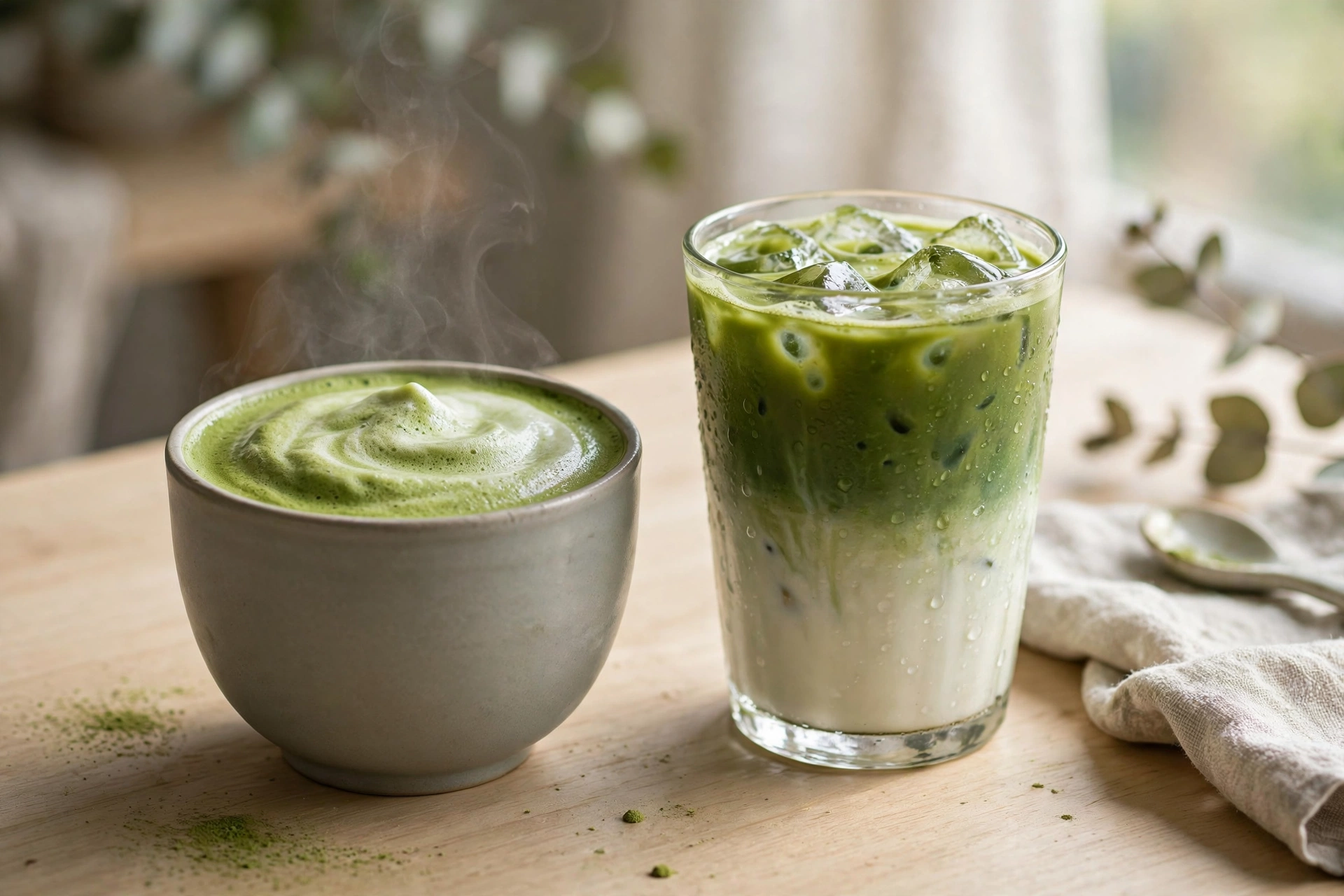
Hot vs Iced Matcha Latte: Which Is Better?
It's the same powder, the same milk, the same café — and somehow a completely different drink depending on the temperature. The hot vs iced matcha latte debate splits our regulars right down the middle, and the science of why is actually fascinating: heat doesn't just warm matcha up, it changes what you taste.
Quick take: hot matcha lattes are sweeter, creamier, and more aromatic — the heat pulls out matcha's umami and volatile compounds, giving you the fullest flavor. Iced matcha lattes are smoother, more refreshing, and more forgiving — the cold mutes bitterness and turns the whole thing into an easy-drinking treat. Both are legit. But if you pressed us, we'd tell you one of them shows off good matcha better. Keep reading.
Flavor: What Heat Actually Does to Matcha
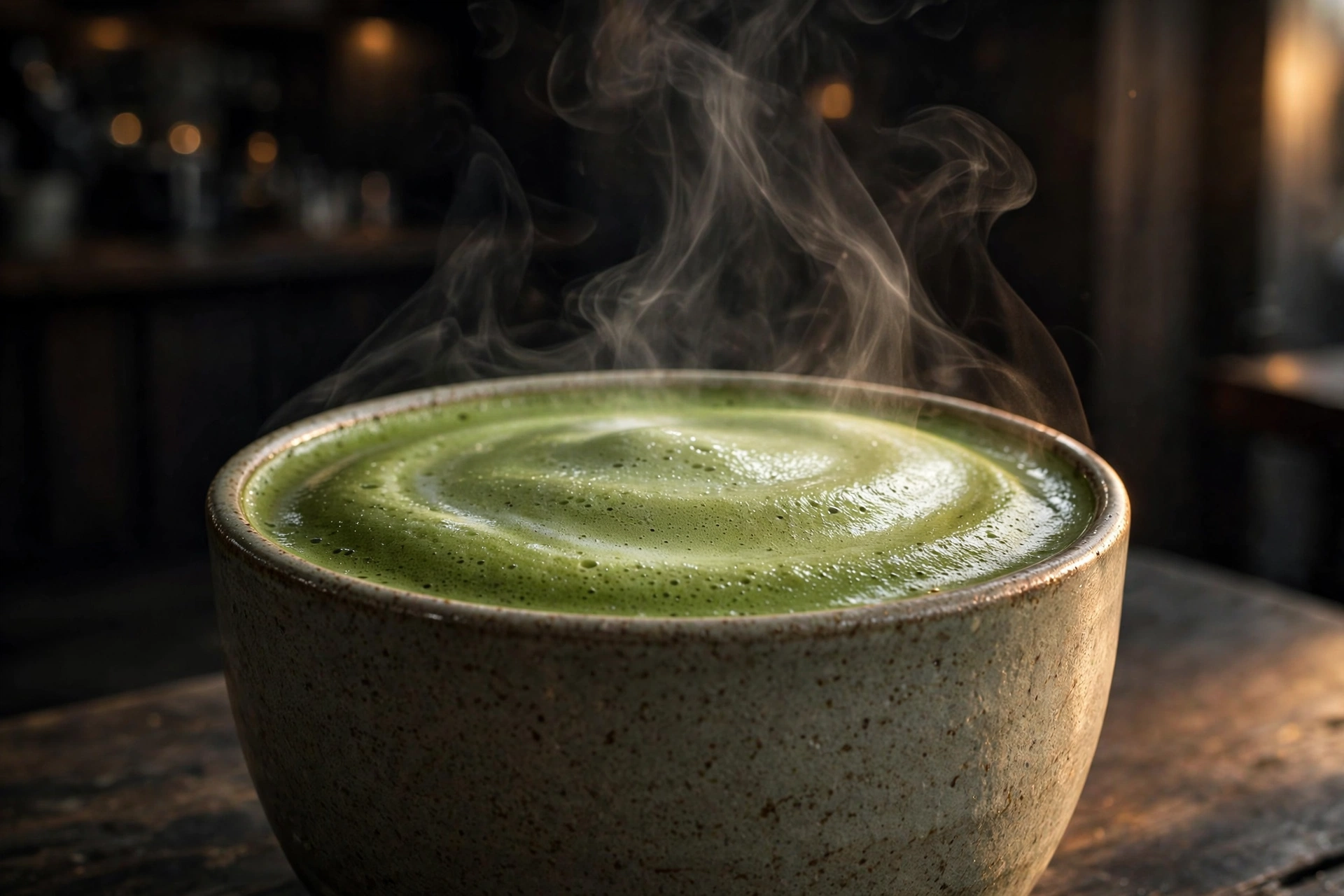
Here's the part most articles skip. Hot water extracts more of matcha's flavor compounds — including the good ones (umami, sweetness, those fresh-grass aromatics) and the harsher ones (bitterness, astringency). That's why a hot matcha latte tastes more: more depth, more nuttiness, a richer mouthfeel, and a noticeably stronger aroma rising off the cup. With high-quality ceremonial matcha, heat is your friend — it's the only way to experience the full range of what the leaf can do.
Cold does the opposite. It suppresses bitterness and astringency, which is why iced matcha lattes taste smoother and more mellow even with the exact same powder. The trade-off is that it also mutes the delicate stuff — the umami, the subtle sweetness, the aroma. An iced matcha latte is refreshing and delicious, but it's a simpler drink. Think of it like wine: chilling a great bottle makes it pleasant but hides its complexity.
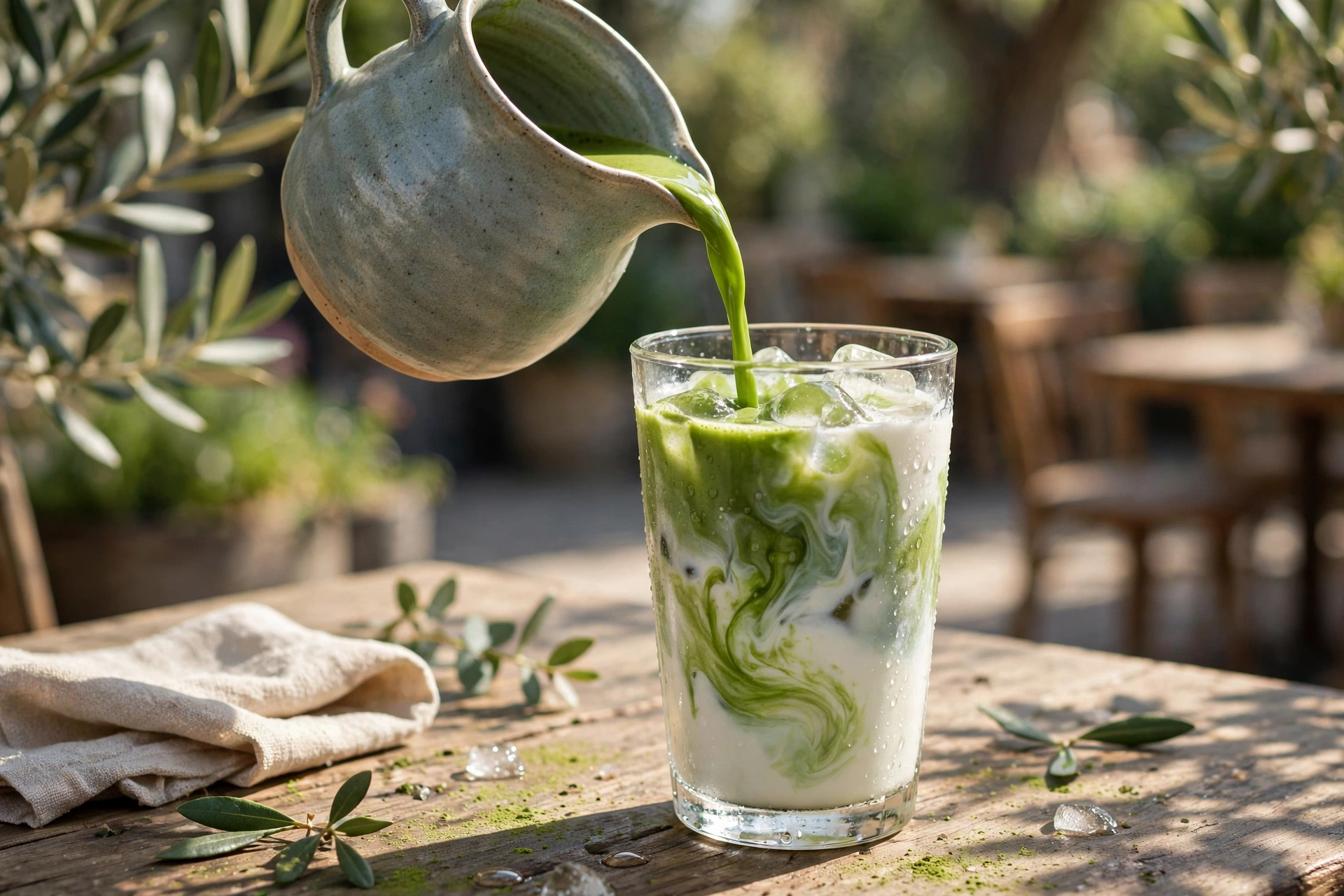
One practical note: matcha dissolves better in warm water than cold. Every good iced matcha latte — including ours — starts with matcha whisked into a little hot water (around 160–175°F, never boiling, which scorches it bitter) before it ever meets ice. If your homemade iced matcha is clumpy, that's why.
Texture and the Drinking Experience
A hot matcha latte, properly made with steamed milk, has a velvety, unified texture — the warmth marries the matcha and milk into one cohesive sip. There's something genuinely comforting about it, the same reason hot chocolate beats chocolate milk on a cold night.
An iced matcha latte is a different pleasure: the visual layers, the cold milk hitting first, the gradual marbling as you stir. Iced versions typically use more milk relative to matcha (the ice dilutes as it melts), so they drink lighter and milkier. On a hot LA afternoon, there's no contest — iced wins on pure refreshment.
Caffeine and Practical Differences
The caffeine is essentially the same — you're using the same amount of matcha either way, roughly 40–70 mg per latte depending on the scoop. Heat extracts marginally more caffeine from the powder, but the difference in the cup is negligible. The L-theanine calm-focus effect works identically in both.
What does differ: iced is faster to make at home (no milk steaming), easier to customize (syrups blend instantly into cold milk), and more forgiving of mediocre matcha — the cold hides flaws. Hot is less forgiving but more rewarding: bad matcha tastes worse hot, which is exactly why a hot latte is the true test of a café's matcha quality.
| Hot Matcha Latte | Iced Matcha Latte | |
|---|---|---|
| Flavor | Sweeter, nuttier, more umami, stronger aroma | Smoother, mellower, more refreshing |
| Bitterness | More pronounced (heat extracts everything) | Muted by the cold |
| Texture | Velvety, unified, comforting | Light, layered, milkier |
| Matcha quality matters | A lot — flaws show | Less — cold hides flaws |
| Caffeine | ~40–70 mg (same powder) | ~40–70 mg (same powder) |
| Best for | Savoring good matcha, cold mornings | Hot days, easy drinking, beginners |
Hot vs Iced Matcha: Our Verdict
Here's our honest position: the hot matcha latte is the better drink. It shows off good matcha more fully, the texture is superior, and it's the version where quality actually matters. If you want to know whether a café's matcha is the real deal, order it hot — there's nowhere to hide.
And yet — we'd guess 80% of what we sell is iced. Because it's Los Angeles, because it's delicious, because sometimes you want refreshment, not a tasting experience. There's no shame in it. Our Korean-style cream-topped matcha drinks are iced, and they're the most popular thing on our menu.
So the real answer: hot when you want to taste the matcha, iced when you want to enjoy the drink. Just promise us you'll try it hot at least once, with good ceremonial-grade powder. That's the version that made people fall in love with matcha in the first place.
Quick Questions
Does hot or iced matcha have more caffeine? Practically the same. Both use the same amount of matcha powder (about 40–70 mg caffeine per latte). Temperature doesn't meaningfully change the caffeine in your cup.
Why does my iced matcha taste watery? Usually too much ice or too little matcha. Use a proper 2-gram scoop whisked into a hot-water paste first, and consider matcha ice cubes if you're making it at home.
Should I use different matcha for hot vs iced? You can use the same, but hot rewards better powder. If you're buying one tin, get the best you can afford and drink it hot sometimes — that's where it earns its price.
Come run your own taste test at Community Goods. We'll make you our matcha latte hot and iced, side by side — Melrose Ave in West Hollywood or Edinburgh Ave in Hollywood. Fair warning: most people walk in team iced and leave at least a little converted.