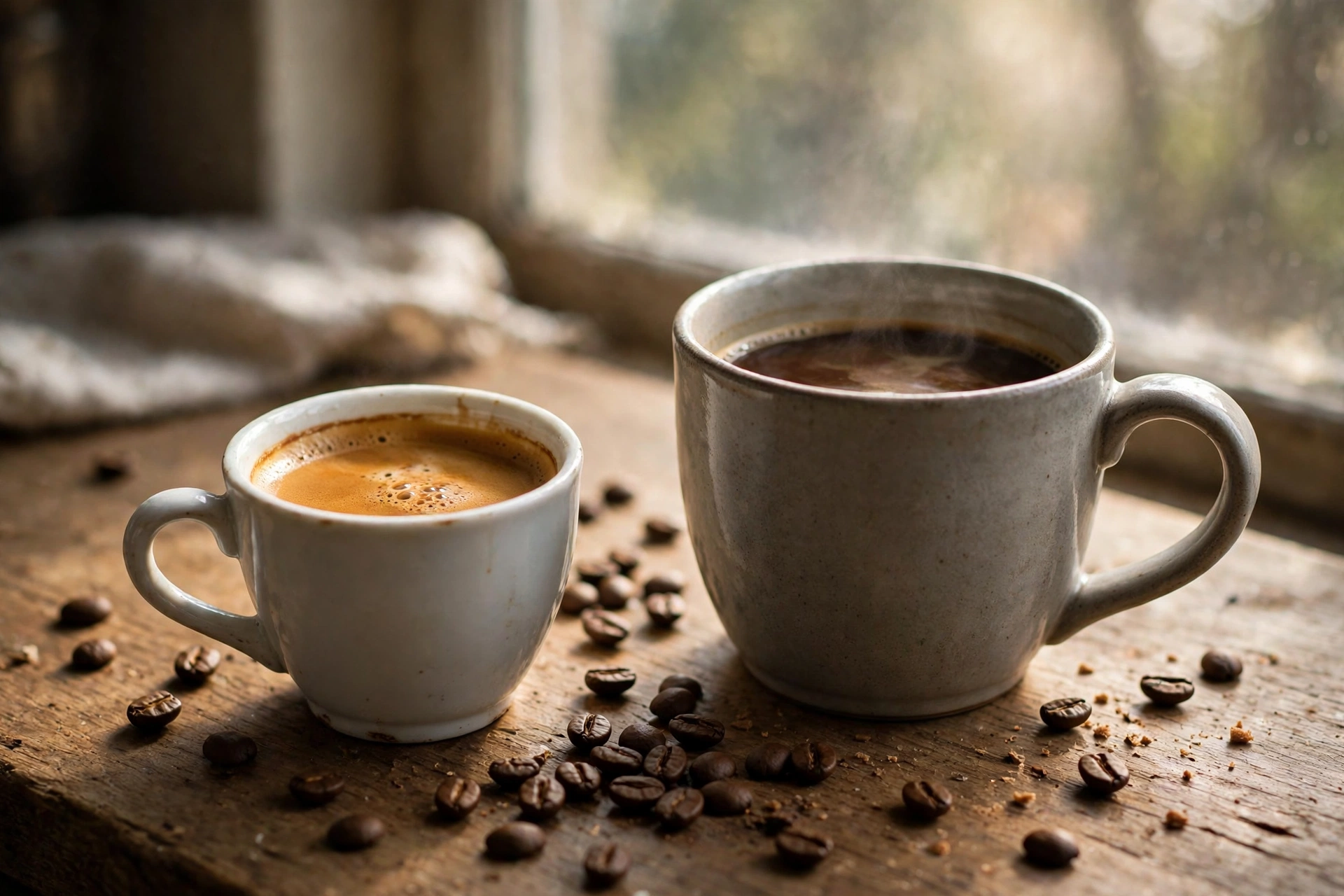
Espresso vs Drip Coffee: What's the Difference?
Everyone "knows" espresso is stronger than drip coffee. It's served in a tiny cup, it tastes like a punch in the mouth, and it costs more. So it must have more caffeine, right? Not exactly. The espresso vs coffee question is one of the most misunderstood comparisons in the entire coffee world, and the real answer is more interesting than the myth.
Here's the short version: espresso is finely ground coffee forced through with pressurized hot water in about 30 seconds — intense, syrupy, concentrated. Drip coffee is medium-ground coffee with hot water dripping through a filter over several minutes — cleaner, milder, and served in a much bigger cup. They're different brews, different rituals, and — here's the twist — your morning mug of drip probably has more total caffeine than a double espresso.
How They're Made
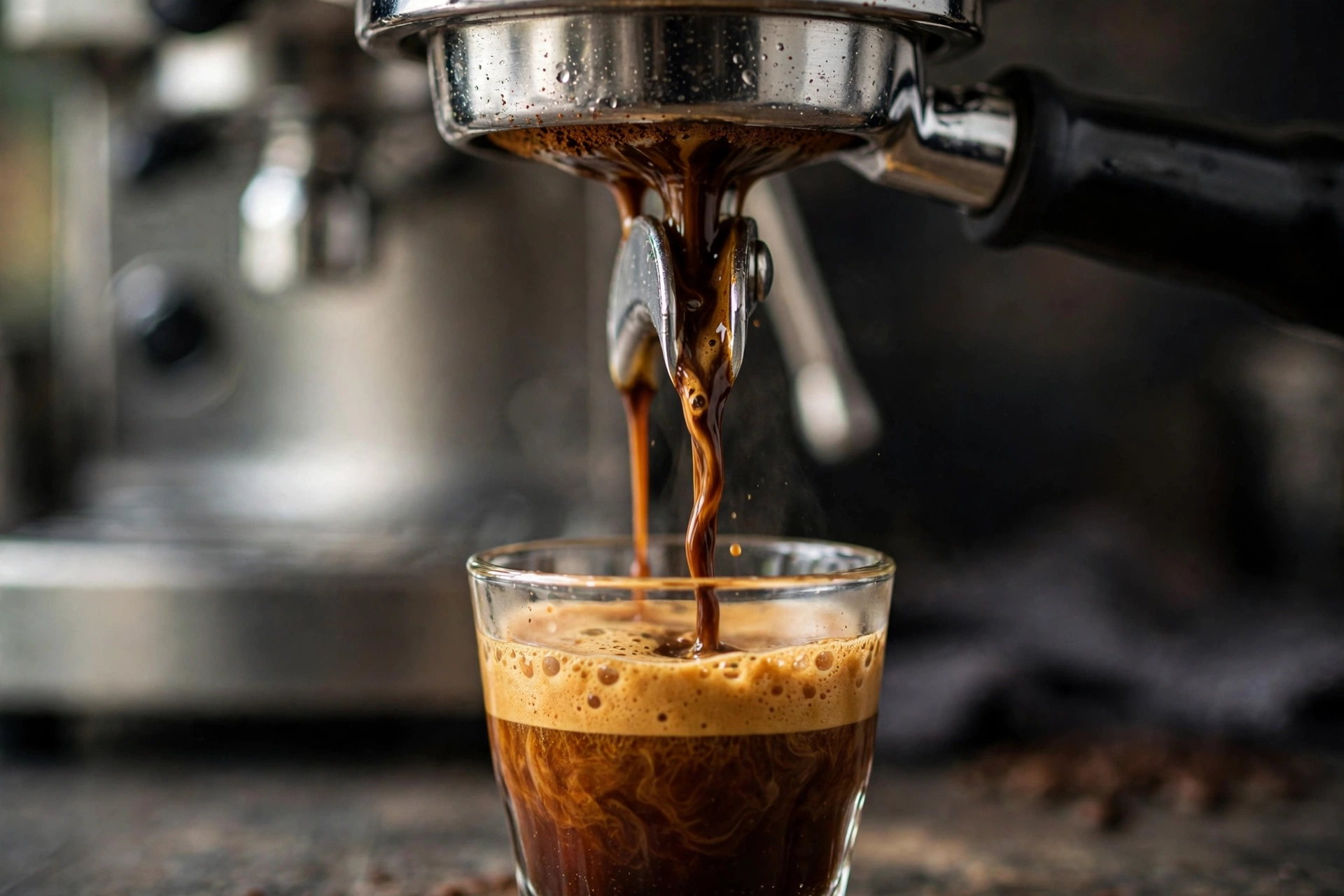
Espresso is all about pressure. Around 9 bars of it — roughly nine times atmospheric pressure — forcing water at about 195–205°F through a puck of finely ground coffee in 25 to 30 seconds. That violent, fast extraction pulls out oils, dissolved solids, and flavor compounds at a concentration no other method touches, and it produces the signature golden crema on top. It requires a real espresso machine and a good grinder; there's no faking the pressure part.
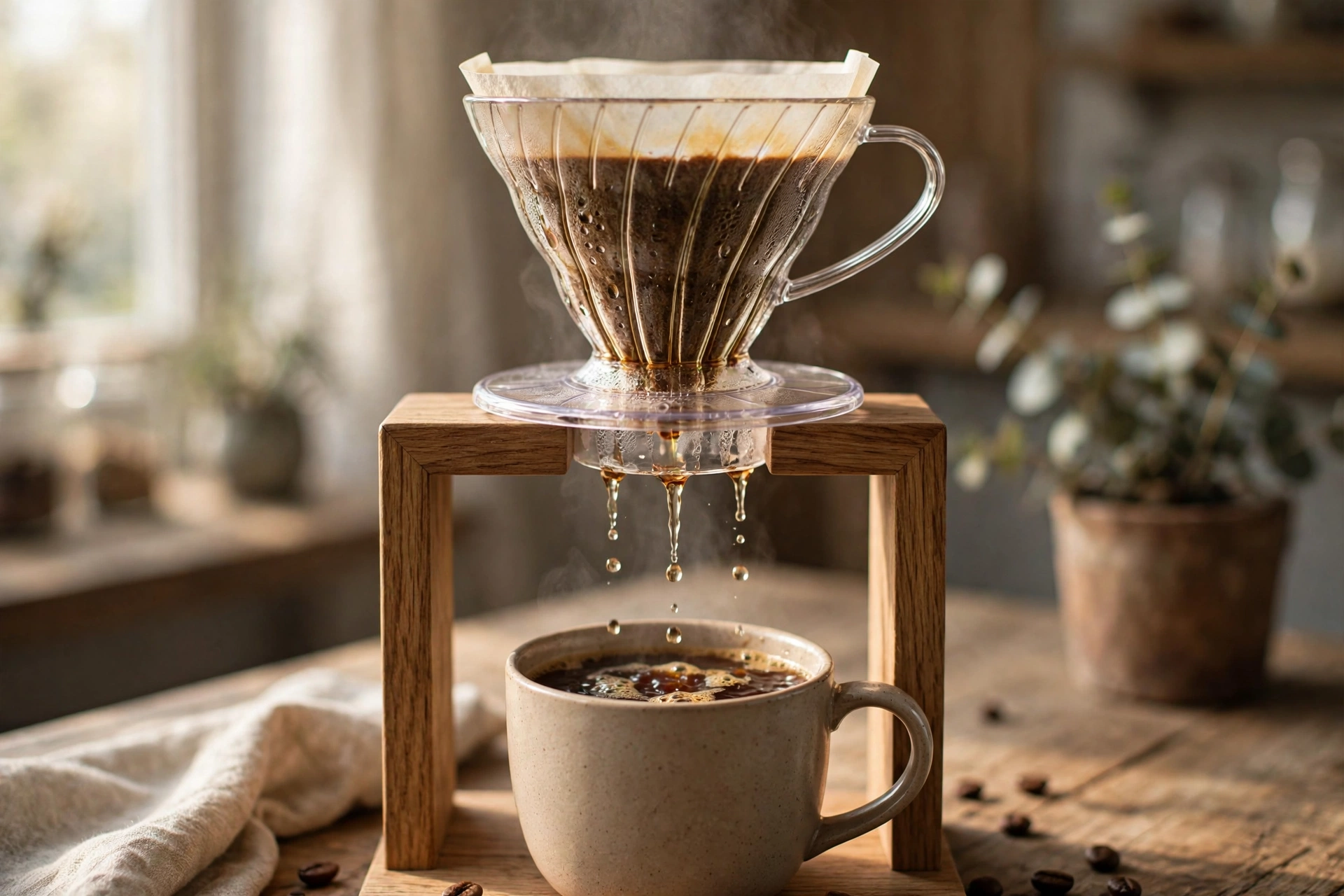
Drip coffee is the patient one. Hot water drips by gravity through medium-ground coffee in a paper filter, taking four to six minutes. The filter catches most of the oils, which is why drip tastes cleaner. It's the most forgiving brew method in existence — a basic automatic brewer and pre-ground beans will still give you a decent cup, which is why it conquered American kitchens.
The Caffeine Question, Settled
Let's do the actual math, because this is where everyone gets confused.
Per ounce, espresso wins easily: about 60–65 mg of caffeine per ounce versus 12–15 mg per ounce for drip. Nearly five times the concentration. That's why it feels stronger.
But nobody drinks espresso by the 12-ounce mug. A standard double shot is 2 ounces — about 120–130 mg of caffeine total. A standard 12-ounce mug of drip coffee? Around 140–180 mg. Per serving, drip coffee usually has more caffeine. The espresso just delivers its smaller dose faster and more intensely, so it feels like a bigger hit.
So if you're ordering espresso "for the caffeine," you might be doing it wrong. A big mug of drip will keep you going longer.
Taste and Texture
Espresso is thick, syrupy, and intense, with a bittersweet edge and a heavy body that coats your mouth. The crema adds a velvety texture and aroma you can't get any other way. Because the extraction is so fast and concentrated, you taste the roast more — dark, caramelized notes dominate, and subtle florals get a bit bulldozed.
Drip coffee is lighter-bodied and cleaner, with the paper filter stripping out oils for a smoother sip. It's the better showcase for a coffee's origin character — the fruity Ethiopian, the nutty Colombian, the floral notes that make single-origin nerds swoon. If you want to actually taste what a bean tastes like, drip (or pour-over) is the clearer window.
Neither is "better" tasting in the abstract. They're different pleasures: espresso is a shot of intensity, drip is a long, easy conversation.
Cost, Effort, and Daily Life
Here's where drip quietly dominates. A decent drip setup costs $20 to $50; a capable home espresso setup starts around $300 and climbs steeply, plus the learning curve is real — dialing in grind, dose, and timing takes weeks. Drip is push-button.
At a café, the math flips a little: espresso drinks (lattes, cappuccinos) cost more because of the labor and the milk, while a plain drip is usually the cheapest thing on the menu. Per cup at home, though, drip wins on both cost and convenience by a landslide.
| Espresso | Drip Coffee | |
|---|---|---|
| Brew method | 9 bars of pressure, 25–30 seconds | Gravity drip through a filter, 4–6 minutes |
| Grind | Very fine | Medium |
| Serving size | 1–2 oz shots | 8–16 oz mugs |
| Caffeine per ounce | ~60–65 mg (much higher) | ~12–15 mg |
| Caffeine per serving | ~120–130 mg (double shot) | ~140–180 mg (12 oz mug) |
| Body & flavor | Thick, intense, syrupy, crema | Clean, mellow, lets origin notes shine |
| Equipment cost | $300+ | $20–$50 |
Espresso vs Coffee Verdict: Drip Wins the Week
Controversial for a specialty café to say, but here it is: for daily drinking, drip coffee wins. More caffeine per cup, a fraction of the cost, zero learning curve, and it shows off good beans more honestly. The vast majority of the world's great coffee is drunk as filter coffee, and there's a reason.
Espresso's real job isn't to be drunk straight every morning — it's the foundation of everything else. Lattes, cappuccinos, cortados, our cream-top drinks: all of it starts with a well-pulled shot. Espresso is the ingredient; drip is the beverage. Respect both, but if we could only keep one for our own mornings? We'd keep the drip brewer and never look back.
Quick Questions
Does espresso have more caffeine than coffee? Per ounce, yes — about five times more. But per serving, a 12 oz drip coffee (140–180 mg) usually beats a double espresso shot (120–130 mg).
Can you make espresso without a machine? Not true espresso — the 9 bars of pressure are non-negotiable. A moka pot gets you strong, espresso-like coffee, but without the crema and concentration of the real thing.
Which is better for lattes? Espresso, no contest. Its concentration is designed to cut through milk. Drip coffee diluted with milk just tastes like weak milky coffee.
Come taste both ends of the spectrum at Community Goods — a proper double espresso and a clean, bright drip, side by side. Find us on Melrose Ave in West Hollywood or Edinburgh Ave in Hollywood, and we'll settle the debate over the counter.