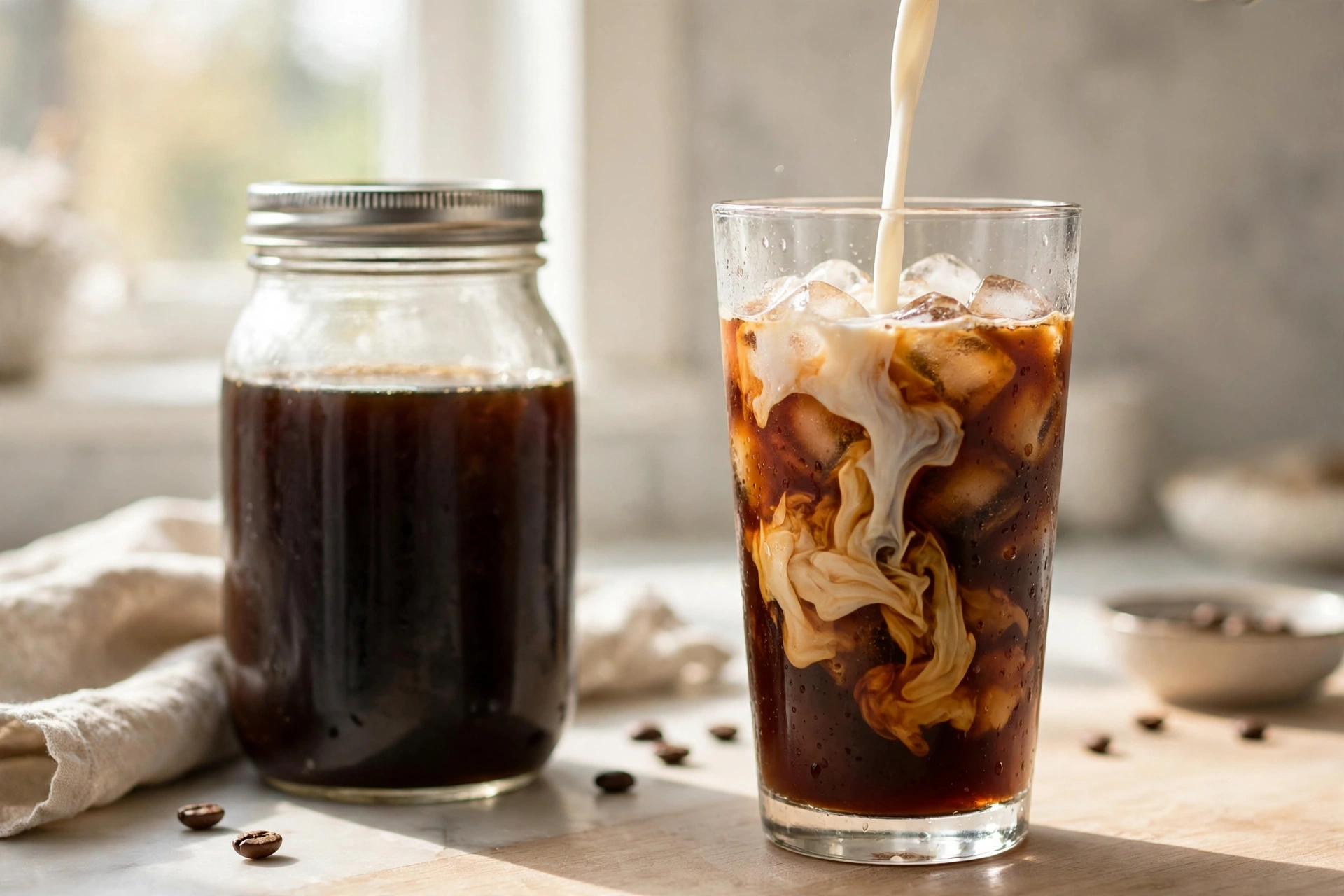
How to Make Cold Brew Coffee at Home
Every summer, cold brew goes from café luxury to household essential. Learning how to make cold brew coffee at home is one of the easiest wins in all of coffee: no machine, no technique to master, no way to scorch anything — just coarse grounds, cold water, and time. What you get is a smooth, naturally sweet concentrate that lives in your fridge for a week and turns into iced coffee or iced lattes in seconds.
Why cold brew tastes different (and why it matters)
Cold brew isn't just iced coffee with better marketing. Hot water and cold water pull different things out of coffee grounds: heat extracts acids and bitter compounds quickly, while cold water is a slow, gentle extractor that leaves most of the harsh stuff behind. The result is naturally lower in perceived acidity, rounder, and sweeter — even with no sugar added. That's why people who "can't do black coffee" often love cold brew black.
One honest caveat: cold brew concentrate is strong. A glass of undiluted concentrate will hit harder than your morning drip — dilute it, and you'll land in normal territory.
What you'll need
- A large jar, pitcher, or French press (a quart-size mason jar is perfect)
- Coarsely ground coffee — think sea salt or breadcrumbs, not powder
- Cold, filtered water
- A fine-mesh strainer, plus cheesecloth or a paper coffee filter for the second pass
- A spoon and a clean bottle or jar for storage
No scale? You can start with measuring cups — coffee is inconsistent by volume, but don't let that stop your first batch. Filtered water matters more than most people expect; if your tap water tastes off, your cold brew will too.
On beans: medium to dark roasts are the forgiving starting point, since their chocolate and nut notes bloom in a long cold steep. Whatever you use, grind it fresh if you can — and keep it coarse, the single biggest variable in a clean cup.
How to make cold brew coffee at home: ratios, grind, and timing
The standard starting ratio for ready-to-drink cold brew is 1:8 coffee to water by weight — about 1 cup of coarse grounds to 8 cups of water, or 125 grams to 1 liter. Want a concentrate you can dilute 1:1 later? Go 1:4 to 1:5. Start with 1:8: it's drinkable straight over ice and forgiving.
Here's the full method:
1. Grind coarse. Aim for sea-salt texture. Too fine and your cold brew will taste bitter and muddy — fine grounds over-extract even in cold water, and they're miserable to strain.
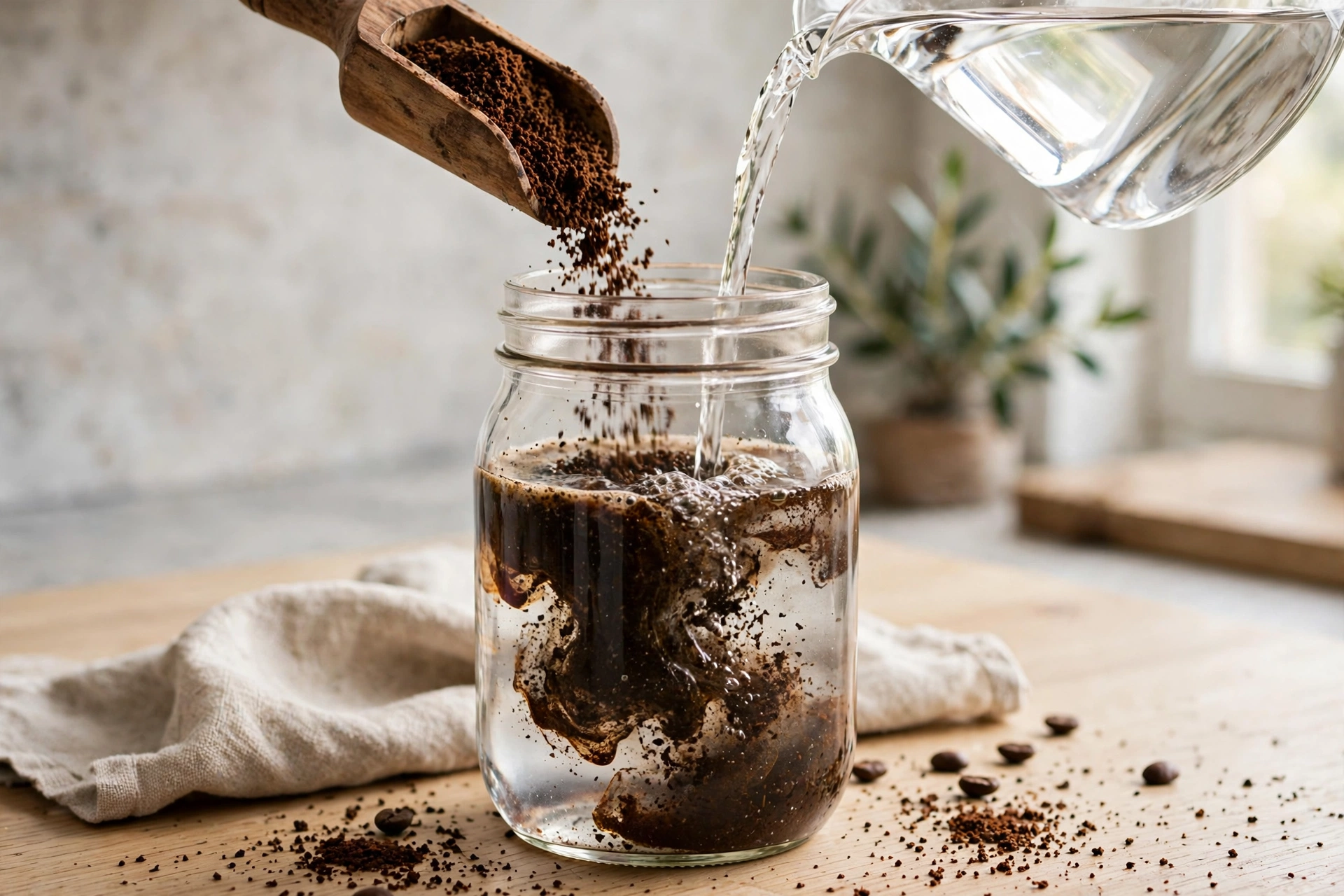
2. Combine. Add the grounds to your jar, pour in about half the water, and stir so every ground gets wet — dry pockets are the most common reason a batch tastes thin. Then add the rest of the water and stir once more.
3. Cover and steep. Lid on, into the fridge (or the counter — room temperature steeps a bit faster). Set a timer: 12 to 18 hours is the sweet spot. Under 12 and it's weak; past 24 and it starts picking up woody, harsh notes. Sixteen hours is our default.
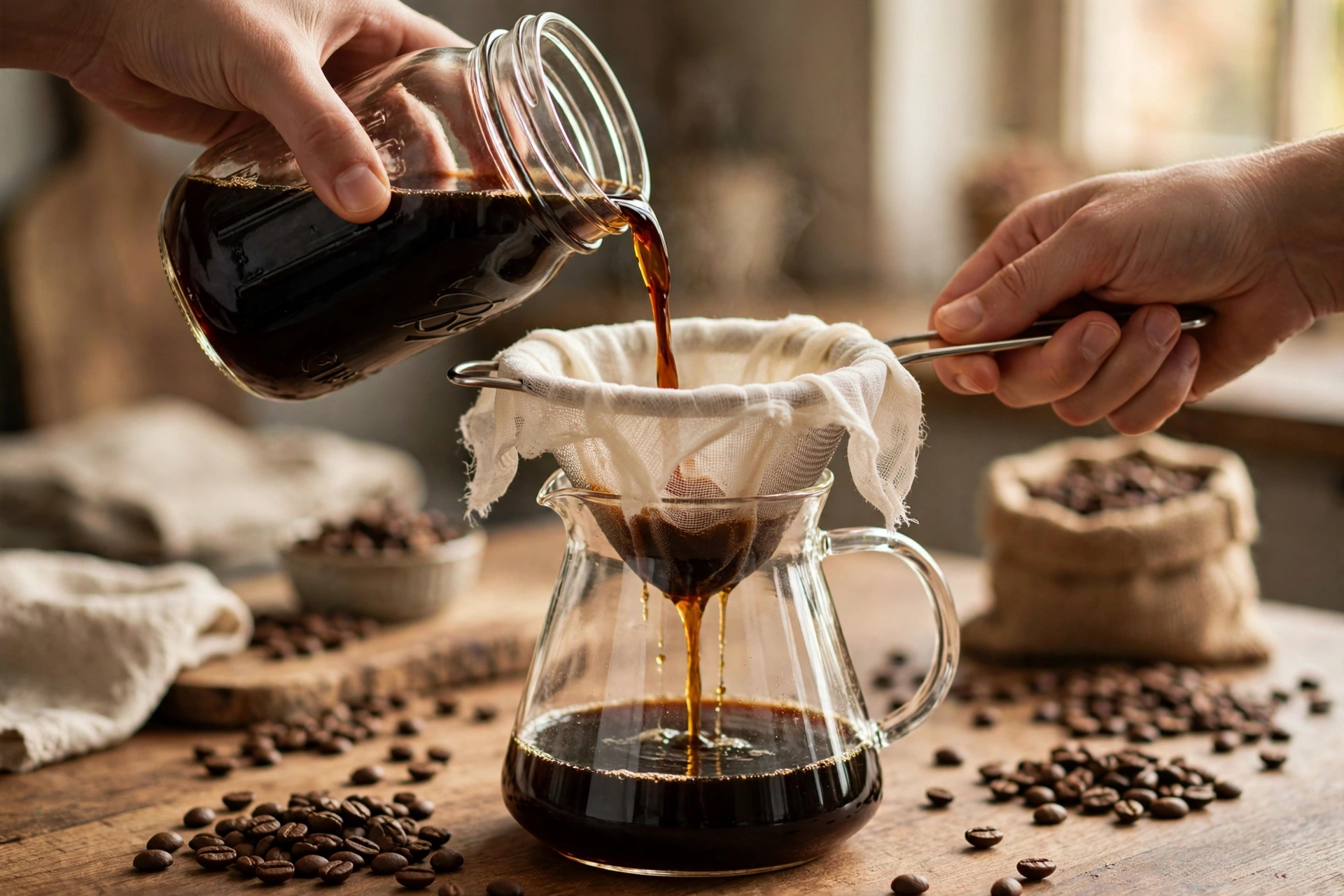
4. Strain twice. First pass: pour through a fine-mesh strainer to catch the big grounds. Second pass: line the strainer with cheesecloth or run the liquid through a paper filter. Don't squeeze the grounds — wringing them pushes bitter sediment through.
5. Store and serve. Funnel into a clean, sealed bottle and refrigerate. It keeps 7 to 10 days. Serve over ice, diluted to taste — start with equal parts concentrate and water or milk, then adjust.
Troubleshooting your batch
It tastes weak and watery. Your grind was probably too coarse, your ratio too lean, or your steep too short. Next time, nudge the ratio toward 1:7, make sure grounds are fully saturated at the start, and give it the full 18 hours.
It's bitter or harsh. Usually the opposite problem: grind too fine, steep too long, or room-temperature steeping on an already dark roast. Coarsen the grind first — that fixes most bitterness.
It's cloudy with sediment. You rushed the second straining pass. Run it through a paper filter once more; it drips slowly, but it's worth it.
It tastes flat by day five. That's just oxidation — cold brew is best in the first 3 to 4 days. Make smaller batches more often, or freeze leftover concentrate in ice cube trays for iced lattes.
Variations to try once you've nailed the base
The neutral sweetness of cold brew makes it a great canvas. Toss a split vanilla bean, a cinnamon stick, or a few strips of orange peel into the jar during the steep. For a café-style treat, pour concentrate over ice with oat milk and a spoonful of brown sugar. And a pinch of flaky salt in the glass makes everything taste more like itself.
A few quick questions
Fridge or counter? Both work. The fridge gives a smoother, cleaner cup; the counter is faster and extracts more punch. We default to the fridge.
Can I heat cold brew up? Gently — dilute the concentrate with hot water rather than microwaving it straight, which can turn it bitter.
Is cold brew stronger than espresso? Ounce for ounce, no. But a full glass of concentrate has more total caffeine than a shot of espresso, so dilute thoughtfully.
Come compare with ours
Homemade cold brew will ruin store-bought concentrate for you. But if you'd rather skip the 16-hour wait, come grab one at Community Goods on Melrose Ave in West Hollywood or Edinburgh Ave in Hollywood.