Ceremonial vs Culinary Grade Matcha: Which Should You Buy?
Walk into any shop selling matcha and you'll see two words everywhere: ceremonial and culinary. One costs three times the other. The internet will tell you ceremonial is "the real stuff" and culinary is the budget option — but that's not the whole story, and buying the wrong grade for your habits is a fast way to waste money. Here's the honest breakdown of ceremonial vs culinary matcha, from a shop that whisks a lot of both.
Quick answer: ceremonial grade is made from the youngest, first-harvest, shade-grown leaves — smooth, sweet, and meant to be drunk straight with water. Culinary grade comes from later harvests with a bolder, more bitter flavor built to punch through milk, sugar, and heat. Neither is "bad matcha." They're different tools for different jobs.
What "Ceremonial Grade" Actually Means
First, some honesty: there is no official certification body for ceremonial grade. No government stamp, no universal standard. It's an industry convention — but a meaningful one when the seller is reputable.
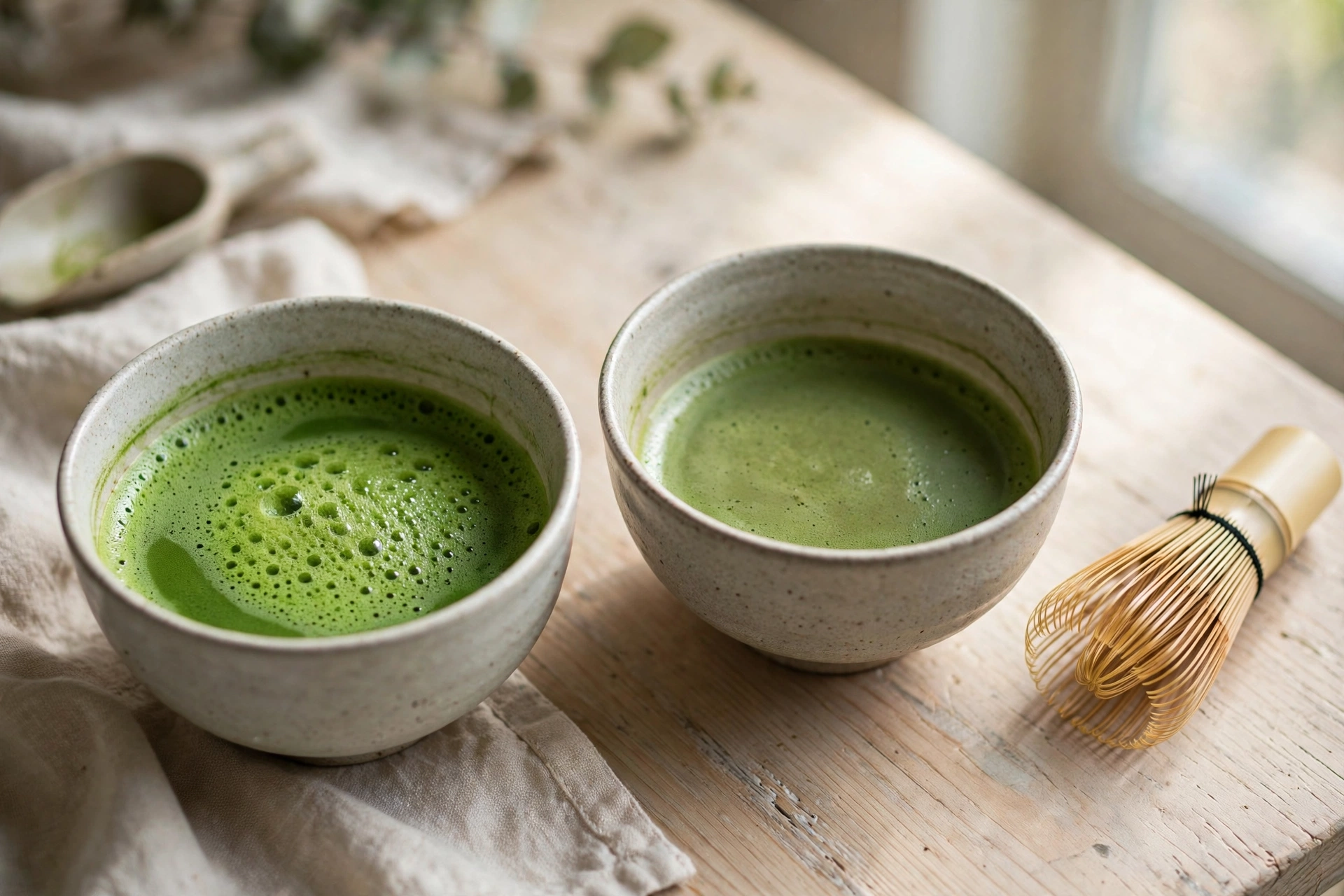
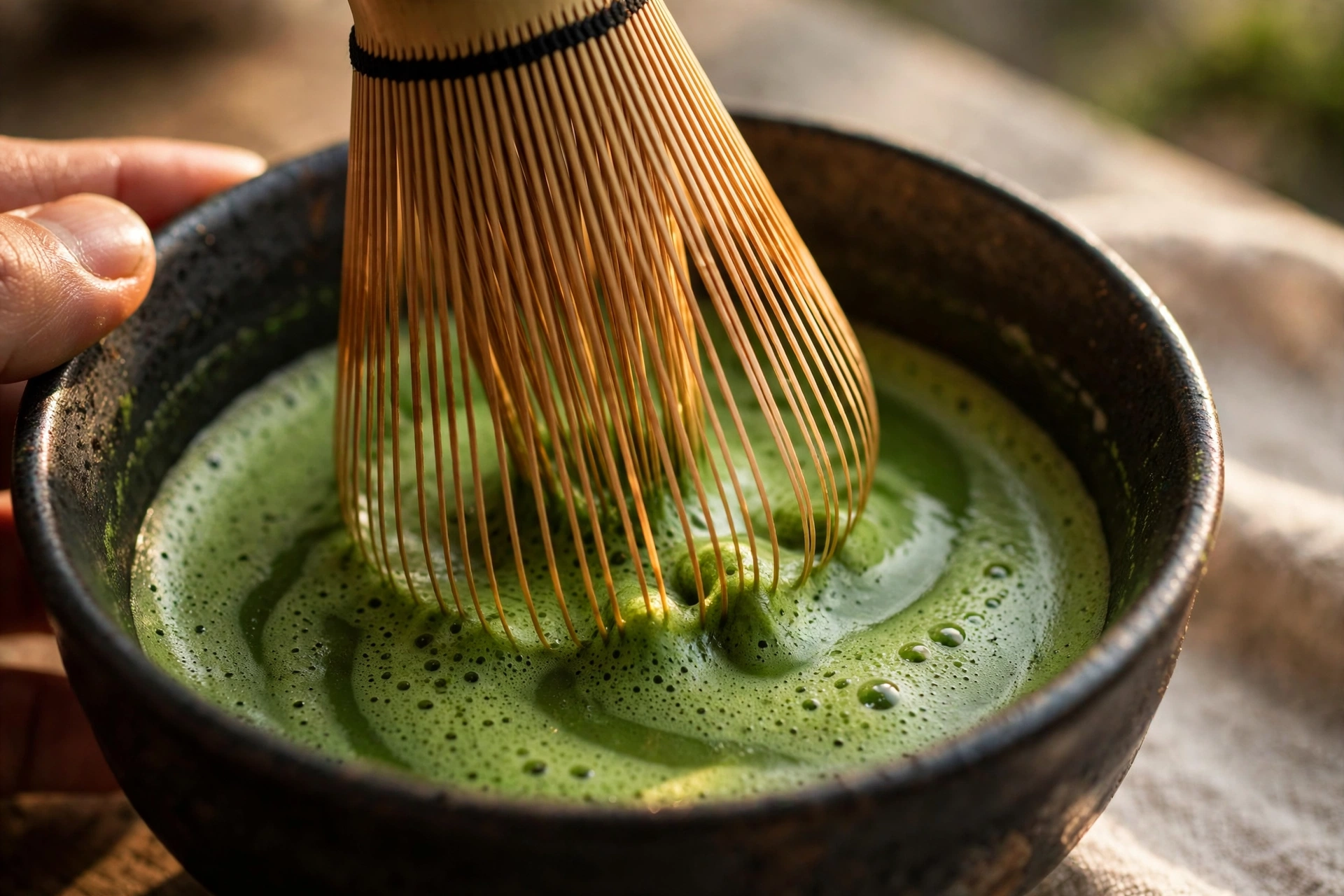
Genuine ceremonial matcha starts in the field. The tea bushes are shaded for 20 to 30 days before harvest, which forces the plant to produce more chlorophyll and L-theanine — that's where the vivid green color and the smooth, umami sweetness come from. Only the youngest leaves of the first spring harvest (ichibancha, picked around late April to May) make the cut. The stems and veins are stripped away, leaving only the soft leaf tissue called tencha, which is stone-ground at agonizingly slow speed — a single granite mill produces about 30 grams an hour — so heat never damages the flavor.
The result: powder that's talc-fine, jade green, and sweet enough to whisk with plain hot water and drink as-is. No sugar needed, no milk required. That's the whole point — ceremonial matcha is the star, not a supporting ingredient.
What Culinary Grade Is For
Culinary grade uses later harvests — second or third flush leaves that are more mature, shaded for a shorter period, and processed less meticulously. The flavor is bolder, more astringent, more bitter. The color leans olive rather than emerald. The texture is fine but not silk.
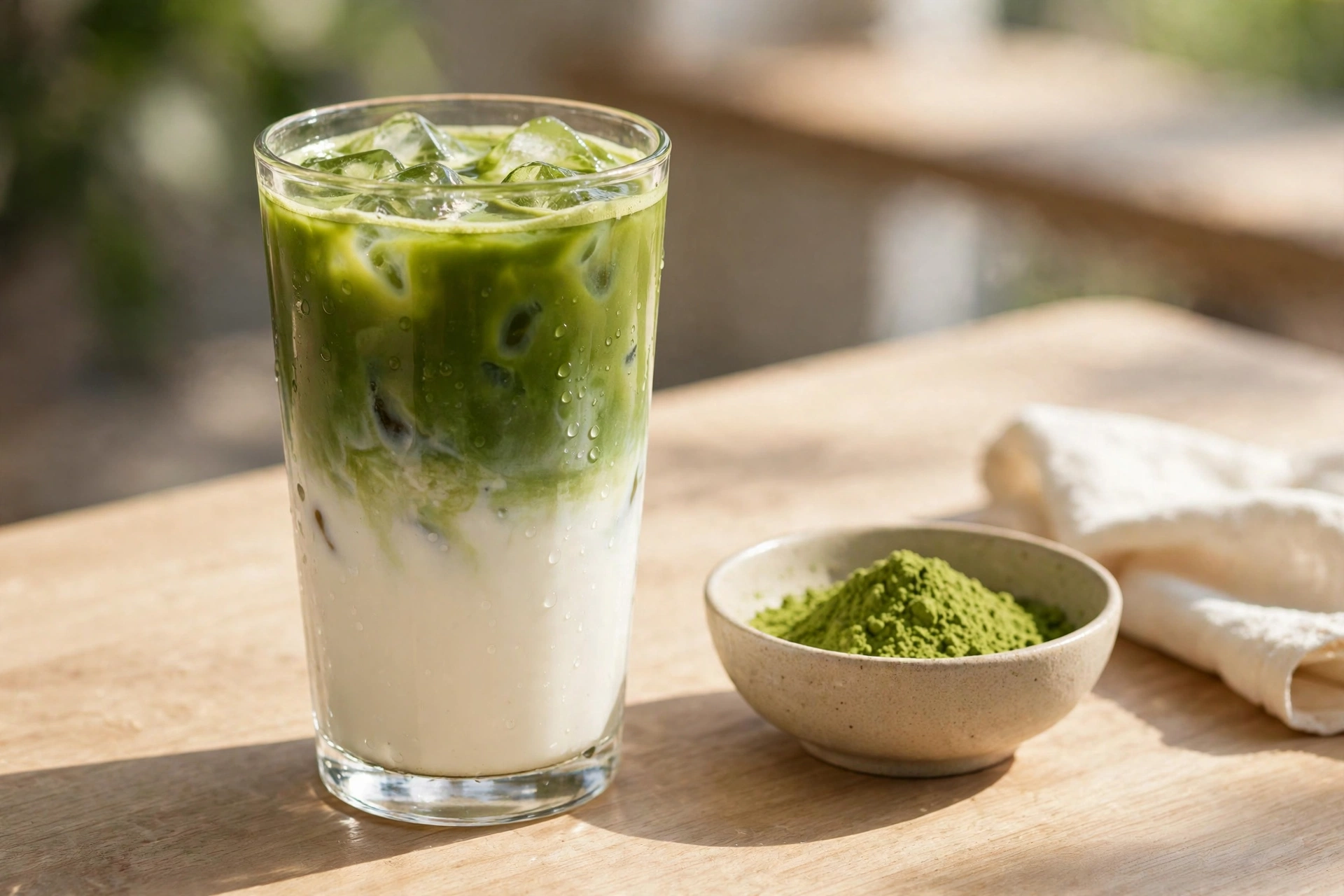
Here's what people get wrong: that doesn't make it low quality. It makes it fit for purpose. That extra bitterness is a feature, not a flaw — it's what lets the matcha flavor survive being mixed into milk, blended into smoothies, or baked into a cake at high heat. A delicate ceremonial powder dumped into a vanilla-heavy latte is like using a great olive oil for deep-frying: the subtlety you're paying for vanishes the moment it hits the other ingredients.
Ceremonial vs Culinary Matcha: Head to Head
| Ceremonial Grade | Culinary Grade | |
|---|---|---|
| Leaves | Youngest first-harvest (ichibancha), shade-grown 20–30 days | Later harvests, more mature leaves, shorter shading |
| Color | Vivid jade green | Deeper, duller olive-green |
| Flavor | Sweet, umami, smooth, barely bitter | Bold, earthy, more bitter and astringent |
| Texture | Ultra-fine, silky | Fine, slightly coarser |
| Best for | Whisked straight with water (usucha), tea ceremony | Lattes, smoothies, baking, cooking |
| Price (per 30g) | $25–$50+ | $10–$25 |
There's also a middle ground worth knowing about: many cafés — ours included — use a "café" or "latte" grade that sits between the two. A well-chosen mid-grade matcha has enough character to shine through milk but stays smooth without much bitterness. If you're mostly making lattes at home and want the best cup without the ceremonial price tag, that's the sweet spot to ask for.
How to Spot the Real Thing
Whatever grade you buy, quality markers don't lie. Look for a vibrant, lively green — dull, yellowish, or khaki tones mean older leaf or oxidation. The origin should be stated clearly (Uji, Nishio, Kagoshima — vague "Japan" or no origin at all is a red flag). The ingredient list should say one thing: green tea. No sugar, no milk powder, no added flavorings. And rub a pinch between your fingers — good matcha feels like talc, not sand.
Our Verdict: Buy for How You Actually Drink It
Here's our position: most people should buy culinary grade, and the matcha snobs hate hearing it. If your matcha life is lattes, smoothies, and baking, culinary grade is not the compromise — it's the correct choice. You'll get a bolder matcha flavor in the finished drink at half the price, and the ceremonial stuff's delicate sweetness would be lost in the milk anyway.
Buy ceremonial if you drink matcha straight — whisked with hot water, the traditional way — or if you want to taste what the leaf itself actually tastes like, at least once. Everyone should try real ceremonial matcha whisked plain at least once; it's the difference between hearing about umami and tasting it.
One thing we'd never do: use ceremonial for baking. That's just setting money on fire.
Quick Questions
Can you drink culinary matcha straight? Yes — it'll be stronger and more astringent than ceremonial, but plenty of people enjoy it neat. If it tastes too sharp, it's telling you it wants milk.
Is expensive matcha always better? For drinking straight, price tracks quality pretty reliably. For lattes, a mid-priced culinary or café grade will outperform a pricey ceremonial once milk enters the picture.
Does matcha grade affect caffeine? Barely. Ceremonial tends to have slightly more L-theanine (which smooths out the caffeine), while culinary has a bit more bitterness-causing catechins. The caffeine difference in the cup is negligible.
We take matcha grading seriously at Community Goods — it's kind of our whole thing. Come by the Melrose Ave shop in West Hollywood or Edinburgh Ave in Hollywood and taste the difference yourself. We'll whisk you a proper ceremonial cup and a latte side by side, and let your palate settle the debate.