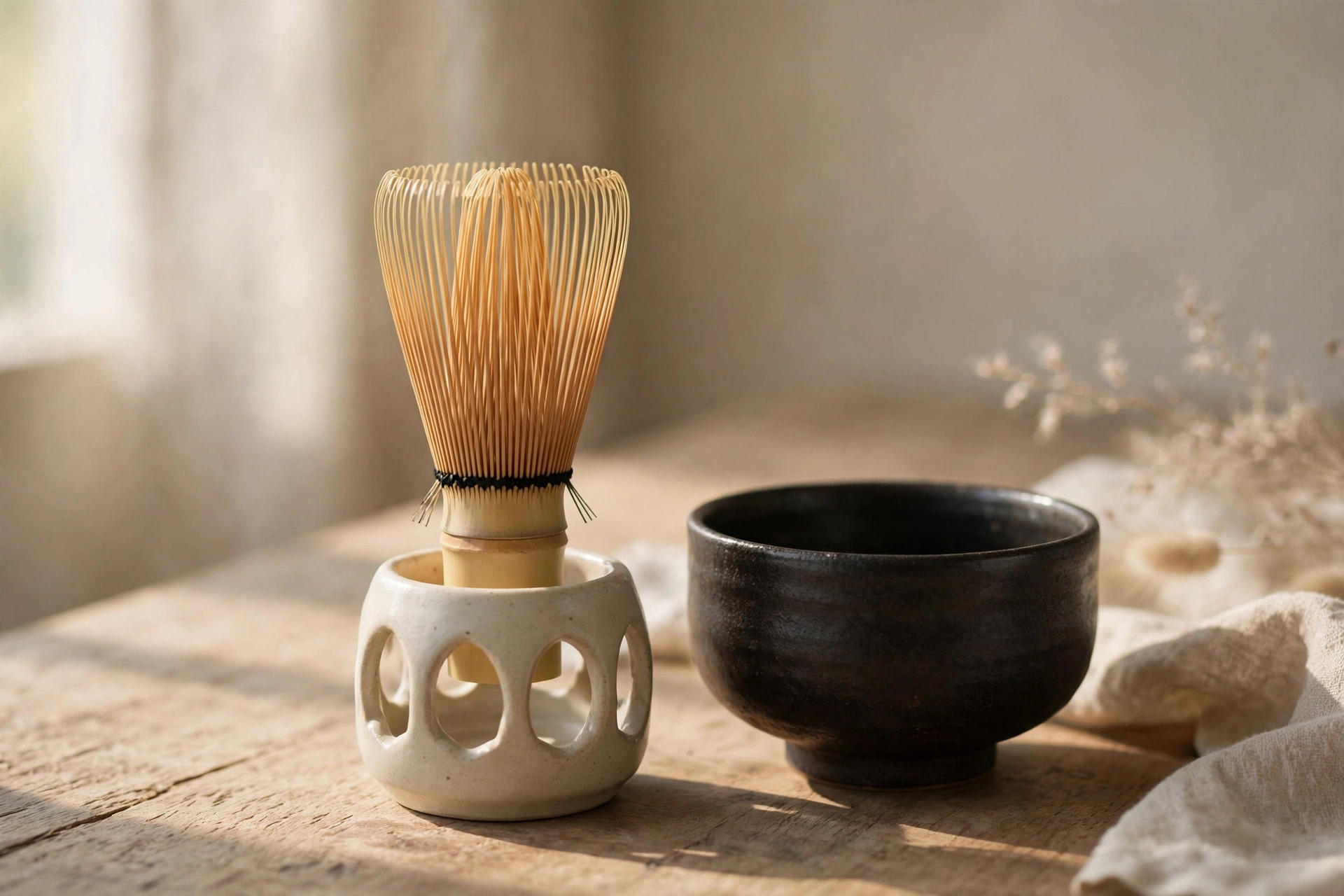
Best Matcha Whisks (Chasen) for Beginners
You can buy the most beautiful ceremonial matcha in the world and still end up with a lumpy, bitter bowl if your whisk is wrong. The chasen — that delicate bamboo whisk that looks like a tiny sea urchin — isn't decorative. Its fine tines break up clumps and whip air into the tea in a way no spoon, fork, or kitchen whisk can replicate. Picking the best matcha whisk as a beginner mostly comes down to one thing: don't buy the fanciest one first.
We whisk hundreds of bowls a week at the shop, and we've snapped our share of tines learning. Here's what actually matters when you buy a chasen, and the ones we'd hand to a friend starting out.
What to Look For in a Chasen
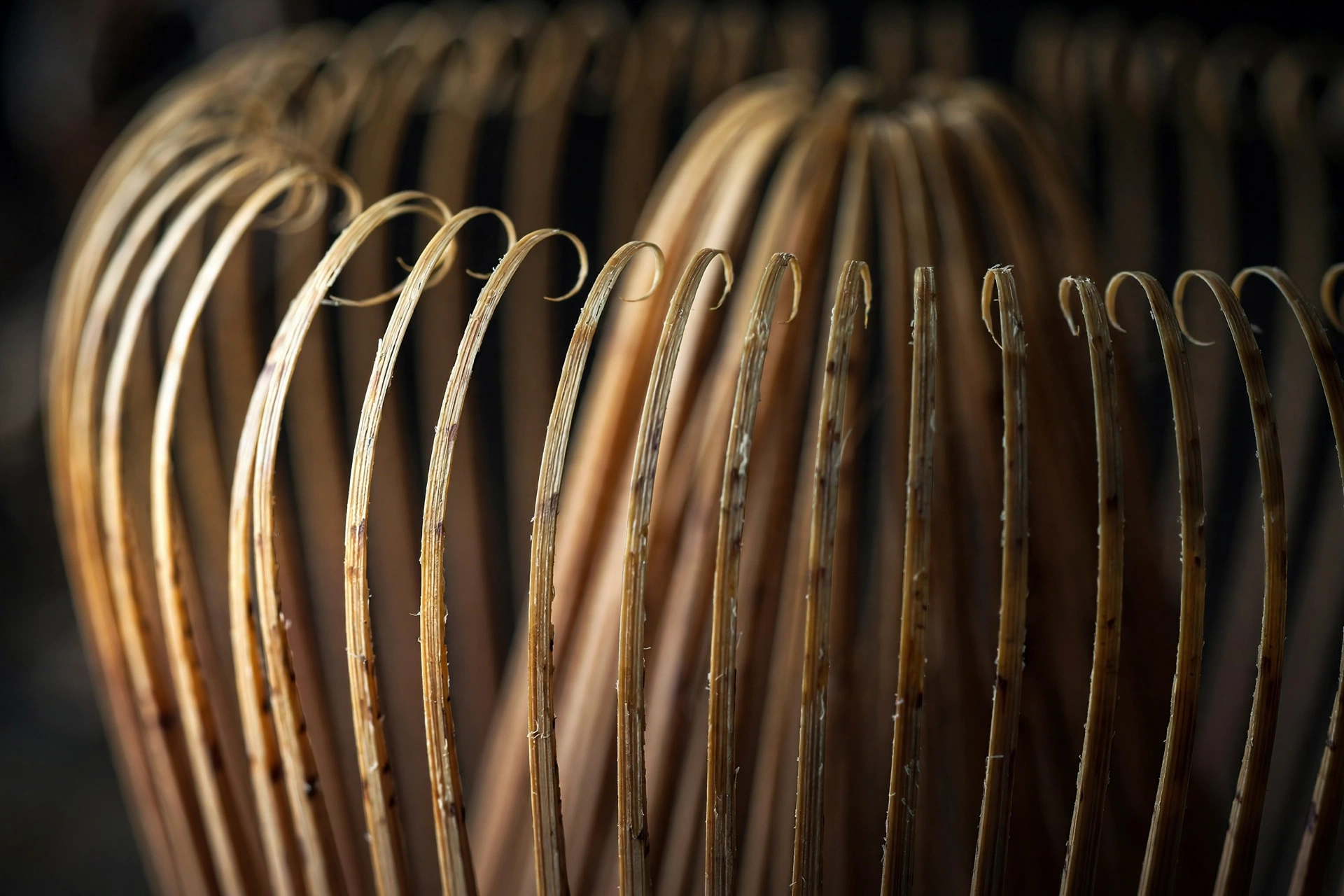
Tine count: 80 is the beginner sweet spot. Tine count (hokazu) is the main variable. Around 70 tines (kazuho style) gives you stiffer, springier tines — great for thick koicha. Around 80 is the all-rounder: fine enough for a creamy usucha froth, sturdy enough to survive a beginner's heavy hand. The 100- and 120-tine whisks make even finer foam, but their tips are thinner and more fragile, with thicker handles that are harder to control.
Made in Japan, ideally Takayama. Takayama in Nara prefecture is the historic home of chasen-making, and handmade Japanese whisks are springier and longer-lasting than machine-made ones. Cheap mass-produced whisks (often made in China) can arrive brittle, chemically treated, or prone to snapping in the first week.
Shape matters more than you'd think. The shin shape — narrow handle with curved, tapered tines that open wide — gives beginners a bigger whisking surface and is more forgiving of imperfect technique. It's the shape we'd recommend for your first whisk.
Care is part of the purchase. Bamboo whisks are consumables: expect 3 to 12 months of daily use depending on care. Rinse in warm water only (never soap), and dry it tines-up on a ceramic whisk holder (kusenaoshi) so the tines keep their shape.
Consider resin for cold drinks. A newer option: resin or plastic whisks that mimic the chasen shape. They'll never match bamboo for a traditional hot bowl, but they're nearly indestructible, dishwasher-friendly, and great for iced matcha, travel, and offices.
The Best Matcha Whisk Picks for Beginners
An 80-prong handmade Japanese chasen (e.g. via Yunomi) — best for beginners
This is the classic recommendation for a reason: about 80 tines, handmade bamboo from Japan, versatile enough for both thin usucha and thicker bowls. It's the whisk most Japanese tea shops suggest to newcomers because the tips are sturdy enough to survive learning. Honest take: it costs more than the bargain-bin whisks, and it's still a consumable — but it's the difference between fighting your tools and actually enjoying the ritual. Buy the holder too; your whisk will last twice as long.
A kazuho-style shin chasen (e.g. ECOLEMON entry-level) — best budget everyday whisk
The shin shape with 64–72 flexible prongs is genuinely beginner-friendly: the springy tines blend powder and water fast with less effort, and the narrower handle feels natural in the hand. Hand-finished bamboo beats mass-produced alternatives for durability at this price. Honest take: treat it as a starter whisk and plan to replace it every couple of months of daily use. At this price, that's a feature, not a flaw — you'll know exactly what you want in your next one.
A 100-prong chasen — best upgrade for foam lovers
Once your technique is solid and you want the finest, creamiest usucha foam possible, step up to 100 tines. The finer tips aerate more delicately and produce that Instagram-worthy microfoam cap. Honest take: do not buy this first. The thin tips snap easily under a beginner's pressure, and the thicker handle is harder to control until your wrist learns the motion. This is a second-whisk purchase.
A resin chasen-style whisk — best for iced matcha and travel
For cold whisked drinks, offices, and anyone who winces at the idea of a fragile tool: resin whisks do a respectable job, survive drops and dishwashers, and cost very little. Honest take: it won't produce the layered, delicate foam of bamboo in a hot bowl. But whisked into cold milk for an iced latte? You'd be surprised how close it gets.
A complete starter set (whisk + sifter + bowl + scoop) — best all-in-one
If you're starting from zero, a set with a bamboo whisk, fine-mesh sifter, chawan bowl, and scoop saves you from buying the wrong accessories separately. The sifter alone is worth it — clump-free matcha starts before the whisk touches the bowl. Honest take: set whisks are usually the budget tier, so expect to replace the chasen sooner. Think of the set as buying the bowl and sifter with a free practice whisk.
Whisk Questions We Get a Lot
Do I really need a bamboo whisk? Can't I use a milk frother? A handheld frother works fine for lattes — it mixes powder into milk well. But for a traditional bowl of usucha, nothing replicates the chasen's fine foam and texture. Different tools, different jobs.
How long does a chasen last? With daily use and decent care, a few months to a year. Rinse warm, never soap, dry tines-up. The moment tines snap or the shape won't bounce back, replace it.
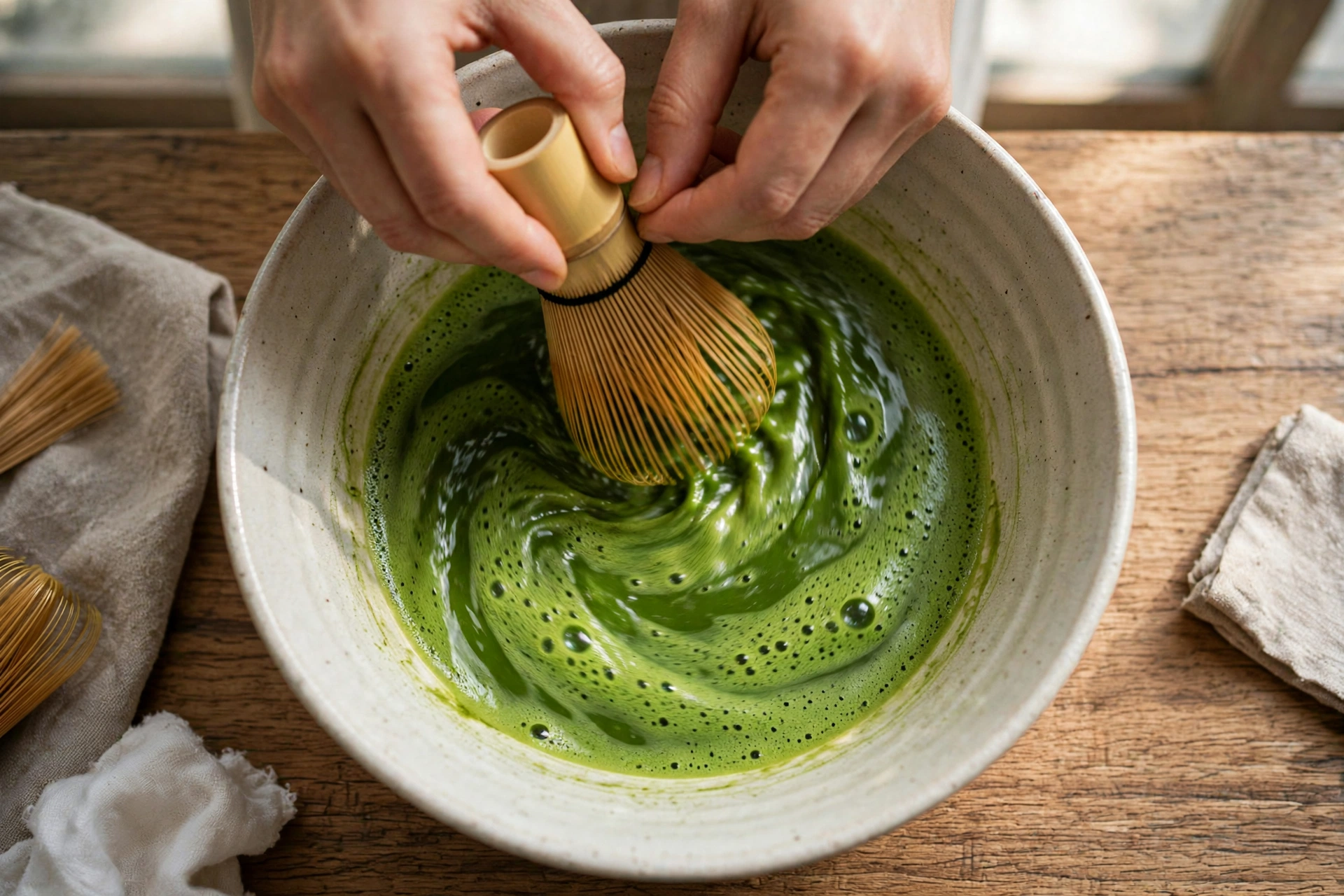
Do I need a special bowl? A wide, shallow bowl helps — it gives your wrist room for the rapid W-shaped whisking motion. Any wide cereal or soup bowl works to start; a proper chawan is an aesthetic upgrade, not a functional requirement.
The short version: an 80-tine handmade Japanese chasen, a sifter, and a wide bowl. That's the whole kit, and it's under the cost of a week of café matcha.
Or skip the shopping and come watch us do it: we whisk matcha to order every day at our Melrose Ave shop in West Hollywood and our Edinburgh Ave spot in Hollywood — pull up a stool at the bar and steal our technique.